
GUIDE · SUDDEN AND UNEXPECTED DEATH

Sudden death: what to do, step by step

In short: after a sudden, unexpected death, call 112 or the family doctor. If the doctor can determine the cause — for example, a known heart condition — they issue the medical death certificate and the funeral follows the normal route. If the cause is unclear, the case goes to the forensic institute (Medicina Legală) for autopsy; the forensic doctor then issues the certificate. This guide explains the steps, when an autopsy is needed, and which documents are involved.

Updated: 22 June 20261,650 wordsReviewed by Andrei
sobru.ro — Romanian funeral services
Illustrative image for the guide above.

What is a sudden death

A sudden death is an unexpected death that happens abruptly, without a known terminal illness. It can occur at home, on the street, or anywhere — in a person who seemed healthy.

Unlike an expected death after a long illness, a sudden death raises the question of cause. That is why the procedure may require additional medical examination.
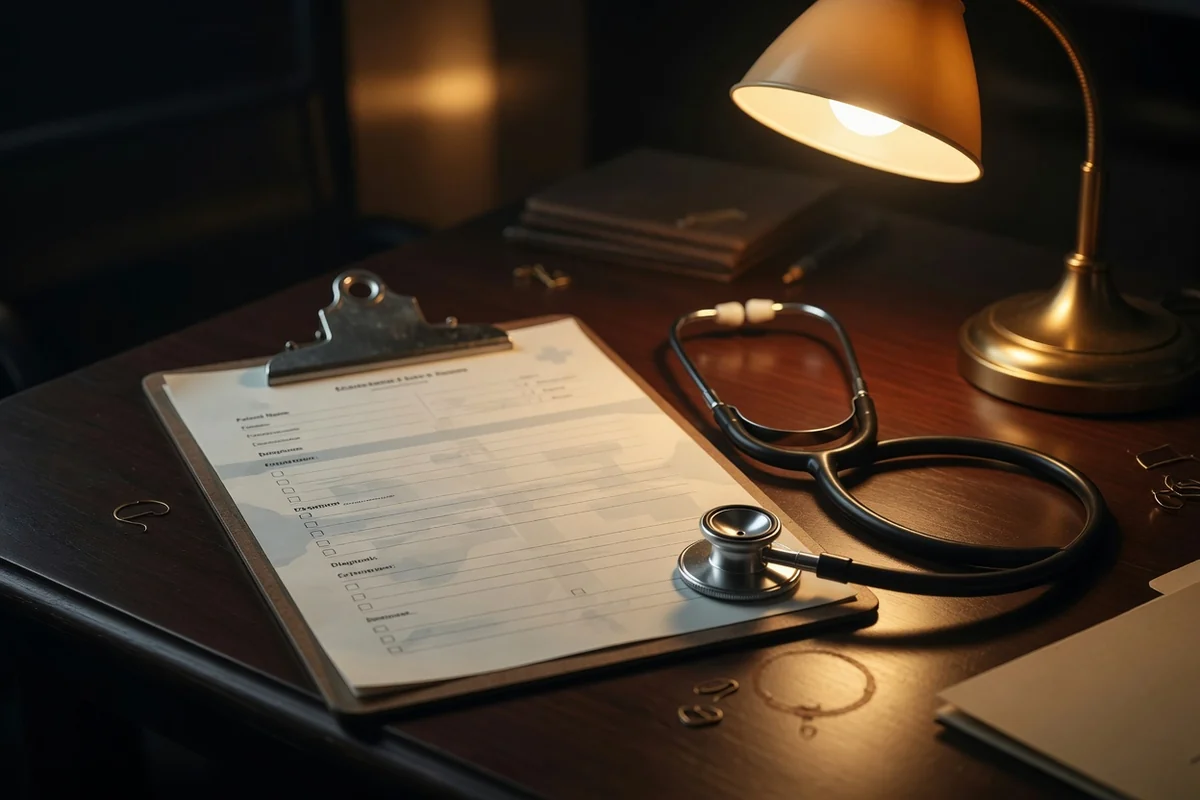
Clipboard with a blank medical form and stethoscope on a consultation desk
Illustrative image: completing the medical death certificate.

First step — call 112 or the family doctor

At a sudden death, call 112 or the family doctor. Medical personnel will attend, confirm the death, and determine the next steps depending on the circumstances.

Do not move or prepare the body until authorised staff have arrived. See also the guide on what to do in the first hours.

When the doctor can issue the certificate directly

If the doctor can establish the cause of death — for example, a known cardiac condition — they issue the medical death certificate (certificatul medical constatator al decesului), the first mandatory document.

In this case the funeral follows the standard route: registering the death at the Civil Status office, obtaining the official death certificate, and organising the ceremony.

When an autopsy is needed

If the death is unexplained and the doctor cannot establish the cause, the case goes to the forensic medicine service (Medicina Legală). The autopsy — examination of the body — determines the cause of death.

In these cases the medical death certificate is issued by the forensic doctor (medic legist) after examination. This is a routine procedure, not an accusation of wrongdoing.

Death certificate registration — official MAI service

The role of the family doctor

For a person with a known illness already in the family doctor's records, the family doctor may confirm the death and issue the certificate — provided the death is explainable by that illness.

That is why, at a sudden death at home, the family doctor is often the first call alongside 112. They know the patient's medical history.

Which documents are required

Whichever route applies, the core document is the medical death certificate, followed by the official death certificate from the Civil Status office. To register the death you will need:

  • Medical death certificate (certificatul medical constatator)
  • The deceased's national ID card
  • The deceased's birth certificate and, where applicable, marriage certificate
  • The ID of the person registering the death

Nightstand at 3 a.m.: phone, handwritten list notebook and a switched-on lamp
Illustrative image: first steps and documents after an unexpected death.

The registration deadline

The death must be registered at the Civil Status office within 3 days of the death. When an autopsy was required, the 3-day period runs from the date of the forensic doctor's certificate.

The funeral home can register the death and collect the official death certificate on the family's behalf, under a power of attorney, so the family does not need to visit any office.

If the death occurred away from home

If the person died suddenly in another town or abroad, transport and — where applicable — repatriation formalities or certificate transcription are added.

We coordinate these situations wherever the death occurred, with licensed funeral transport.

Where a sudden death can happen

A sudden death can happen anywhere, and the location affects the next steps:

  • At home — call the family doctor or 112
  • On the street or in a public place — call 112; police will also attend
  • At the workplace — notify 112 and the employer
  • In hospital — the on-duty doctor confirms the death

How we help

We guide you through each step, collect the deceased, and handle the paperwork and coordination with the forensic service when needed — with respect, and without leaving you alone.

We answer day and night. For a no-obligation conversation, call us or see our funeral transport service.

STEP BY STEP

Steps summary

  1. 01

    Call 112 or the family doctor

    At a sudden death, call 112 or the family doctor. Do not move or prepare the body until authorised personnel arrive.

  2. 02

    Establish the cause

    If the doctor can establish the cause, they issue the medical death certificate. If not, the case goes to the forensic service for autopsy.

  3. 03

    Obtain the medical death certificate

    The certificate is issued by the doctor or, after autopsy, by the forensic doctor. It is the first mandatory document.

  4. 04

    Register the death

    The death must be registered at the Civil Status office within 3 days. The funeral home can do this on behalf of the family under a power of attorney.

OFFICIAL SOURCES

Information verified with

FREQUENT QUESTIONS

What families ask most often

  • What is a sudden death?

    An unexpected death that happens abruptly, without a known terminal illness. It can occur anywhere, in a person who seemed healthy.

  • What do I do after a sudden death?

    Call 112 or the family doctor. Medical personnel will attend, confirm the death, and determine the next steps. Do not move or prepare the body until they arrive.

  • Is an autopsy always required after a sudden death?

    Not always. If the doctor can establish the cause — a known illness — they issue the certificate. If the death is unexplained, the case goes to the forensic service for autopsy.

  • Who issues the certificate after an autopsy?

    The forensic doctor (medic legist), after examining the body. They issue the medical death certificate in place of the family doctor.

  • How long does an autopsy take?

    It depends on the case and the forensic service's schedule. As a rule the body is examined within a few days and the certificate issued afterwards.

  • Can the family doctor confirm a sudden death?

    Yes, for a person with a known illness already in their records, if the death is explainable by that illness. The family doctor knows the patient's medical history.

  • What documents are needed after a sudden death?

    The medical death certificate, the deceased's national ID, their birth and marriage certificates, and the ID of the person registering the death.

  • How long do I have to register the death?

    Within 3 days of the death. When an autopsy was required, the 3-day period runs from the date of the forensic doctor's certificate.

  • Does needing an autopsy mean something criminal is suspected?

    No. An autopsy for an unexplained death is a routine procedure to establish the cause. It is not an accusation of wrongdoing.

  • Can I start planning the funeral during an autopsy?

    Preparations can begin, but the funeral itself takes place after the forensic doctor has issued the certificate. We help you coordinate the steps.

  • What if the death occurred in another town?

    Funeral transport is added, and — where applicable — transcription or repatriation formalities. We coordinate these situations wherever the death occurred.

  • Who collects the deceased?

    The funeral home, after the death has been confirmed — and, if required, after examination at the forensic service. We collect with a licensed vehicle, day or night.

  • Sudden death in hospital — what happens?

    The on-duty doctor confirms the death and issues the certificate if they can establish the cause. Otherwise the case goes to the forensic service, just as it would at home.

  • How long will the body be at the forensic service?

    Usually a few days, depending on the case and the institution's schedule. We keep you informed and collect the deceased as soon as the body is released.

  • Does the family pay for the forensic autopsy?

    A forensic autopsy ordered under the law is not charged to the family. The funeral costs themselves are separate.

  • How do you help with a sudden death?

    We guide you through each step, collect the deceased, and handle the paperwork and coordination with the forensic service when needed — with respect and without leaving you alone.

  • Do I need to notify the police after a sudden death at home?

    If the doctor can confirm a natural death, no. If the death is unexplained or raises questions, call 112 and the police may attend.

  • Who decides whether an autopsy is needed?

    The doctor confirming the death. If they cannot establish the cause, they refer the case to the forensic service, where autopsy determines the cause.

  • What is the difference between a sudden death and a violent death?

    A sudden death is an unexpected death from internal causes; a violent death results from external causes — an accident, a fall, assault. The legal procedure differs.

  • Can the ambulance doctor issue the certificate?

    They can confirm the death, but the medical death certificate is issued by the doctor who can establish the cause — the family doctor or, after autopsy, the forensic doctor.

  • Can I see the deceased before the autopsy?

    It depends on the circumstances and the institution. We help you contact the forensic service to find out when and how you may see your loved one.

  • How quickly can the funeral be arranged?

    If no autopsy is needed, within 2–3 days as with any death. If an autopsy was required, once the forensic doctor has issued the certificate.

  • Sudden death with no witnesses — what happens?

    When no one was present and the cause is unclear, the case typically goes to the forensic service for autopsy to establish the cause.

  • Is dying in sleep considered a sudden death?

    Yes. If the person had a known illness, the family doctor may confirm the death; otherwise the forensic service may be needed.

  • What does natural death mean?

    A death caused by illness or old age, without external factors. In these cases the doctor can issue the certificate without an autopsy.

READ ALSO

Related guides

QUESTIONS?

Call us for guidance

We answer day and night. We explain your family's specific situation with no commercial pressure.

0739 592 835WhatsApp