Funeral ceremony organization covers coordination of all steps from the wake to the post-ceremony memorial. Includes chapel or church reservation, priest coordination, floral arrangements, traditional food packages, cemetery or crematorium transport, memorial organization. The family may choose traditional Orthodox ceremony, ceremony of another confession, or secular civil ceremony — we adapt every detail.
A traditional Orthodox funeral ceremony unfolds over 2–3 days in 5 distinct stages. Family decides service type (short or complete with full liturgy) and meal location (home, restaurant, cemetery chapel).
1D+1
Wake
1–2 nights, at home or chapel. Open casket, candles at 4 corners, relatives come to say goodbye.
2D+2
Church service
Coordinated with parish priest. Duration 1–2 hours (with full liturgy). Priest fee: 100–500 RON, paid directly.
3+30 min
Cortege
Procession from church to cemetery. Hearse leads, relatives' cars follow.
Traditional Orthodox ceremony — wake, church service, cemetery burial, memorial
Catholic ceremony — Catholic church service, burial or cremation per tradition
Protestant or Neo-protestant ceremony — service at place of worship, burial or cremation
Secular civil ceremony — no religious service, with master of ceremonies, speeches, moments of reflection
Cremation ceremony — at crematorium, short farewell + later memorial
Ceremony for repatriations — adapted after the deceased arrives in Romania
Romanian Orthodox funeral traditions — a guide for family abroad
If you grew up outside Romania or haven't attended many Orthodox funerals, some of the customs may be unfamiliar. This section explains them plainly, so you know what to expect and can take part without uncertainty.
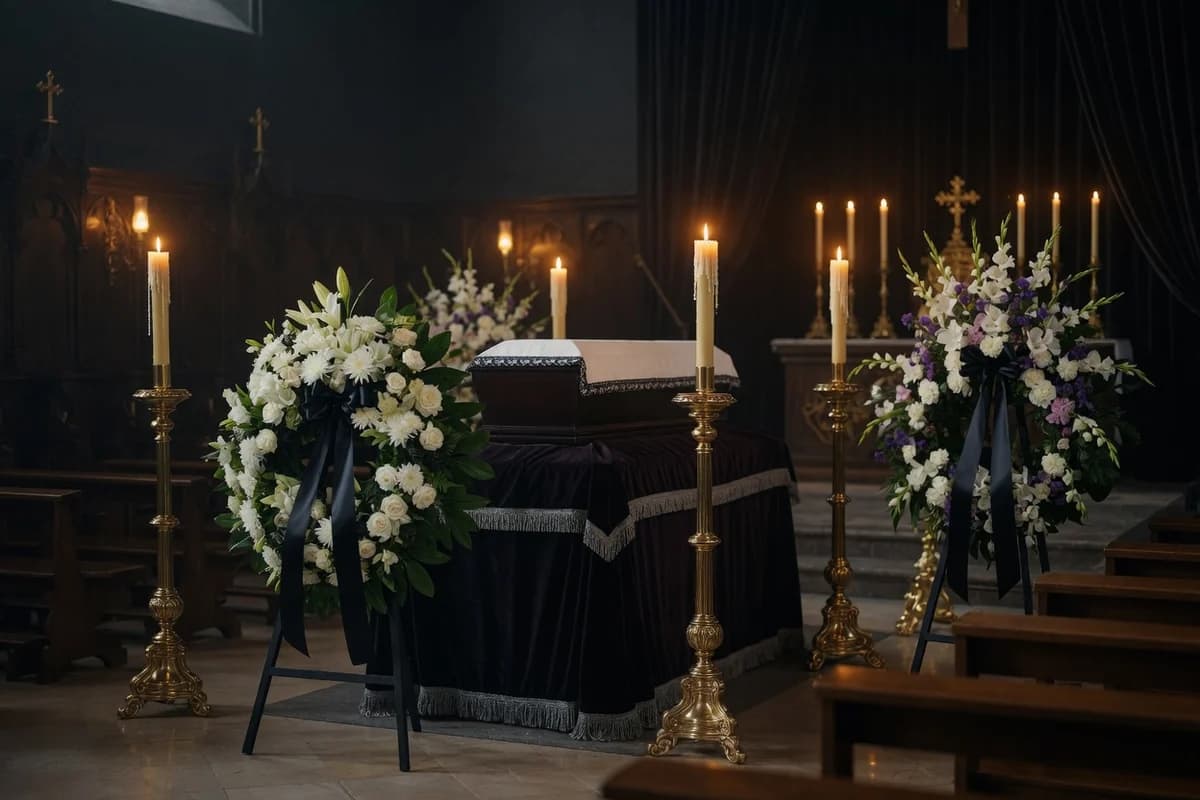
The wake (priveghi): after the deceased has been prepared and placed in the casket, the family holds a wake at home or in a chapel for one or two nights. The casket is open. Candles are lit at the four corners. Relatives, neighbors, and friends come throughout the day and evening to say a final goodbye. There is no fixed schedule — people come and go. The priest may come once or twice during the wake nights to lead a short prayer (parastas). This is not mandatory but common. Expect the house or chapel to be full of people, some of whom you may not know.
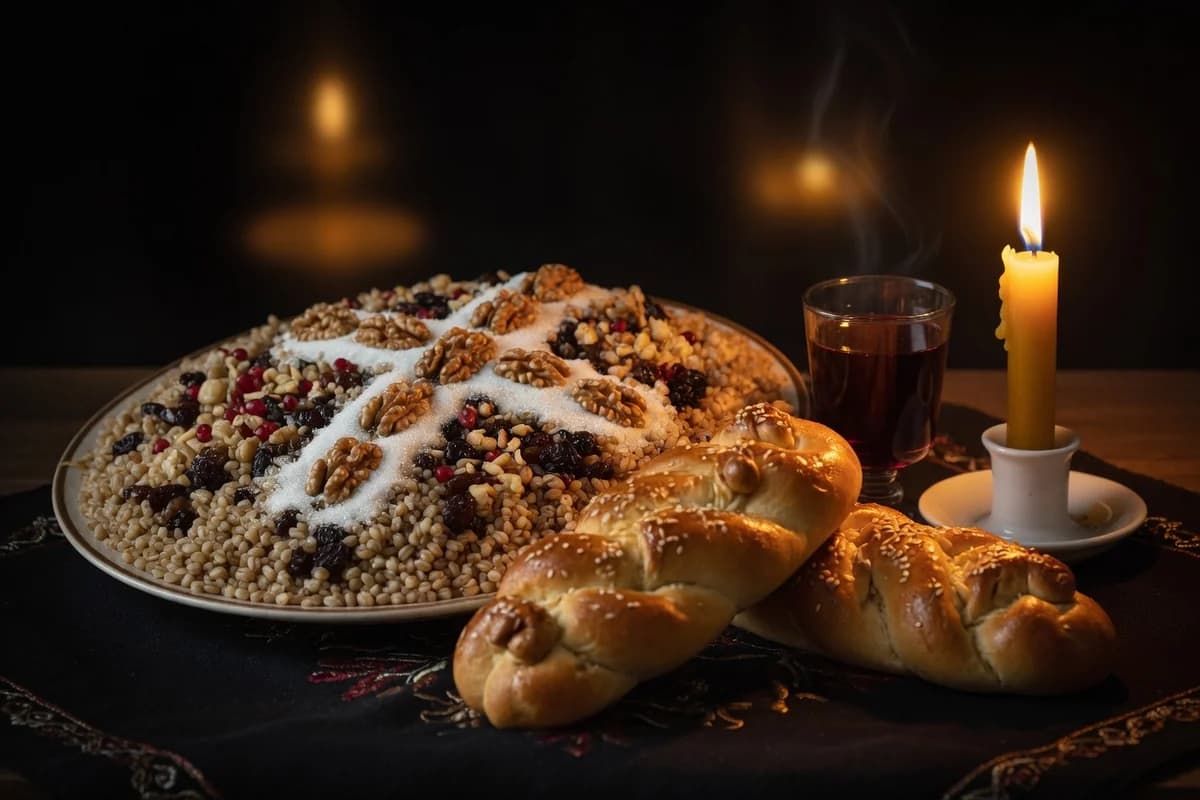
Coliva: this is a dish made from boiled wheat mixed with walnuts, honey, and powdered sugar, shaped into a mound and decorated with a cross on top. It is prepared by the family and brought to the church. It represents the body returning to the earth and the soul's hope of resurrection — drawn from the Gospel image of a grain of wheat. The priest blesses it and distributes it after the service. If you are in charge of organizing from abroad, a family member in Romania typically makes or orders the coliva.
Colaci (ritual breads): these are round braided breads, usually handed to attendees at the wake or at the cemetery after the burial. They are given as an act of remembrance. Each loaf is typically accompanied by a candle. The number and size vary by family tradition.
Other customs you will see: mirrors in the home may be covered during the wake period — this is a folk tradition, not a church rule, and not all families observe it. Attendees are often given a small cloth — a handkerchief or white towel — as a token of remembrance. In some families, a candle is placed in the deceased's hands in the casket. None of these are compulsory Orthodox rites; they are regional and family customs that have merged with religious practice over centuries.
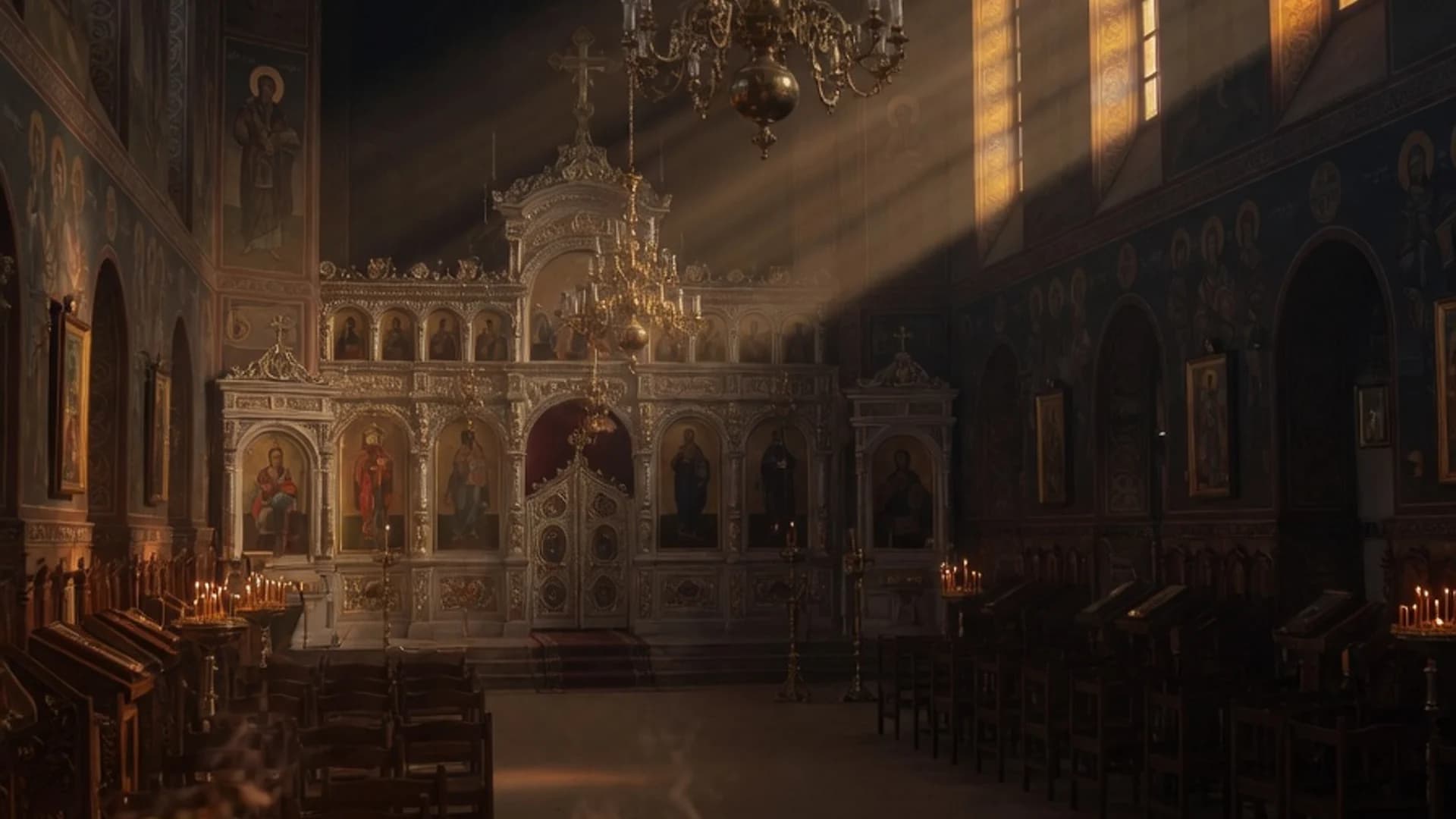
The service (slujba): held at the church, it lasts 1 to 2 hours with the full liturgy (prohod). The priest chants, there is incense, and close family typically stand near the casket. At the end, each person in attendance kisses the icon or cross held by the priest, and approaches the casket for a final goodbye before it is closed. The procession to the cemetery follows.
Illustrative image: a chapel arranged for the wake — open casket, candles at the four corners, and floral arrangements placed by the family.
The eulogy — how to prepare it
A eulogy is not a standard part of Romanian Orthodox funerals in the formal sense — the priest leads the service — but family members often add a few words, and in secular or mixed ceremonies a eulogy is the central moment. If you are asked to speak, or want to, keep it simple.
Three ideas are enough: who this person was (in one or two sentences — not their CV, but the essence of them), one concrete memory that shows something true about them, and a brief thanks to the people who came. Sixty to ninety seconds is the right length. Longer and you lose the room; shorter and it feels unfinished.
Who may speak: anyone who wishes to. In traditional ceremonies, the eulogist is often a son, daughter, or close colleague. There is no rule. If you are calling in from abroad and want to be present remotely for this moment, tell us in advance — we can arrange for a phone or video call to be held near the casket or at the graveside. For the floral arrangements at the ceremony, browse our funeral wreaths and flower arrangements.
Organizing the ceremony in 10 steps
These are the practical steps from the moment of death to the end of the ceremony. If you are coordinating from abroad, almost all of these can be handled by phone or WhatsApp — you do not need to be in Romania for the planning phase.
Call us. We take the details and assign one coordinator to your case — this person stays with you through to the end. You can reach them by phone or WhatsApp at any hour.
Set the date and time with the parish. We contact the church, speak to the priest, and confirm a slot that works for the family's schedule — including time for relatives flying in.
Confirm the location of the wake: at home, in a chapel, or at a church hall. We prepare the space — casket pillars, candles, floral arrangements, assistance throughout.
Choose the type of service: full Orthodox service with prohod (1.5–2 hours) or a shorter service (about 1 hour). We relay the family's preference to the priest.
Arrange flowers: wreaths from the family and any institutional wreaths. We coordinate receipt and placement, including wreaths sent by people who cannot attend.
Confirm the burial plot or cremation booking. If the family does not already have a plot, we arrange a new concession — this step should happen in the first 24 hours.
Prepare the coliva and colaci. If no family member in Romania is available to make them, we can arrange them for you, from a trusted local supplier.
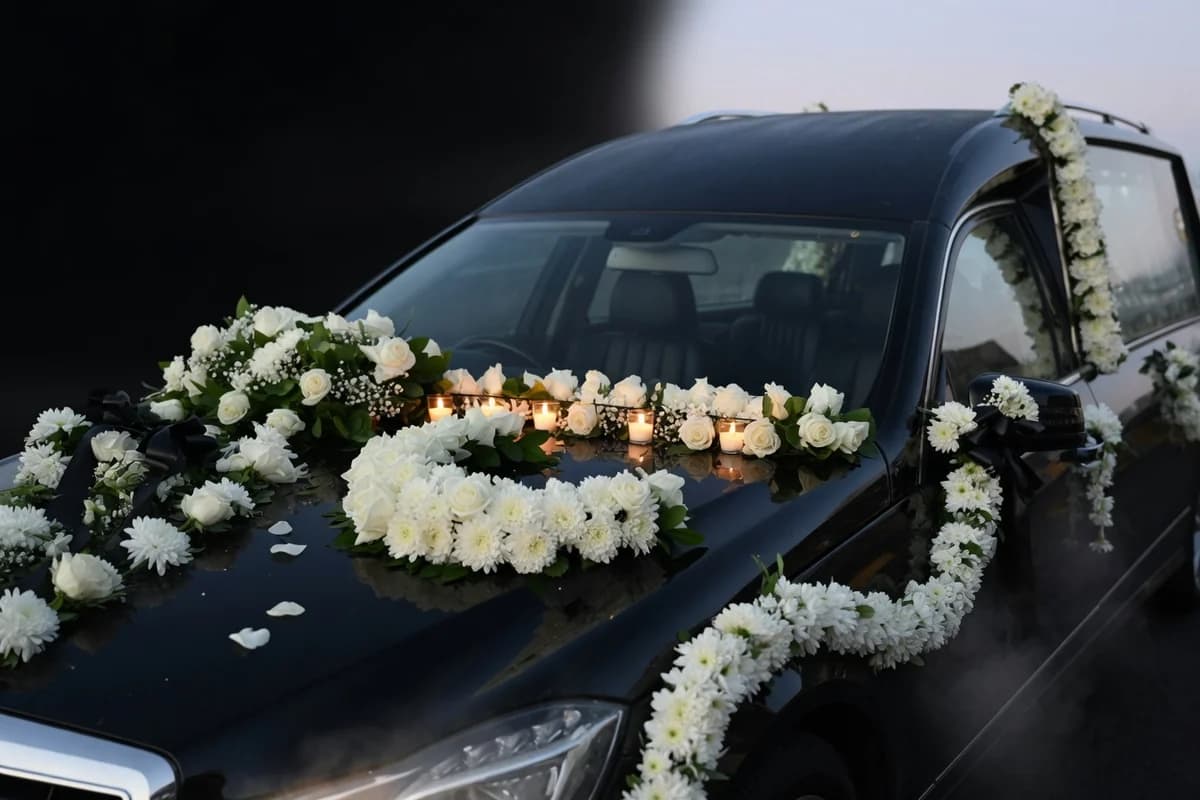
The funeral procession: hearse leads, family cars follow. In Bucharest the drive to the cemetery typically takes 20–40 minutes. Premium packages include a funeral limousine.
The burial or cremation. The priest conducts the final prayer at the graveside. For cremation, the farewell ceremony takes place at the crematorium chapel before the process begins.
The memorial meal (pomana): organized at home, a restaurant, or the cemetery chapel. We deliver the food package and set up. Guests are given colaci and a candle as they leave.
What the ceremony costs
Ceremony coordination is our work — planning, logistics, being present at every step. Certain costs are paid directly by the family to third parties (priest, church). The table below gives an honest picture.
Illustrative image: the funeral procession leaving the church, with floral arrangements and the hearse at the front.
Item
Indicative cost
Ceremony coordination (from first call to end of burial)
from 1,300 RON
Priest fee for the service
100–500 RON — paid directly to the priest
Chapel or wake location
Varies by parish or cemetery; confirm at first call
Memorial meal (pomana)
200–3,500 RON depending on guest count and package
Ceremony — cost overview All the above are included or bundled in our complete funeral packages — see the packages page for a single all-in price.
Steps of organizing a traditional ceremony
Wake — at home or in chapel, 1-2 nights. Open casket, relatives and friends come to say goodbye, candles lit at the 4 corners. We provide furniture (refrigeration cover, casket pillars), candles, initial floral arrangements, throughout assistance.
Church service — we coordinate with parish priest (or family-chosen church), set the time, prepare casket for transport. Family decides service type: short (1h) or complete (1.5-2h, with prohod).
Funeral procession — convoy from church to cemetery. Hearse in front, family cars behind, possibly funeral limousine (Premium packages). Typical distance in Bucharest: 5-15 km, may be more in provinces.
Burial — at cemetery, in presence of priest and family. Grave digging, casket lowering, burial ritual, earth sprinkling. Takes 30-60 minutes. The coffin models choice is made at the first meeting.
Memorial meal — organized at home, restaurant, or cemetery chapel. Traditional food package (koliva, breads, wine, cooked food), for guest count agreed with family.
Coordination with church and priest
The family may choose the traditional parish church (where the deceased was baptized or married) or a new, geographically more accessible church. We contact the priest, set the service time, coordinate with cantors and deacons.
Priest's fee for the service is paid directly to the church, generally 100-300 RON (depending on service duration and church traditions). This is not included in our packages — it's a direct family-church relationship.
For special cases (violent death, complex autopsy, suicide, etc.), some churches apply strict rules regarding the service — we consult with the priest beforehand and facilitate dialogue with the family.
Floral arrangements and decor
Flower wreath — in standard package (3 tiers) or premium (5 tiers with roses and chrysanthemums)
Casket bouquet — placed on the casket, optional
Cemetery arrangements — flowers placed at the grave after ceremony
Chapel or church decor — optional, with large candles and altar flowers
Wreaths offered by institutions or friends — we coordinate receipt and placement
White or black veil on casket (per tradition) — included in package
Food package (memorial meal)
The memorial meal is an old Romanian tradition — meal offered to relatives and close ones after the ceremony, as a sign of respect and remembrance. Contains religiously significant elements: koliva (boiled wheat with nuts and honey), special breads, wine, plus cooked food.
We provide food packages per chosen package: Essential (12-16 people, basic), Traditional (12-16 people, complete), Premium (24+ people, elaborate gastronomy with professional catering). For 40-day and yearly memorials after the funeral, see our the memorial calendar page.
Meal location: family home, cemetery chapel, or reserved restaurant. We coordinate delivery and setup.
Illustrative image: the memorial table (pomana) with coliva, breads, and ritual candles, as prepared for family and guests after the ceremony.
LOCAL COVERAGE
Where do we provide ceremony organisation in Bucharest and Ilfov?
We cover all six sectors of Bucharest and the towns of Ilfov county. Pick your area for local details: cemeteries, churches and the neighbourhoods we cover.
Select Bucharest or Ilfov for local ceremony organisation pages.
FREQUENT QUESTIONS
What families ask about funeral ceremony organization
How long does a traditional ceremony take in total?
The ceremony day itself — church service plus burial — runs 1 to 2 hours with a full Orthodox liturgy. Add the drive to the cemetery and the graveside prayers, and you are typically looking at 2 to 3 hours from the church doors to the end of the burial. The wake the previous night is separate: families usually hold it for one or two nights before the service. The memorial meal adds another 1–2 hours. For cases with repatriation or medico-legal autopsies, the period from death to ceremony extends well beyond — repatriations average 3–14 days.
Who gives the eulogy at a Romanian Orthodox funeral?
In a traditional Orthodox service, the priest delivers the service and a closing blessing — the spoken remembrance is part of the liturgy, not a separate eulogy slot. That said, families often add a few personal words at the graveside or at the end of the service. Anyone may speak: a child, a sibling, a colleague, a close friend. There is no formal rule. In secular or civil ceremonies, the eulogies are the main event and are usually coordinated by a master of ceremonies. If you want to speak and are joining from abroad by phone or video, tell us — we can make that work.
How long does the service last?
A full Orthodox service with prohod lasts 1 to 2 hours at the church, followed by 30-60 minutes at the graveside. A shorter service (without prohod) runs about 1 hour. The choice is the family's — we relay your preference to the priest when we arrange the booking.
Can I organize a secular ceremony (no religious service)?
Yes. We can coordinate a civil ceremony with master of ceremonies (included in Premium package), family and friends speeches, family-chosen music, moments of reflection. May take place at cemetery, crematorium, or civil chapel. Frequent option for non-religious persons.
Do I need to attend the priest meeting?
Not mandatory. Family gives us a simple power of attorney for coordination. We contact the priest, set the time, pay the fee on family's behalf (if chosen). If the family prefers, they may attend the priest meeting with us.
How much is the priest's fee?
Generally 100–500 RON for the service, paid directly to the priest. Varies by church and service length. This amount is not included in our packages — it is a direct payment between the family and the church.
Can I choose which flowers are at the ceremony?
Yes. At first meeting we present the wreath and arrangement catalog. Family chooses colors, flower types (roses, chrysanthemums, carnations, lilies, gerberas, orchids), wreath size. We can prepare custom wreaths on request (with specific ribbon messages, non-standard colors).
How do you handle relatives traveling from abroad?
We coordinate ceremony timing to allow arrival of relatives from abroad. Generally, if a relative comes from Italy or Spain, we allocate 2-3 days for extended wake. For relatives from USA or Canada, 4-5 days. Family provides travel information and we adjust the plan.
RELATED SERVICES
Related services we provide
Ceremony organisation in Bucharest
Local page by district: neighbourhoods, cemeteries, collection times. 24/7 funeral home.