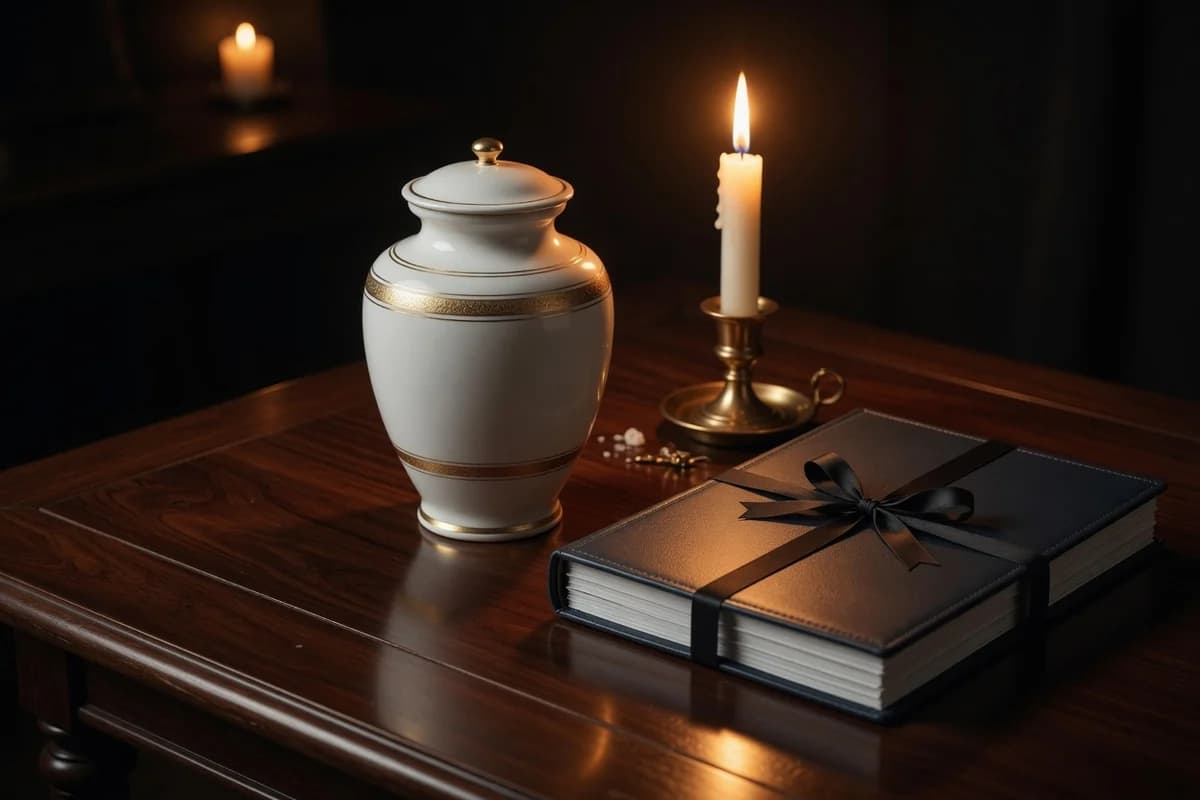
Human cremation is the procedure by which the deceased's body is reduced to ashes in an authorized crematorium. Three crematoria operate in Romania: Vitan-Bârzești in Bucharest, Pro Ignis in Cluj-Napoca, and Phoenix in Oradea. The process takes 5-7 days from death to urn delivery, and the complete package cost (transport, compatible casket, crematorium fee, urn) starts at 4,900 RON — generally 30-40% cheaper than traditional burial. For a side-by-side comparison, see our guide on cremation vs burial. Cost details: cremation prices.
human cremation — authorized crematoria. Illustrative image.
ROMANIA · 3 CREMATORIA
Authorized crematoria in Romania
Three authorized human crematoria operate in Romania, strategically distributed to cover the entire country. Choice depends on death location and available time — all three operate per Romanian Law 102/2014.
ROMANIA · 3 AUTHORIZED CREMATORIA
Vitan-Bârzești · Bucharest
Bucharest + Ilfov + southeast
Wait:
4–7 days
Fee:
~900 RON adult
Pro Ignis · Cluj-Napoca
Transylvania + Banat
Wait:
2–4 days
Fee:
~850 RON adult
Phoenix · Oradea
Western + northwestern
Wait:
1–3 days
Fee:
~800 RON adult
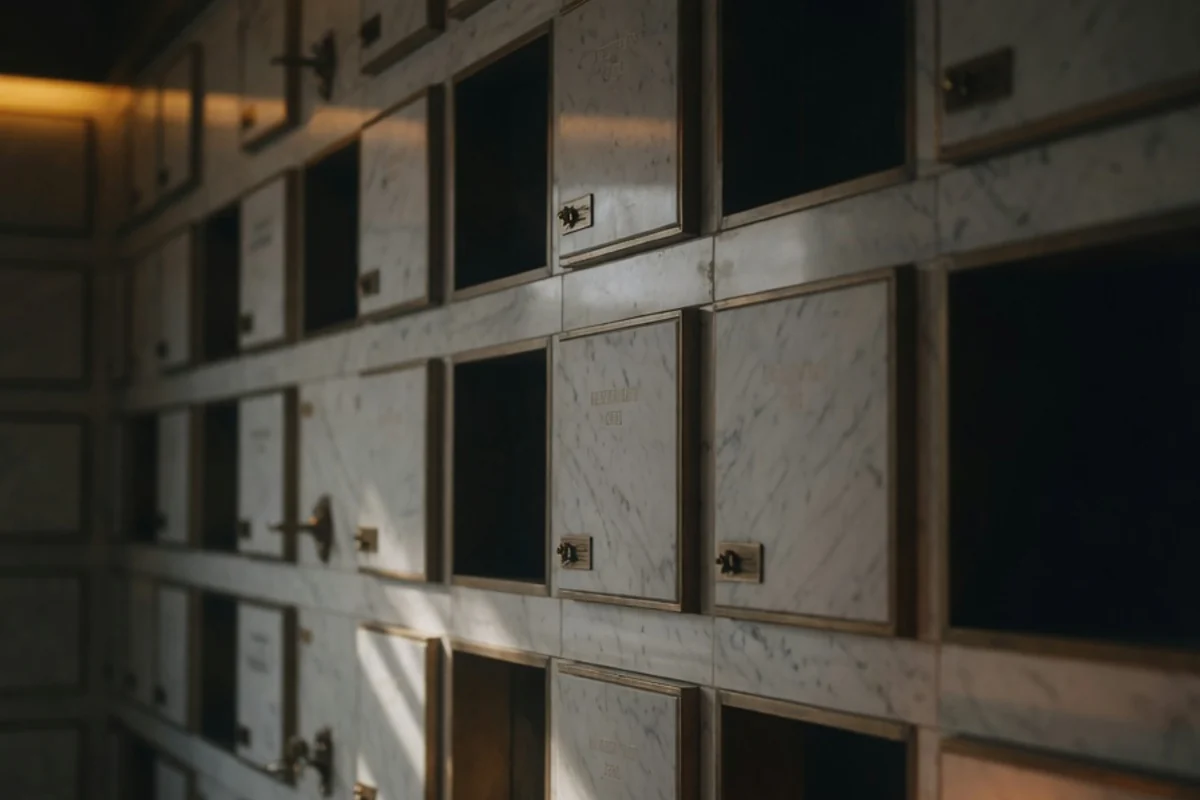
Illustrative image: columbarium niches — one of the urn placement options after cremation.
What human cremation means
Human cremation is a funeral method where the deceased's body is placed in a special oven at temperatures between 800 and 1000°C for 1.5-3 hours. The result is approximately 2-3 kg of ash for an adult, placed in a funeral urn.
The procedure is regulated in Romania by Law 102/2014 and the technical norms of each crematorium. Only DSP-authorized crematoria may perform cremations — currently 3 nationwide, with significantly growing demand over the past decade.
Romania's first crematorium, named "Cenușa" (Ash), opened in Bucharest in 1928. It was one of the earliest crematoria in southeastern Europe and operated for decades before closing. The three crematoria operating today all opened after 1990.
Cremation remains considerably less common in Romania than in Western Europe — in the United Kingdom, for example, it exceeds 70% of all funerals. In Romania, cremation is chosen by a growing minority of families, concentrated largely in Bucharest and the larger cities where crematoria are accessible.
For the diaspora, the choice is often practical: a cremation urn is far simpler and cheaper to ship internationally than a sealed casket, and many Romanian families abroad arrange for cremation in Romania before flying the urn to a final resting place in Western Europe. After cremation, the urn can be placed in a columbarium niche or burial plot.
The 3 authorized Romanian crematoria
Vitan-Bârzești Crematorium (Bucharest, Sector 4) — largest and most-requested. Waiting time 4-7 days. Crematorium fee ~900 RON adult, ~600 RON child. Covers most cases from Bucharest and Ilfov.
Pro Ignis Crematorium (Cluj-Napoca) — second largest. Waiting time 2-4 days. Covers Transylvania and Banat.
Phoenix Crematorium (Oradea) — newest. Waiting time 1-3 days. Covers western Romania and north-western Transylvania.
Documents for cremation — Romanian and foreign citizens
The paperwork required for cremation is slightly more extensive than for burial, because cremation is irreversible and Romanian law requires an additional sanitary clearance specifically for cremation. We handle all of this on the family's behalf.
For Romanian citizens: civil death certificate (issued by the Civil Status office), medical death certificate (issued by doctor or hospital), valid ID of the person requesting cremation, the cremation clearance issued by the town hall's civil status office.
For foreign citizens additionally: clearance from the diplomatic mission (embassy or consulate) of the country of citizenship and, where applicable, certified translations of documents issued abroad. The exact list differs by country — we confirm it on the first call.
In all cases, the deceased's casket must be crematorium-compatible: plain combustible wood, no zinc lining, no metal handles.
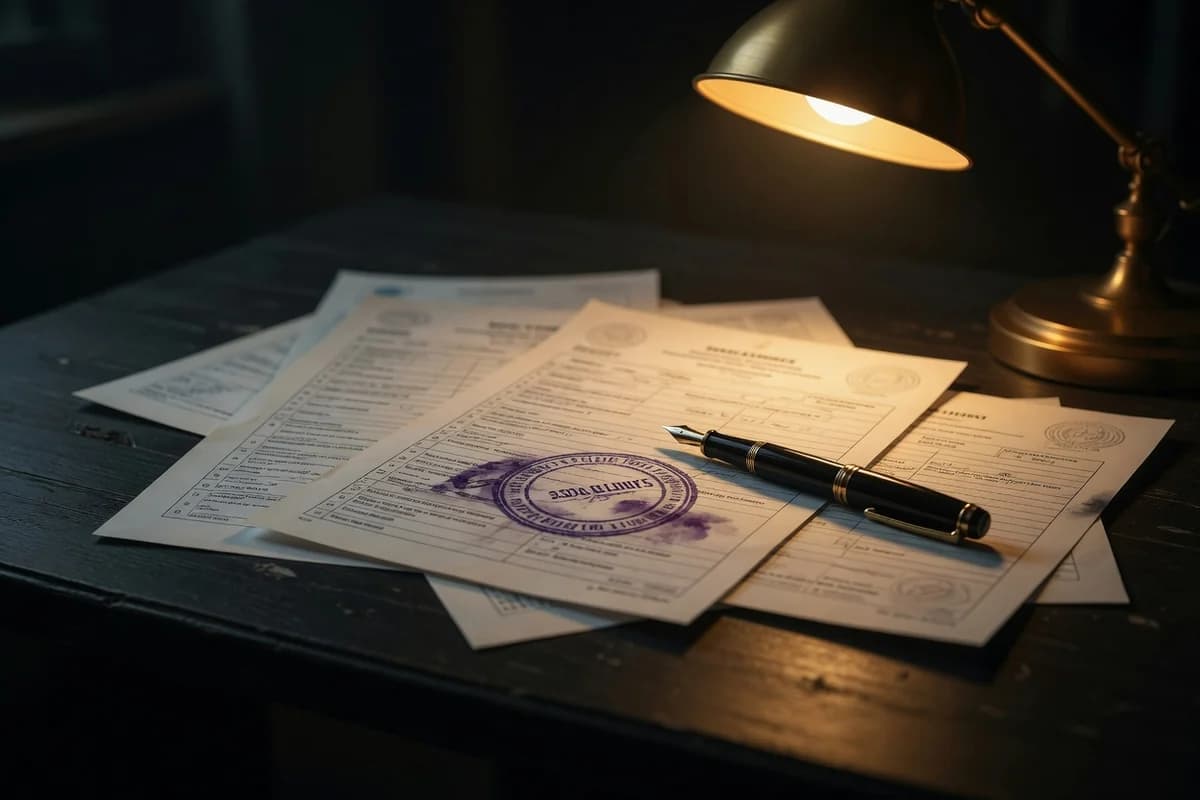
Illustrative image: the paperwork set required for cremation — civil death certificate, medical certificate, sanitary clearance.
When cremation is chosen
Family has no concessioned burial plot and doesn't want the associated costs (10,000-30,000 RON in Bucharest)
Deceased expressed cremation preference (funeral testament or known verbal wish)
Ecological or practical reasons — cremation occupies much less physical space than a burial
Repatriation of an urn from abroad is much simpler and cheaper than a casket
Cheaper urn space — a columbarium niche costs 3,000-8,000 RON vs. a burial plot 10,000-30,000 RON
Mixed-religion families where a complete religious service isn't imperative
How the cremation procedure unfolds
Day 1: pickup of the deceased from hospital, home, or morgue. Issuing the medical certificate and preliminary documents. Preparation for the ceremony — embalming per crematorium norms, dressing, cosmetics.
Day 2: issuing the civil death certificate from Civil Status office and the special sanitary clearance for cremation. Scheduling the slot at the chosen crematorium (based on availability).
Days 3-6: waiting for the crematorium slot. The family may organize a short wake or farewell ceremony.
Ceremony day: transport to crematorium, short farewell ceremony (may include a short religious service depending on confession), the actual cremation (2-3 hours).
3-5 days after cremation: the funeral urn is ready and handed to the family. The family decides where and when to place it (columbarium, burial plot, home keeping).
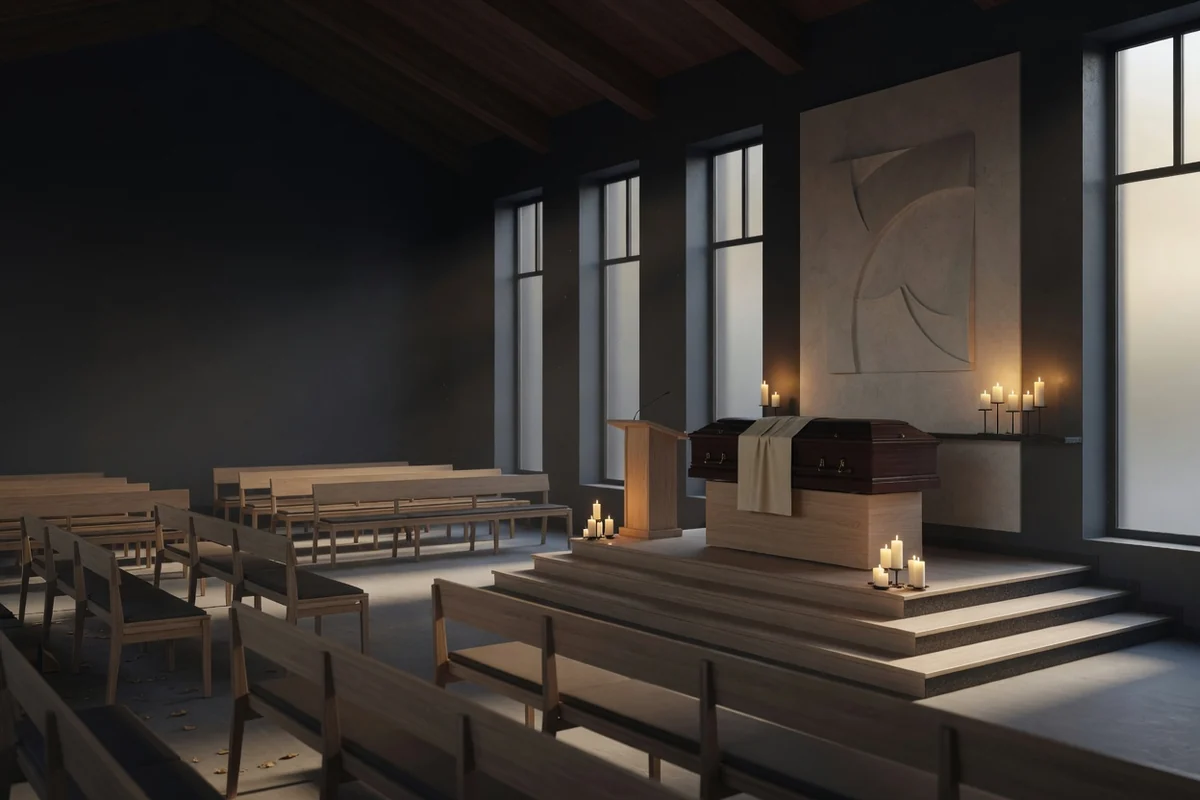
Illustrative image: the farewell chapel at a crematorium, where families gather before the cremation takes place.
What the Cremation package includes
Our Cremation package covers everything from the first call to urn handover, at 4,900 RON.
Item
Included
Pickup of deceased and transport to crematorium
Yes
Body preparation (embalming per crematorium norms, cosmetics, dressing)
Yes
Crematorium-compatible casket (plain wood, no zinc)
Yes
Crematorium fee (Vitan-Bârzești or equivalent)
Yes
All sanitary paperwork and cremation clearance
Yes
Standard urn (wood or metal)
Yes
Urn handover to the designated family member
Yes
Premium urn (decorative, engraved, biodegradable)
Chosen separately
Cremation package — what is included Premium urns are available as an add-on and can be chosen from our catalogue. Columbarium niche or burial of urn is not included in the package price.
How much cremation costs
Total complete-package cost starts at 4,900 RON and includes: pickup of the deceased, transport to crematorium, preparation (embalming per norms), crematorium-compatible casket (plain wood, no zinc, no metal handles), the crematorium fee, scheduling, classic wood or metal urn, and all formalities.
Optional separate costs: premium urn (300-1,500 RON extra), urn location (columbarium 3,000-8,000 RON or separate burial plot), columbarium plaque (200-800 RON), wake or food packages (if family organizes — generally not done with cremation). Browse our full range of funeral urns to choose the right container.
Religious and cultural considerations
Romanian Orthodox Church — does not accept cremation. The Holy Synod decided in 1928, and confirmed again in 2012, that no funeral service and no memorial services are held for those who choose cremation. The exception covers cases where cremation was not the person's wish but was imposed for objective, financial, or legal reasons: then only the bishop may approve, after reviewing the case, the short Trisagion prayer when the urn is laid to rest. The family can hold a non-religious farewell at the crematorium.
Catholic Church — accepts cremation provided the ashes are placed in a consecrated location (cemetery or columbarium), not kept at home or scattered.
Protestant and Neo-protestant confessions — generally accept cremation without restrictions, officiating complete services for cremated persons.
Judaism and Islam — generally don't accept cremation as a funeral option per religious law.
What happens to the soul after cremation, in Orthodox teaching?
The Romanian Orthodox Church does not teach that God cannot raise those who were cremated. It rejects cremation out of respect for the body, and the consequence is practical: for those who chose cremation themselves, no funeral service and no memorials are held. We cannot answer on behalf of the faith; what follows is what the Church's own representatives say.
The reason is respect for the body. A Christian's body was the “dwelling” of the soul and is called to resurrection, so it is laid in the earth, following the burial of Christ. The issue is not God's power to raise the dead — Church representatives have said so plainly.
For those cremated against their will, for financial or legal reasons, the bishop may make an exception, as described above.
What you can do: if the decision is not yet made, speak with the parish priest first. If cremation was imposed for financial or legal reasons, the priest can guide you in asking the bishop. If you want cremation for yourself, put your wish in writing — see funeral wishes in a will. Other denominations follow different rules, listed in the section above.
Are flowers brought to a cremation?
Yes. Flowers mean the same as at a burial: respect for the person who died and support for the family. They are brought to the wake and to the farewell ceremony before the cremation, in the crematorium chapel or wherever the ceremony is held.
The difference comes after the ceremony. On that day there is no grave on which to lay the wreaths. The family decides where the flowers go: they stay in the chapel, go to the place where the urn will rest, or are taken home. At later memorials, flowers are placed by the urn — at the columbarium, at the grave, or at home.
If you want to send a wreath, ask the family where and when the ceremony is held and choose one suitable for a chapel. See our funeral wreaths.
Personal items, safety, and identification
Before cremation, a pacemaker and any other battery-powered device are removed, because they can explode in the cremator. Jewellery and valuables are removed or recorded in a declaration of metals and precious items, which goes into the cremation file (Government Decision 741/2016, art. 38).
If you would like to place something in the casket — a letter, a photograph, a small wooden icon — tell us beforehand. The rules require the casket to be made of materials free of chlorine compounds, rubber, and heavy metals (Government Decision 741/2016, art. 31 and 37), so we avoid items made of plastic, rubber, or metal. We tell you what the chosen crematorium accepts.
Safety: authorised crematoria filter the combustion gases and monitor both the cremation and the emissions (Government Decision 741/2016, art. 36). Each cremation is entered in a register, with its start and end time.
Identification: the person to be cremated wears a bracelet with their name, sex, and date of birth, fitted by the funeral home that transports them (Government Decision 741/2016, art. 39). Cremating an unidentified person is prohibited, and the urn is handed over against a signed record.
After cremation, the remains are cooled, any metal parts are separated, and the bone fragments are ground into fine ash. This is what goes into the urn.
Can the family attend? The farewell ceremony takes place beforehand, in the chapel. Access to the cremation itself depends on each crematorium's rules; we tell you when we book the slot.
Talking about cremation with your family
Cremation cannot be undone. That is why it helps to discuss the decision early, with those closest to you.
Talk openly about the reasons: the person's wishes, cost, a burial plot, distance. The pros and cons are set side by side in our guide on cremation vs burial.
Consider the family's faith. For Orthodox families, the Church's position is described above; a conversation with the priest beforehand is worthwhile.
Decide where the urn will rest: columbarium, burial plot, or home. See where to keep the urn.
The cremation request is signed by one person, designated under the law (Government Decision 741/2016, art. 35). It is best if the family agrees before it is signed.
If you want cremation for yourself, put your wish in writing. The law allows it to be expressed in a notarial deed or by designating a person to handle the arrangements.
What is water cremation (aquamation)?
Water cremation — technically called alkaline hydrolysis or aquamation — uses no flame. The body is placed in a closed vessel with water and an alkaline solution, which are heated. After a few hours only the bones remain; they are ground into a white powder and returned to the family, like ashes.
It is used in a number of US states. In Europe, the first facility opened in Ireland in 2023. Other European countries are considering it.
Water cremation is not available in Romania as of the date this page was last updated. Romania's authorised crematoria use flame cremation only.
What happens to the urn after cremation
Placement in columbarium — special wall at the crematorium or cemetery, with individual niches closed with inscribed plaques (3,000-8,000 RON per niche)
Burial in existing or new plot — much reduced price vs. standard burial (small urns, no large casket). The rules require a depth of at least 0.5 m (Government Decision 741/2016, art. 40).
Home keeping — the crematorium hands the urn to the family, and many families choose to keep it at home
Scattering in nature — there is no dedicated rule in Romanian law, and local rules may differ. Ask the local authority and get the landowner's consent.
Illustrative image: the moment of urn handover — a crematorium staff member presenting the sealed urn to a family representative.
LOCAL COVERAGE
Where do we provide cremation in Bucharest and Ilfov?
We cover all six sectors of Bucharest and the towns of Ilfov county. Pick your area for local details: arrival times, cemeteries and nearby landmarks.
Select Bucharest or Ilfov for local cremation pages.
FREQUENT QUESTIONS
What families ask about cremation at authorized crematorium
How long from death to receiving the urn?
On average 5-7 days, depending on slot availability at the chosen crematorium. Vitan-Bârzești (most requested) has 4-7 days wait. Pro Ignis Cluj — 2-4 days. Phoenix Oradea — 1-3 days. After actual cremation, the urn is handed to the family in 3-5 days.
When and how is the urn handed over — especially if we are flying in from abroad?
The urn is ready 3-5 days after the cremation itself. Handover is done in person at our premises or at the crematorium, to whoever the family designates. If you are flying in from abroad, tell us your arrival date when you call — we schedule the handover to coincide with your visit so you don't need to make a separate trip. If you cannot come to Romania at all, the urn can be shipped internationally via a licensed carrier with the appropriate cremation certificate; we handle the paperwork and coordinate the shipment.
What does a cremation farewell ceremony at the crematorium actually look like?
Before the cremation itself, the family can hold a short farewell — a small wake and, depending on confession, a brief religious service. We arrange the slot with the crematorium and prepare everything. For where each confession stands on cremation (Orthodox, Catholic, Protestant), see our guide on cremation and burial compared.
What casket is used for cremation?
The casket must be crematorium-compatible — unburnable wood (pine, poplar), no zinc, no metal handles that don't burn, no toxic chemical impregnations. We provide the suitable casket in the cremation package. A zinc casket (like those for repatriations) cannot be used.
Which crematorium is closest to me?
For Bucharest and Ilfov — Vitan-Bârzești (in Sector 4). For Transylvania (Cluj, Mureș, Sibiu, Bistrița, etc.) — Pro Ignis Cluj. For Banat and northwestern Romania (Bihor, Satu Mare, Maramureș, Arad, Timiș) — Phoenix Oradea or Pro Ignis Cluj. For the rest of the country, we organize transport to the closest crematorium.
How much does cremating a child cost?
The fixed crematorium fee is lower for children — approximately 600 RON at Vitan-Bârzești (vs. 900 RON for adults). The complete package for a child starts at 3,200 RON (with appropriately-sized casket and special urn). These are delicate cases — we discuss all details with maximum care and respect.
What if the family cannot come to Romania to collect the urn?
The urn is ready 3-5 days after the cremation. It can be handed to a representative designated by the family, or — if you cannot come to Romania at all — shipped internationally via a licensed carrier together with the cremation certificate; we handle the paperwork and coordination. For all legal placement and scattering options, see our guide on the comparison guide.
How much does a columbarium niche cost for an urn?
Between 3,000 and 8,000 RON, depending on location and size. At Vitan-Bârzești Crematorium there's an on-site columbarium. In cemeteries Reînvierea, Tudor Vladimirescu, Bellu and others in Bucharest there are public columbaria. The niche includes an inscribed plaque holding the urn. Concession is usually 7-15 years, renewable.
Can I keep the urn at home instead of placing it somewhere?
Yes. The crematorium hands the urn to the family, and many families keep it at home to stay close to their loved one, in a quiet, safe place such as a shelf or cabinet. Note that the Orthodox Church holds no memorials for those who chose cremation themselves, and the Catholic Church asks for the urn to rest in a consecrated place.
What does “cremated” mean?
It means the body of the person who died was reduced to ashes in an authorised crematorium, and the ashes were placed in an urn. In Romanian the word is “incinerat”. The alternative is burial — in the ground, in a casket.
What happens to the soul after cremation, according to the Orthodox Church?
The Romanian Orthodox Church does not say that God cannot raise those who were cremated. It rejects cremation out of respect for the body, which is called to resurrection. In practice, no funeral service or memorials are held for those who chose cremation themselves. For a question of faith, speak with the parish priest.
What personal items can go in the casket for cremation?
Small items that burn cleanly — a letter, a photograph, a small wooden icon. Plastic, rubber, and metal are avoided. Jewellery is removed or recorded in the declaration of valuables, and a pacemaker is removed. Tell us in advance what you would like to include.
Is water cremation available in Romania?
No, not as of the date this page was last updated. Romanian crematoria use flame cremation only. Water cremation (alkaline hydrolysis) is offered in a few countries, for example Ireland and some US states.