
What does „licensed funeral transport” mean?
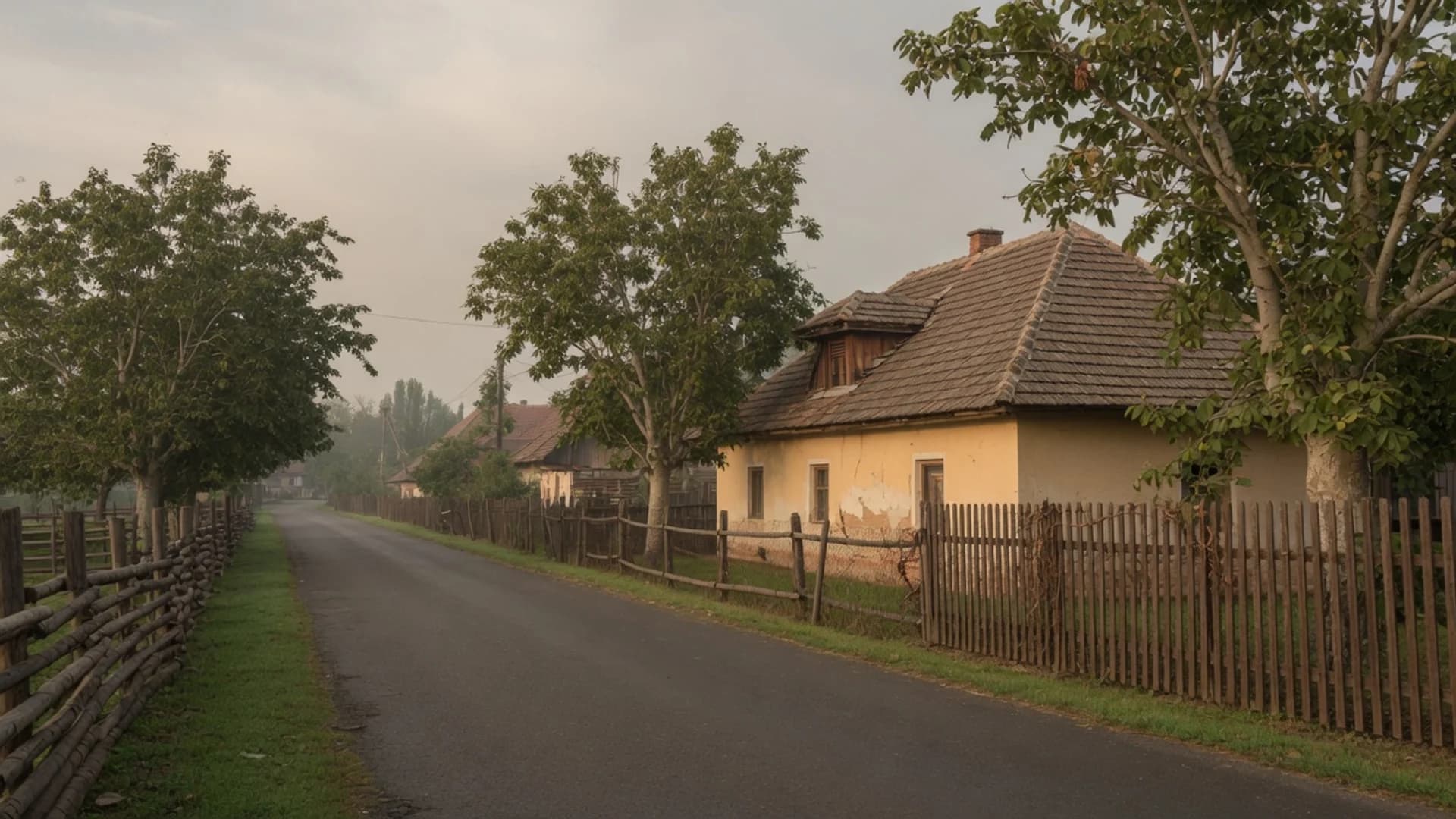
Funeral transport is regulated by Romanian Law 102/2014 on funeral services, supplemented by Law 246/2018. Only companies with DSP (Public Health Directorate) authorization may transport the deceased on public roads. The funeral hearse must meet strict hygiene, ventilation, and sealing standards. In the capital, by district: funeral services Bucharest.
We have a sanitary-licensed hearse and personnel with valid sanitary certifications for handling the deceased. For each transport, we obtain the required sanitary clearance — for local operations as well as inter-county or international transfers.
Romanian Law 102/2014 (in Romanian)When funeral transport is performed
- Pickup of the deceased from hospital, after the medical certificate is issued
- Pickup from home, after death confirmation by family doctor or SMURD
- Pickup from morgue, after autopsy or forensic examination
- Transfer to chapel or church for the wake
- Transport to cemetery for the burial ceremony
- Transport to crematorium for the cremation ceremony
- Inter-county transfers (deceased picked up in one county, buried in another)
- International repatriations — pickup from abroad, transport to Romania
How a funeral transport unfolds
The family calls us at the first call. An advisor takes the details — pickup location, destination, whether prior embalming is needed. We agree on the optimal time and dispatch with the licensed hearse plus certified personnel.
At the pickup location, the team handles the deceased with the provisional or final casket (depending on logistics), signs the handover with the doctor or attending personnel, and transports to destination. At destination, we dispatch the deceased to the designated place — chapel, mortuary refrigerator, casket for the wake.
For inter-county or international transfers, additional steps are: special sanitary clearance, possible zinc-lined embalming, the mortuary passport for international transport, coordination with consulates or local authorities.
Our fleet and equipment
Every vehicle we use for transporting the deceased holds current DSP (Public Health Directorate) sanitary authorization under Romanian Law 102/2014 and HG 741/2016. Authorization covers the vehicle, the crew, and the facilities — not just the company.
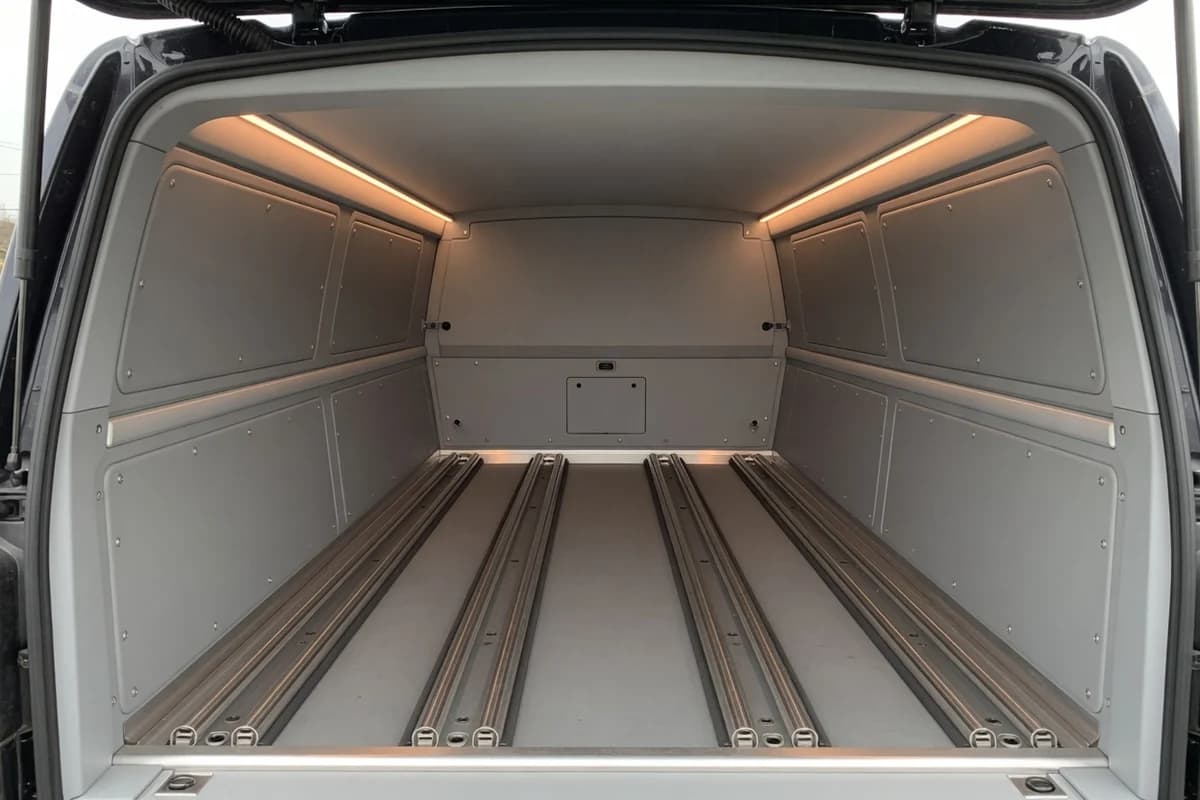
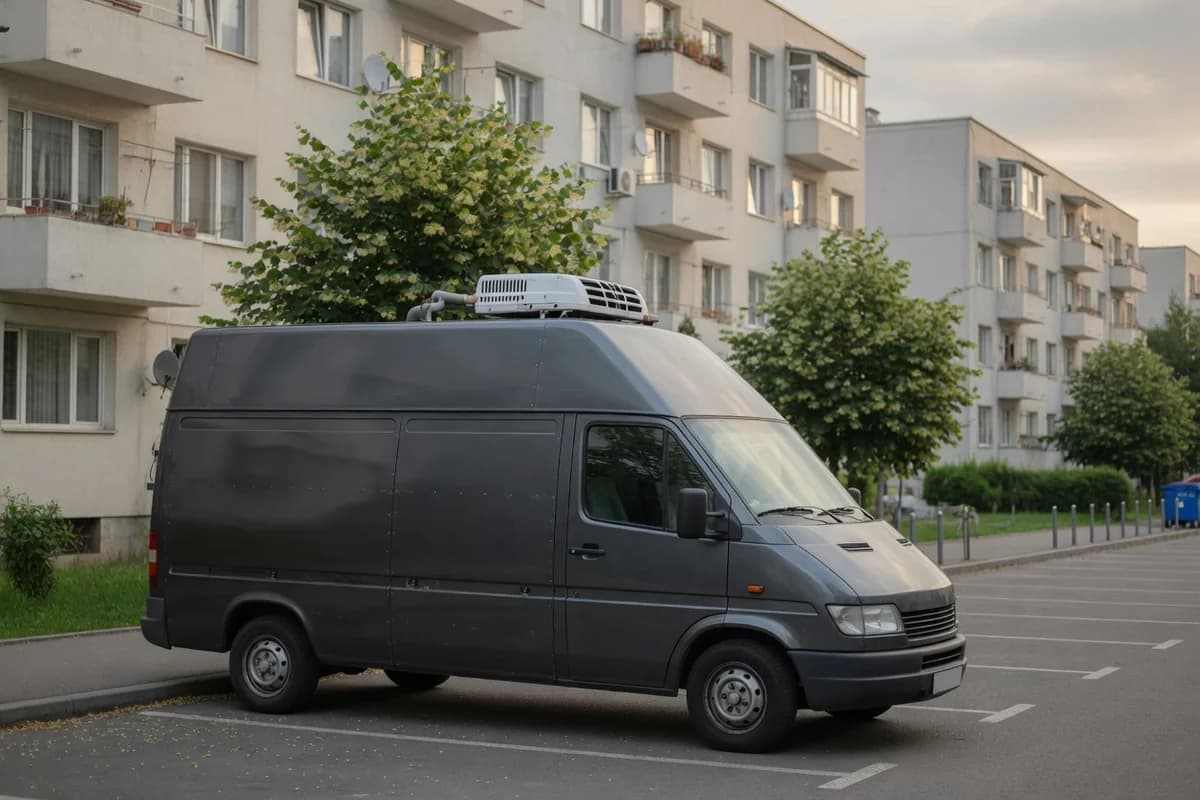
Our primary vehicle is a licensed funeral hearse with a climate-controlled compartment, gurney rails, and full internal sealing. For longer transfers or cases where refrigeration is needed before preparation, we also operate a refrigerated mortuary van — this keeps the deceased in stable condition during transport, avoiding any need to rush the family's decisions.
Every transport includes: a regulation-compliant stretcher, sealed transport covers, and full chemical disinfection of the vehicle interior after each use. Disinfection records are available for inspection by DSP at any time.
How much funeral transport costs
Indicative prices below are for standalone transport (i.e., not bundled in a package). When transport is part of a complete funeral package, it is priced within that package.
| Transport type | Indicative price | What it includes |
|---|---|---|
| Transport typeFuneral van (Bucharest) | Indicative pricefrom 400 RON | What it includesLicensed van, certified crew, sanitary clearance, pickup and delivery |
| Transport typeFuneral hearse (Bucharest) | Indicative pricefrom 750 RON | What it includesLicensed hearse, certified crew, climate-controlled compartment, sanitary clearance |
| Transport typeBeyond 100 km (domestic inter-county) | Indicative price+4 RON/km beyond the first 100 km | What it includesAdded on top of base fee; includes crew time and return journey costs |
| Transport typeInternational repatriation | Indicative priceOn request — see repatriation page | What it includesZinc embalming, sealed casket, mortuary passport, consular coordination; quote within the hour |
Final price is confirmed by phone after we know the pickup and destination addresses. No hidden costs — what we quote is what you pay.
Types of transport we perform
- Local transport — same locality or surroundings (~50 km radius)
- Inter-county transport — pickup in one county, transport to another for burial
- Transport to crematorium — with cremation-compatible casket (unburnable wood, no zinc)
- EU intra-international — Italy, Spain, Germany, France, Austria, etc. with zinc casket
- Extra-EU transport — USA, Canada, other destinations, with mortuary passport and consular formalities
- Domestic urn transport after cremation — simplified procedures, no casket requirements
- Airport pickup — for international repatriations when the deceased arrives by air
Delivery at destination
We deliver the deceased to whichever place the family designates. Most commonly: a chapel at the cemetery or hospital, a mortuary refrigerator for overnight storage before the wake, or directly to the church if the service begins the same day.
At each destination we hand over formally to the attending staff — chapel administrator, hospital mortuary, priest — and provide the family with confirmation. We do not simply leave the vehicle and go: every handover is documented and signed.
When the family has chosen a refrigerated chapel or mortuary — common in summer months or when relatives are flying in from abroad — we coordinate the slot in advance so there is no delay on arrival. For the full list of required paperwork, see our guide on required death documents.

Documents required for transport
- Medical death certificate — issued by doctor or hospital
- Deceased's ID document
- Sanitary transport clearance — we obtain it from DSP on family's behalf
- Embalming certificate — required for burial in another town at least 30 km away, for an open-casket chapel viewing and for international transport
- Mortuary passport — for international transport, issued by DSP after embalming
- Transport permit — for certain border crossings