GUIDE · ORGANISING THE CEREMONY

How to organise a funeral ceremony

In short: organising a funeral ceremony means preparing the farewell — the venue, the order of events, who officiates, who speaks, the music, and the flowers. It is the ceremonial part of the funeral, alongside the administrative formalities, which are covered in the guide on organising the funeral. A well-prepared ceremony gives those present a dignified setting in which to say goodbye. This guide walks you through it, step by step.

Updated: 22 June 20261,650 wordsReviewed by Andrei
sobru.ro — Romanian funeral services
Illustrative image for the guide above.

What organising the ceremony involves

Organising the ceremony is about the farewell itself — the service or civil ceremony, and everything that goes into it. The formalities, transport, and cemetery arrangements are part of organising the funeral, covered in full there.

Here we focus on the ceremony: where it takes place, how it unfolds, who officiates, and who takes part.
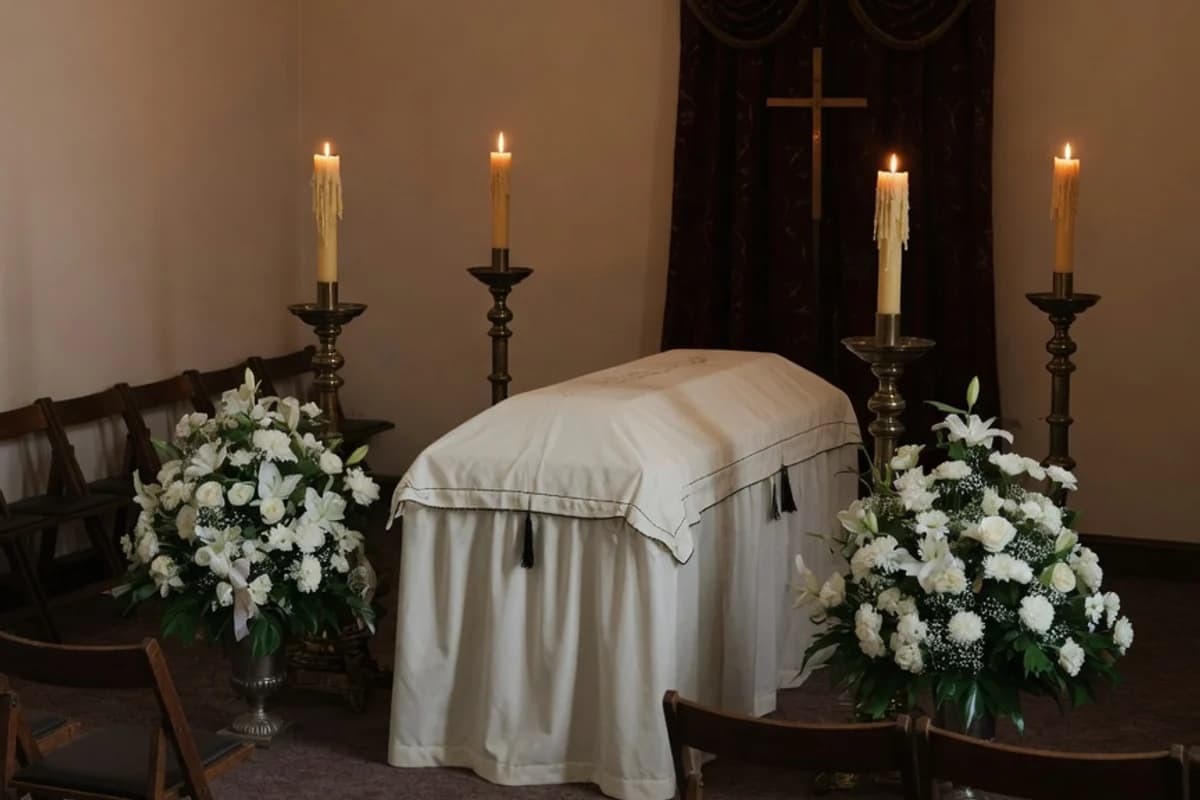
Chapel prepared for a wake: catafalque, candles, flowers
Illustrative image: the farewell ceremony.

Choosing the venue

The ceremony can be held in several places, according to preference and custom:

  • At church, for a religious service
  • At the cemetery or funeral home chapel
  • Directly at the graveside, for a brief ceremony
  • At home, for the wake and a final farewell

Who officiates

For a religious ceremony, a priest officiates, following the order of the funeral service. For a civil ceremony, a celebrant or a close family friend or relative officiates.

The officiant is chosen in advance so they can prepare the ceremony together with the family.

The order of events

A ceremony typically follows a simple thread:

  • Receiving and welcoming those present
  • The religious service or the officiant's address
  • The farewell address and eulogy
  • The final tribute by the coffin
  • The procession and lowering into the grave
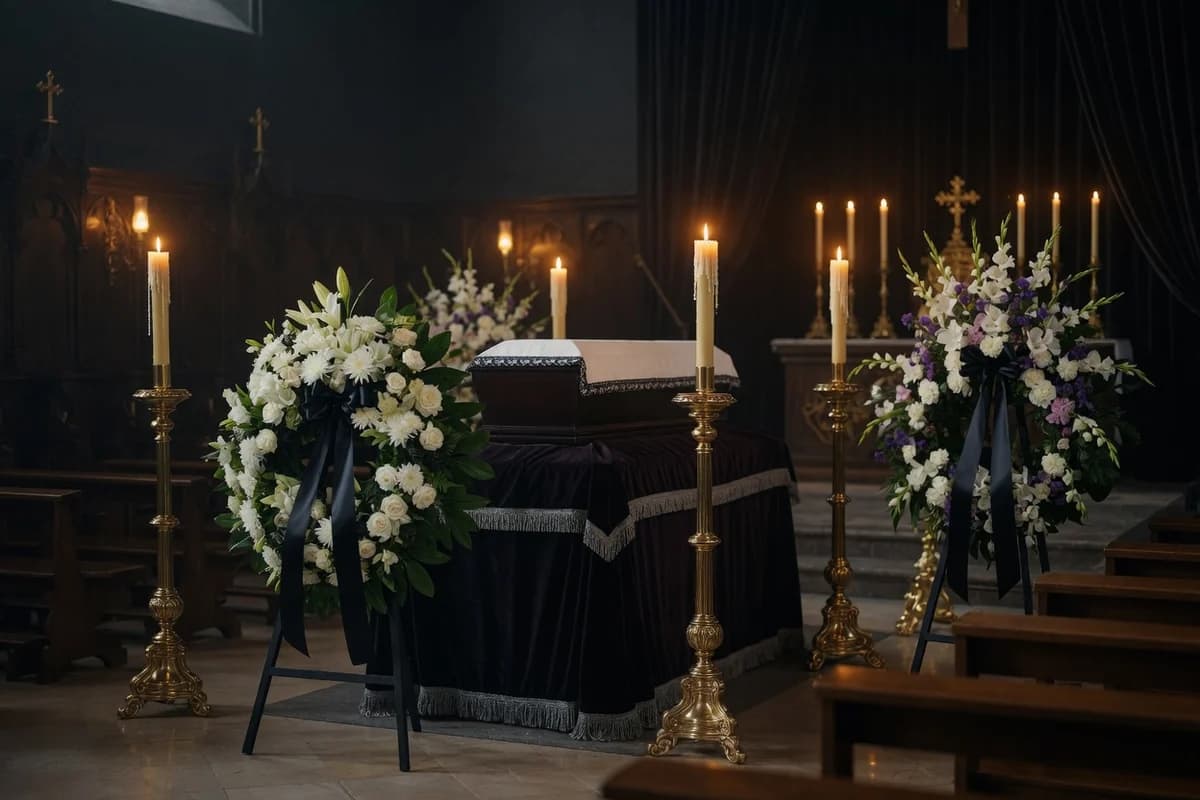
Chapel arranged for a service: tall candles, wreath stands, draped catafalque, no people
Illustrative image: the chapel prepared for the ceremony.

The farewell address

A farewell address read by someone close gives weight to the ceremony. It can be a eulogy or a few sincere memories.

It is best kept short and prepared in advance, so the person can read it calmly in front of those present.

Music and flowers

Music and flowers set the tone of the ceremony. At a religious service, the singing follows the church's order; at a civil ceremony, a piece of music that meant something to the deceased may be chosen.

Flowers — wreaths, sprays, bouquets — are chosen with restraint. See also the guide on which flowers to offer at a funeral.

Notifying people and the announcement

Those close to the deceased are notified through the death announcement, in a newspaper, online, or on social media. The announcement includes the date, time, and venue of the ceremony.

For a ceremony with many attendees, it is worth preparing a suitable space and seating for older guests.

Religious or civil ceremony

The family chooses between a religious ceremony — with a priest and a service — and a civil one, without a religious component. The law recognises both forms.

The choice depends on the faith and wishes of the deceased and the family. Both can be dignified and full of warmth.

Law 102/2014 on cemeteries and funeral services

After the ceremony

After the funeral, many attend the memorial meal (pomana), as is customary. See also the guide on memorial meals and pomeni.

This is also the time to arrange the next commemorations — at three days, nine days, and forty days — according to tradition.

How we help

We organise the ceremony from start to finish — the venue, coordination with the priest or officiant, music, flowers, and the procession — so the family can pray and say goodbye.

We answer day and night. For a no-obligation conversation, call us or see our funeral services.

STEP BY STEP

Steps summary

  1. 01

    Choose the venue and form

    Church, chapel, graveside, or home; religious or civil ceremony, according to the faith and wishes of the deceased.

  2. 02

    Arrange the officiant and order of events

    Priest or celebrant, the order of events, the farewell address, music, and flowers.

  3. 03

    Notify and prepare

    Notify those close through the death announcement and prepare the space, seating, and procession.

FREQUENT QUESTIONS

What families ask most often

  • What does organising the ceremony involve?

    Preparing the farewell — the venue, the order of events, the officiant, the farewell address, music, and flowers. The administrative formalities are part of organising the funeral.

  • Where can the ceremony be held?

    At church, at the cemetery or funeral home chapel, directly at the graveside, or at home — for the wake and a final farewell.

  • Who officiates the ceremony?

    For a religious ceremony, a priest. For a civil ceremony, a celebrant or a close friend or relative. The officiant is chosen in advance.

  • What is the order of events at a ceremony?

    Receiving those present; the service or the officiant's address; the farewell address and eulogy; the final tribute by the coffin; the procession and lowering into the grave.

  • Who delivers the farewell address?

    Usually someone close to the family. It can be a eulogy or a few sincere memories. It is best kept short and prepared in advance.

  • What music is chosen?

    At a religious service, the singing follows the church's order. At a civil ceremony, a piece of music that meant something to the deceased may be chosen, in a sober tone.

  • What flowers are used at the ceremony?

    Wreaths, sprays, and bouquets, chosen with restraint. Flowers are placed by the coffin and then taken to the grave. The funeral home helps with arrangements.

  • How do I announce the ceremony?

    Through the death announcement — in a newspaper, online, or on social media — with the date, time, and venue. This lets relatives and friends know so they can be there.

  • Can I choose a civil ceremony?

    Yes. The law recognises both religious and civil ceremonies. The choice depends on the faith and wishes of the deceased and the family.

  • How long does a ceremony last?

    A funeral service usually lasts under an hour, to which the procession and graveside rites are added. A civil ceremony may be shorter.

  • What happens after the ceremony?

    Many attend the memorial meal (pomana), as is customary. The next commemorations — at three, nine, and forty days — are also arranged at this time.

  • Who takes care of the procession?

    The funeral home organises the procession — transporting the coffin and accompanying it to the cemetery — so that everything proceeds with dignity and without hurry.

  • How much of the ceremony can be prepared in advance?

    A great deal — the venue, the officiant, the order of events, the farewell address, music, and flowers. Planning ahead makes things significantly easier for the family.

  • Can the ceremony be personalised?

    Yes, especially for a civil ceremony — music, words, symbols. For a religious ceremony the order of the service is observed, but everything else can be chosen.

  • How do you help us organise the ceremony?

    We organise the ceremony from start to finish — the venue, the officiant, music, flowers, and the procession — so the family can pray and say goodbye.

  • How far in advance should I start planning?

    As soon as the funeral date is set. The venue, officiant, and order of events are prepared in the days before. The funeral home coordinates everything quickly.

  • Can a ceremony be organised without a funeral home?

    In theory yes, but it is difficult — transport, cemetery, paperwork, coordination. The funeral home takes care of everything so the family can focus on saying goodbye.

  • Who decides the order of events?

    The family, together with the priest or officiant. At a religious service the order is given; at a civil ceremony the order is chosen freely.

  • Can there be a ceremony at a cremation as well?

    Yes. A ceremony can be held before the cremation or at the placing of the urn. The form — religious or civil — remains the family's choice.

  • Who carries the coffin?

    Usually male relatives and close friends, or the funeral home's staff. A heavy solid-wood coffin requires more bearers.

  • Can the ceremony be streamed online?

    Yes, on request and with the officiant's agreement. A discreet live stream helps relatives abroad who cannot attend to still be present.

  • What if relatives are abroad?

    The ceremony can be delayed to await their arrival, within the available time, or streamed online. We set the date together, taking account of everyone close.

  • Who speaks at the ceremony?

    The priest or officiant, and, if wished, close friends or family members who say a few words or read the eulogy. It is best to inform them in advance.

  • Can I choose the music?

    At a civil ceremony, yes — a piece that meant something to the deceased. At a religious service, the singing follows the church's order.

  • What happens to the flowers after the ceremony?

    Wreaths and sprays are taken to the grave and placed on it. Some may be left at the chapel, according to custom and preference.

  • Can the ceremony be kept small?

    Yes. A small ceremony with only family and close friends is an increasingly common choice. We prepare it with the same care as a larger one.

  • What does organising the ceremony cost?

    It depends on the services — venue, transport, flowers, music. We provide a clear breakdown with no hidden costs. See also the guide on what a funeral costs.

  • How many people can attend?

    As many as you wish — from a small family gathering to a large ceremony. We prepare the space and seating based on the expected number.

  • Can religious and civil elements be combined?

    Within certain limits, yes — a short service followed by words and music chosen by the family. We establish with the priest what is appropriate.

  • Who announces the time and venue of the ceremony?

    The family, through the death announcement in a newspaper or online. The funeral home helps you confirm the time with the church and the cemetery so everything fits together.

  • Can candles be lit at the ceremony?

    Yes. Candles have an important place, especially at a religious ceremony. At a civil ceremony too, a lit candle is a gentle symbol of remembrance.

READ ALSO

Related guides

QUESTIONS?

Call us for guidance

We answer day and night. We explain your family's specific situation with no commercial pressure.

0739 592 835WhatsApp