MEMORIAL SERVICES · ORTHODOX TRADITION

Parastas — Romanian Orthodox memorial meals

A parastas is a Romanian Orthodox act of remembrance held at fixed intervals after a death. It combines a short church service (panahida) with a meal shared among family and guests. For diaspora families coordinating from abroad, the timing and customs can be unfamiliar — below is a plain-English guide to what happens, when, and what it costs, with notes on how we organize everything remotely if you cannot be in Romania. For the 2026 dates of the collective memorial Saturdays, see our Orthodox memorial calendar.

Updated:

Traditional glass vigil candles with warm flames
Illustrative image: vigil candles lit for remembrance.

The Orthodox memorial calendar

The Romanian Orthodox Church marks remembrance at set intervals after death. Each interval has a name and a specific church service (panahida or parastas). The table below lists the standard moments. The 3-month and 6-month marks are local Romanian custom rather than strict canonical law — they are widely observed but not universal across all parishes.
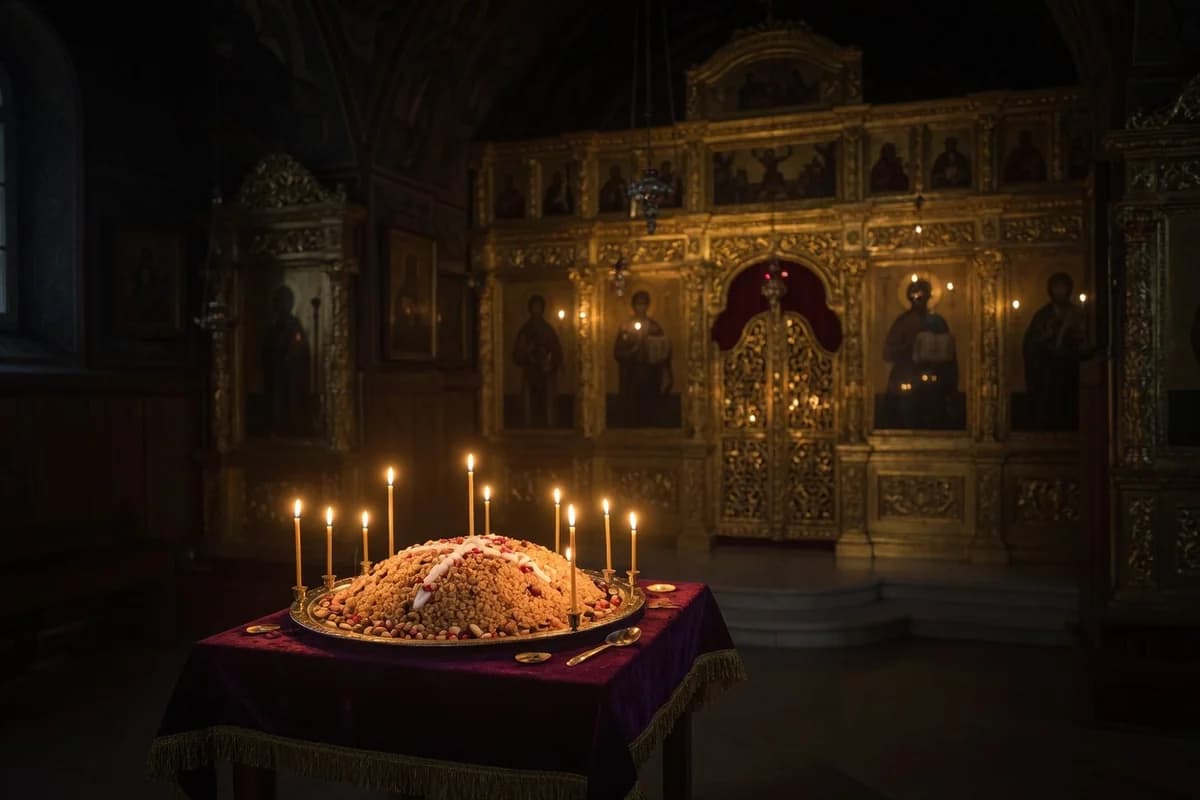
Orthodox church interior with a small memorial table holding koliva and lit candles before the altar
Illustrative image: candles and wheat koliva prepared for a church memorial service.
IntervalRomanian nameTypical observance
3 daysA treia ziShort service at church; close family only
9 daysA noua ziShort service; marks end of the first mourning period
40 daysPatruzeci de zileMajor service + full memorial meal; most relatives attend
3 monthsTrei luni (local custom)Shorter service; immediate family
6 monthsSase luni (local custom)Service + small meal; immediate family
9 monthsNoua luni (local custom)Optional; depends on parish and family
1 yearParastas de un anMajor service + full meal; often coincides with monument raising
2, 3, 4, 5, 6 yearsAni intermediariAnnual services on death anniversary
7 yearsSapte aniFinal major parastas per tradition; memorials become occasional after
Mosii (seasonal)Mosii de vara / Mosii de toamnaCollective remembrance Saturdays; bring koliva to church
Orthodox memorial intervals Dates are counted from the calendar day of death, not from the burial date.

Coliva — meaning and preparation

Coliva is the central element of every parastas. It is made from boiled wheat grains mixed with ground walnuts, honey or sugar, vanilla, and cinnamon — then shaped into a mound, covered with icing sugar, and decorated with a cross and the deceased's initials in chocolate or raisins.

The symbolism comes from the Gospel of John (12:24): the grain of wheat that falls into the earth and dies, then bears much fruit. The candle placed in the centre of the coliva represents the soul still burning. After the church service the priest blesses the coliva, then it is distributed to all those present — a spoonful each, eaten in silence or with the words „Dumnezeu sa-l/s-o ierte” (God forgive him / God forgive her).

We make coliva and ritual breads (cozonac de pomenire, colaci) to order. Both are included in every parastas package we offer — the family does not need to source them separately.
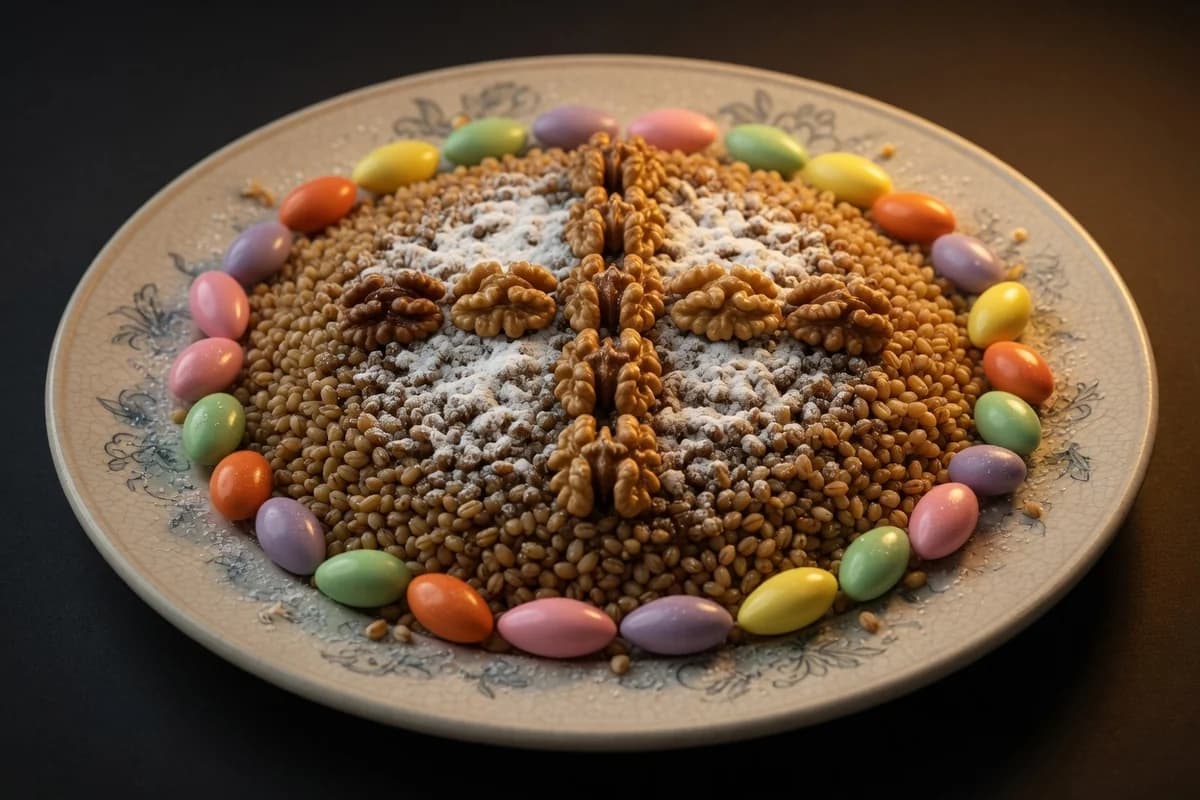
Traditional koliva: boiled wheat, a walnut cross, powdered sugar and coloured sweets at the edge
Illustrative image: decorated coliva with cross and candle, ready for the church service.

The memorial meal: what is served, fasting rules, and address formulas

The meal after the church service is called masa de pomenire (remembrance meal) or agapa. It is not a celebration but a solemn sharing of food in the memory of the departed. The tone is quiet; alcohol is present but not the focus.

Fasting rules apply when the parastas falls during a Church fast (Advent, Great Lent, Apostles' Fast, Dormition Fast). During a strict fast, the meal is vegan: no meat, no dairy, no eggs. We adapt the menu accordingly — inform us when you book.

For Mosii Saturdays (collective remembrance), the meal is brief: coliva distributed at the cemetery or church gate, sometimes with bread and a small glass of wine.

Two address formulas you will hear and may want to use: „Dumnezeu sa-l ierte” (God forgive him) or „Dumnezeu sa-o ierte” (God forgive her) — said when handing someone a piece of coliva or bread. „Vesnica pomenire” (Eternal remembrance) is chanted by the choir at the end of the service. Both are appropriate to repeat as a guest.
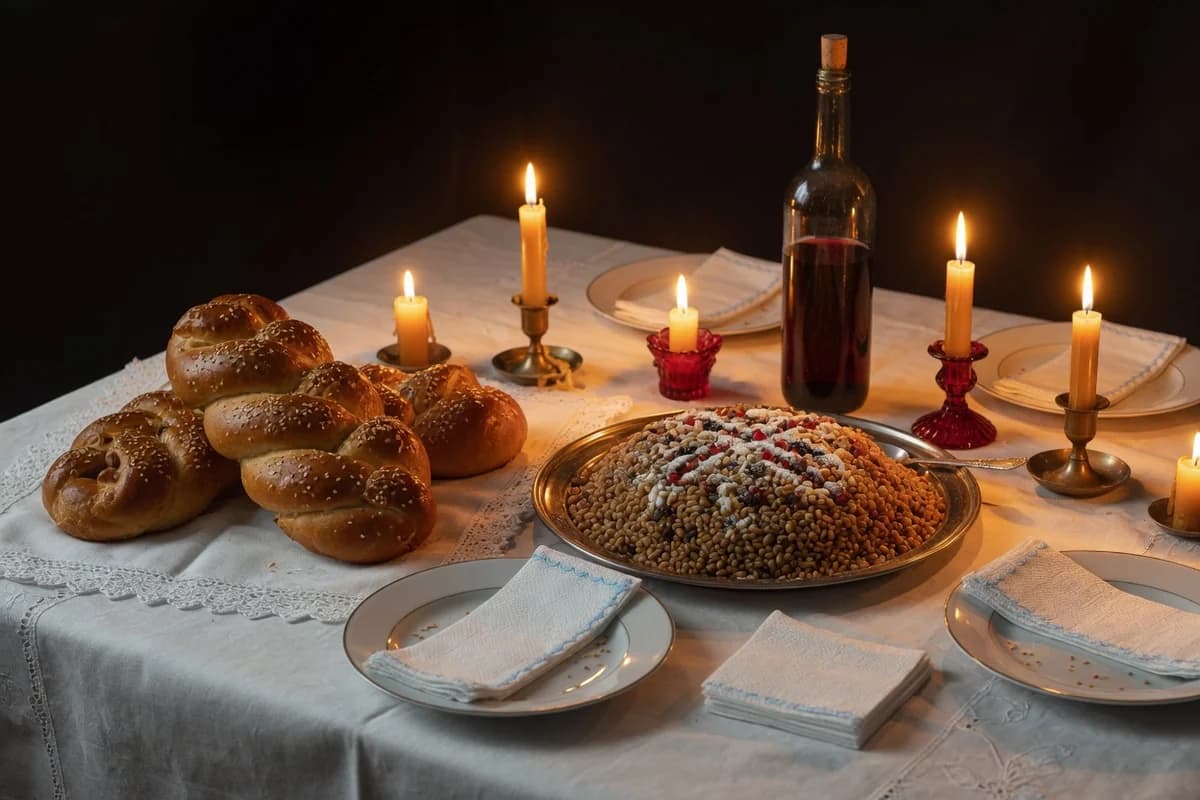
Parastas table: braided loaves, koliva, red wine, candles and plates on white cloth — no people
Illustrative image: laid table with coliva, ritual breads, wine, and candles for a 40-day memorial meal.

What we organize — concretely, including from abroad

We handle the full logistics: church coordination (priest and cantor fee, included in our service fee), coliva and ritual bread preparation, meal delivery or catering setup at the agreed location (home, cemetery chapel, or restaurant), table setup, and on-site assistance throughout. The Traditional funeral package includes the first memorial meal after burial.

For families based abroad, remote organization works as follows. You contact us by phone or WhatsApp, tell us the date and guest count. We confirm the church slot, prepare the food package, and on the day we send you photos of the setup before guests arrive. Video call connection during the service or meal is possible if you want to participate from a distance. Payment is made by bank transfer or card — no need to be present in Romania.

The 40-day parastas is the most frequently organized remotely. Many diaspora families time it on a Friday or Sunday so relatives in Romania can attend, while the family abroad joins by video.

PackageGuestsIncludesPrice
Simple (3 or 9 days)6-8Coliva, ritual breads, wine, candles200-800 RON
40-day complete12-16Coliva, breads, wine, cooked food, salads, sweets, delivery, assistance1,200-2,000 RON
1-year or major parastas16-24All of the above, extended quantities, church coordination2,000-3,500 RON
Coliva + breads only (add-on)anyColiva made to order + 2 cozonac de pomenireIncluded in all packages
Church coordination fee—“, “Scheduling, priest liaison, cantor arrangementIncluded in service fee
Parastas packages — indicative prices 2026 Prices are indicative. Final quote given after confirming guest count, location, and date. Fasting-menu variants available at the same price.

FREQUENT QUESTIONS

Answers to frequent questions

  • When exactly is the 40-day parastas counted from?

    From the calendar day of death — not from the burial date, which may be a day or two later. Count 40 days forward. If the 40th day falls on a weekday, many families move the service to the nearest weekend for practical reasons; this is accepted by most parishes.

  • Can a parastas be organized during Great Lent or another fast?

    Yes. The service takes place as normal. The meal must follow fasting rules: no meat, no dairy, no eggs. We prepare a fasting-compliant menu — coliva and vegetable dishes; fish only on the days when it is permitted. Tell us when you book so we adapt the menu. The coliva recipe itself is always vegan.

  • Can you organize a parastas entirely from abroad?

    Yes, fully. We handle church coordination, food preparation, delivery, and on-site setup. You pay by bank transfer or card. On the day of the service we send photos of the prepared table; video call connection is possible during the meal. The family in Romania attends in person; you follow from wherever you are. Our repatriation service also covers situations where the deceased needs to be brought home before the first memorials.

  • Do we need to order anything separately, or is everything included?

    Nothing needs to be sourced separately. Coliva and ritual breads are made by us and included in the package price. The priest's coordination is part of our service fee. You only pay directly to the church if the parish charges a separate donation at the altar — we let you know in advance if that is the case.

  • What is the difference between parastas and pomana?

    Parastas refers specifically to the church service (panahida) and the structured remembrance meal. Pomana is the broader act of giving — distributing food, objects, or money to the poor or to guests in the deceased's name. In everyday speech the two words are often used interchangeably, but strictly speaking a parastas always involves the church service, while pomana can happen anywhere.

SEE ALSO

Related services or pages

  • Orthodox traditions guide

    Religious considerations for burial and remembrance.

    View details
  • Funeral packages

    Traditional packages include the burial memorial meal.

    View details
  • Funeral monuments

    Monument raising at 40 days or 1 year, per tradition.

    View details

QUESTIONS?

We answer day and night

Consultation is free. We answer any question specific to your family's situation.

MEMORIAL CALENDAR · ORTHODOX TRADITION

7 memorial moments — from 3 days to 7 years

Orthodox tradition marks 7 main memorial moments after death. The most important are the 40-day memorial (traditionally when the monument is raised) and the 1-year. Family may organize additional memorials on the death date or occasionally, as desired.

  1. 3 days· D+3

    First memorial moment

    Short service, immediate family only. Symbolic koliva.

  2. 9 days· D+9

    End of acute grief period

    Brief memorial at home or cemetery. No extended guests.

  3. 40 days· D+40

    Main memorial after burial

    Full church service, memorial meal for 12–16+ guests. Traditionally, monument is raised.

  4. 6 months· M+6

    Intermediate memorial

    Church service, smaller meal (8–12 people). Optional.

  5. 1 year· Y+1

    Major anniversary memorial

    Special service. Extended guest list. Monument raising if not done at 40 days.

  6. 3 years· Y+3

    "Soul completion" per folk tradition

    Full service. Similar to 1-year memorial.

  7. 7 years· Y+7

    Final major memorial

    Afterwards, memorials become annual (on death date) or occasional.

0739 592 835WhatsApp