MEMORIAL SERVICES · COMMEMORATIONS · COLACI

Colaci — ritual breads for commemoration: what they are, what they symbolise, and how they are used

Colaci are ritual breads prepared for the commemoration of the departed, alongside the koliva. They are blessed during the service and distributed to those present and to those in need, as a sign of remembrance and charitable alms for the departed.

Updated:

What are colaci for commemoration?

Colaci are ritual breads — braided or round — prepared for a commemoration. Unlike ordinary bread, a colac has a particular form and a specific purpose: for the service, for distribution, and for the memorial meal.

The colac accompanies the koliva at every commemoration, from the burial to the annual services. It is a bread offering brought in memory of the departed, according to Orthodox custom.
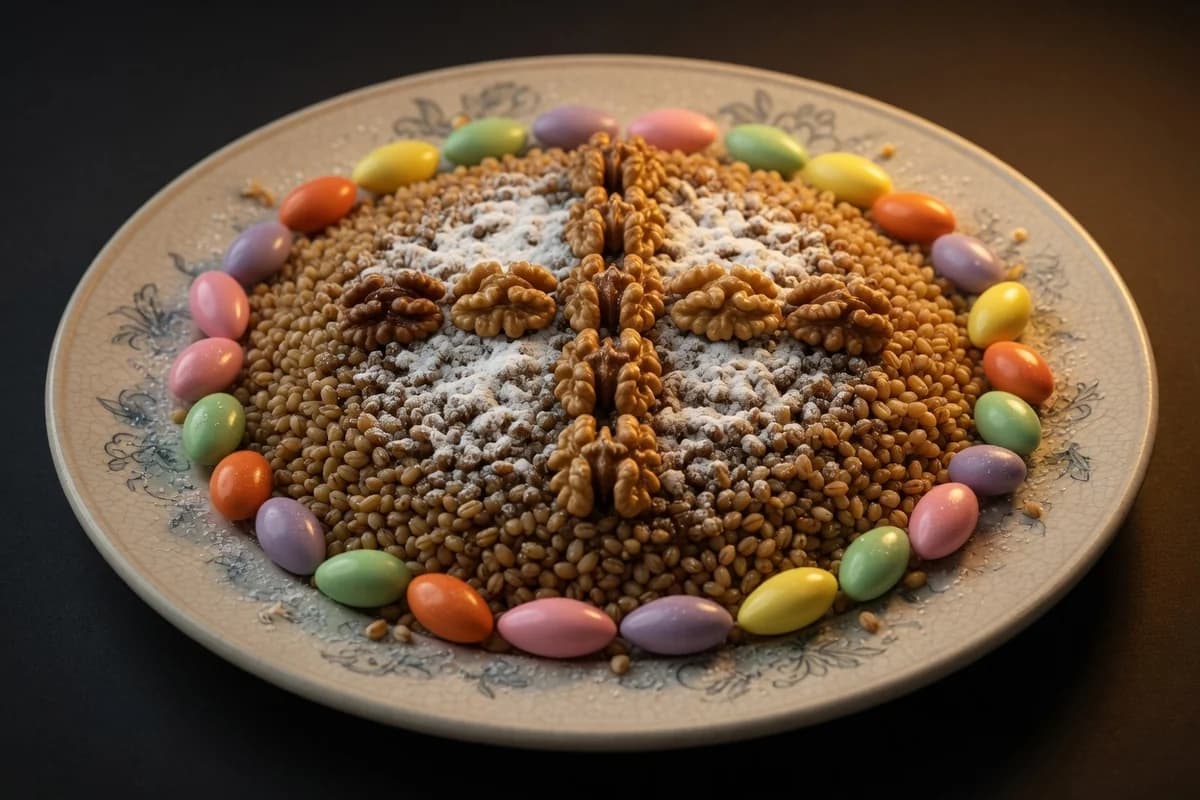
Traditional koliva close-up: boiled wheat with a walnut cross and powdered sugar, coloured sweets around the edge
Illustrative image: colaci and koliva prepared for a parastas.

Types of colaci

There are several kinds of colaci, depending on the occasion and local tradition:

  • The large colac — braided, given to the priest for the service
  • Colăcei — small bread rolls distributed to participants and to those in need
  • Prescura — the bread for the Holy Liturgy, with a stamped seal
  • The head-of-the-deceased colac — placed at the vigil, in some regional traditions
  • Cross-shaped or double-braided colaci — for major commemorations

What do colaci symbolise?

Bread is, in Christianity, the sign of life and of sacrifice. The colac brought to a commemoration recalls the shared bread and the prayer for the soul of the departed.

By distributing the colaci, the family performs charitable alms in the name of the departed. Those who receive a colac pray for the repose of the soul — this is why a colac is never discarded and is received with reverence.

When are colaci used?

Colaci are prepared for every commemorative occasion, alongside the koliva:

  • At the burial — for the service and for the meal of pomană
  • At the 40-day parastas and the other first-year commemorations
  • At the annual commemorations, through 7 years
  • At the Saturdays of the Dead and on the Days of the Moșii

How many colaci are prepared?

The number depends on the commemoration and the number of guests. At a large commemoration, the large colac for the priest and colăcei for all participants are prepared; at a small one, fewer.

Tradition calls for one colac for the priest and a small colac for each person who receives pomană. At the memorial meal, the colaci are placed on the table alongside the koliva.

How are the colaci distributed?

The large colac is given to the priest at the service, together with the koliva and the pomelnic. The colăcei are distributed to those present at church and at the meal, each with a candle, according to the custom of the commemoration.

Some of the colaci are also given to those in need, as pomană. Charity towards the poor is the most valued form of commemoration.
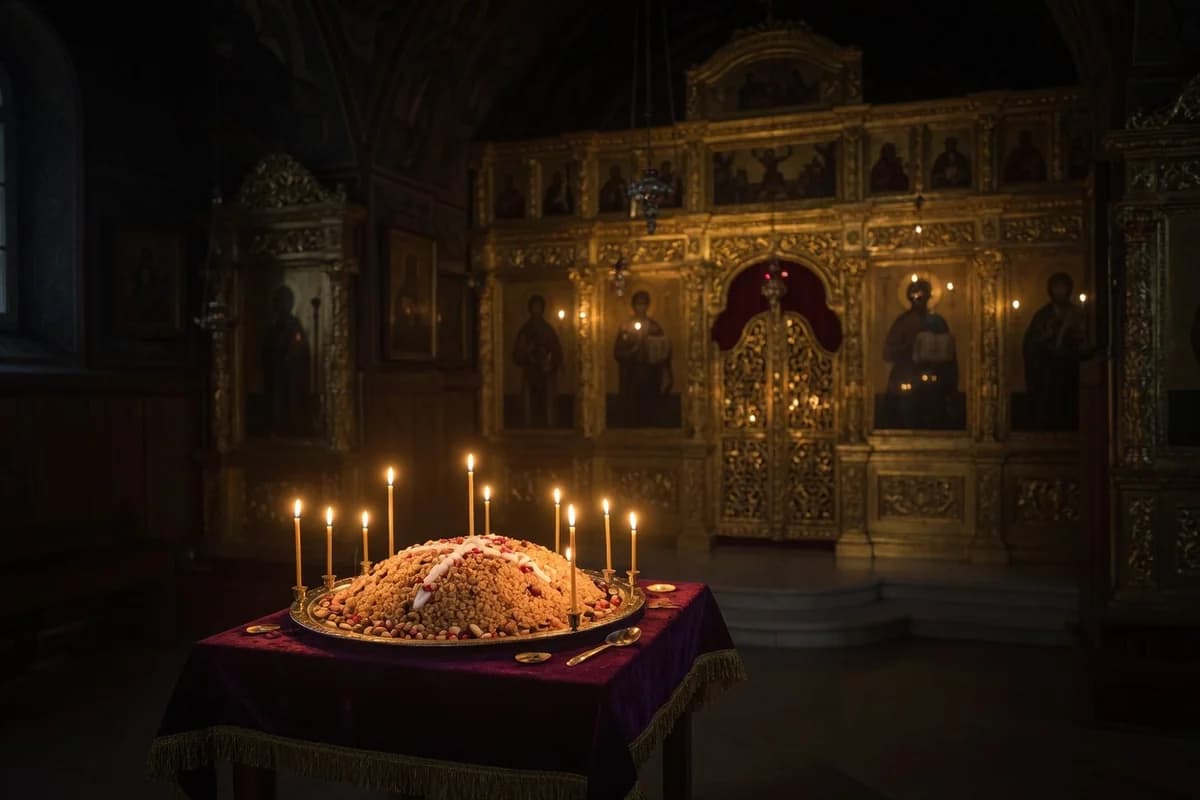
Orthodox church interior with a small memorial table holding koliva and lit candles before the altar
Illustrative image: colaci and koliva brought to the memorial service.

Colaci at the days of the departed

Colaci are not made only for individual commemorations. At the Winter, Summer, and Autumn Moșii, as well as at the Saturdays of the Dead, the faithful bring colaci and koliva to church.

They are given together with the pomelnic listing the names of the departed family members. The exact 2026 dates are in the commemorations calendar.

Colaci prepared by us

For families in mourning, we prepare the colaci according to tradition — the large colac for the priest and the colăcei for participants — and deliver them to the church or the location of the meal.

We coordinate them together with the koliva and the rest of the commemoration preparations. Call us for details or see the free consultation page.

FREQUENT QUESTIONS

Answers to frequent questions

  • What are colaci for commemoration?

    They are ritual breads — braided or round — prepared for commemorating the departed, alongside the koliva. They are blessed during the service and distributed to those present and to those in need.

  • How do colaci differ from ordinary bread?

    A colac has a particular form and a specific purpose — for the service, distribution, and the memorial meal. Ordinary bread is for the table; a colac is a ritual offering.

  • What do colaci symbolise?

    Bread is the sign of life and of sacrifice. The colac brought to a commemoration recalls the prayer for the soul of the departed, and distributing it is an act of charity.

  • How many colaci are needed for a commemoration?

    One large colac for the priest and a small colac for each person who receives pomană. The total number depends on how many guests attend.

  • To whom are the colaci given?

    The large colac is given to the priest at the service. The colăcei are distributed to participants at church and at the meal, and to those in need, as pomană.

  • What is a prescura?

    A prescura is the bread used for the Holy Liturgy, with a stamped seal. It is given to the church separately from the ordinary colaci for commemoration.

  • Are colaci made for every parastas?

    Yes. Colaci accompany the koliva at every commemorative occasion — from the burial to the annual services, as well as at the Saturdays of the Dead and the Moșii.

  • What is done with a colac received at a commemoration?

    It is received with reverence and consumed; it is never discarded. The person who receives the colac prays for the repose of the one being commemorated, according to Orthodox custom.

  • Is a candle given with the colac?

    Yes, a colăcel is usually given together with a candle, especially at commemorations held at church. The candle symbolises light and prayer for the departed.

  • What shape are the colaci for commemoration?

    Usually round or braided. For major commemorations, cross-shaped or double-braided colaci are made. The shape varies according to local tradition.

  • Are colaci made for the Moșii as well?

    Yes. At the Winter, Summer, and Autumn Moșii, as well as at the Saturdays of the Dead, colaci and koliva are taken to church with the pomelnic of the departed.

  • Can the colaci be ordered ready-made?

    Yes. We prepare them according to tradition and deliver them to the church or the location of the meal. It is a practical solution for families in mourning.

  • How much do colaci for commemoration cost?

    It depends on the number and size. We prepare the large colac and the colăcei according to the number of guests, with a clear price communicated in advance.

  • Are colaci made during fasting periods as well?

    Yes, but from fasting dough, without eggs or milk, when the commemoration falls during a fasting period. The form and purpose remain the same.

  • How many colaci are given to the priest?

    Usually one large colac, together with the koliva, wine, and the pomelnic. At some parishes, additional colaci are given to the church's ministers.

  • What is placed on the colac?

    Colaci can be plain or decorated with braiding. Sometimes a candle is placed on top, or they are set beside the koliva at the memorial service.

  • Do colaci differ from region to region?

    Yes. The shape, number, and names vary from region to region. The basis is always the same: ritual bread for commemoration, distributed as charitable alms.

  • Must I make the colaci myself?

    No. You can make them at home, following family tradition, or we prepare them for you. We spare you one concern during a difficult time.

  • Is the colac cut or broken?

    By custom, the large colac is broken or cut and distributed to those present. The gesture of breaking bread recalls its distribution in the name of the departed.

  • Can colaci be made the day before?

    Yes. Colaci are usually baked the day before, so they are fresh for the service. They are kept covered in a cool place until taken to church.

SEE ALSO

Related services or pages

  • Memorial services and commemorations

    Full organisation: koliva, colaci, memorial meal, church coordination.

    View details
  • Koliva for commemoration

    What koliva is, what goes into it, and how it is prepared.

    View details
  • Memorial meal

    The commemorative lunch after the service — organisation and menu.

    View details
  • Pomană — alms for the soul

    The gift given in memory of the departed.

    View details

QUESTIONS?

We answer day and night

Consultation is free. We answer any question specific to your family's situation.

0739 592 835WhatsApp