
When is the 40-day parastas held?
The date is counted from the day of death, including that day itself. At the completion of 40 days, if the date does not fall on a Saturday, the parastas is moved to the nearest Saturday — the day appointed by the Church for commemorating the departed.
If the 40 days fall during Great Lent or in Bright Week after Pascha, the parish priest sets a suitable Saturday from those nearby. Speak with the priest in good time so you can book the service and avoid scheduling conflicts.
The 40-day parastas opens the series of first-year commemorations: 40 days, 3 months, 6 months, 9 months, and one year, then annual commemorations. The full calendar of 2026 Saturdays for commemoration is in the commemorations guide.
Why is it the most important commemoration?
In Orthodox tradition, at 40 days the soul of the departed stands before God, after a period of discernment. This is why the 40-day commemoration carries special weight — the family prays for the repose of the soul at precisely this moment.
This is also when the period of intense mourning concludes. Many families observe strict mourning for the first 40 days and then move into a lighter form after the parastas. It is also the moment when the clothing and belongings of the departed are distributed as alms (pomană).
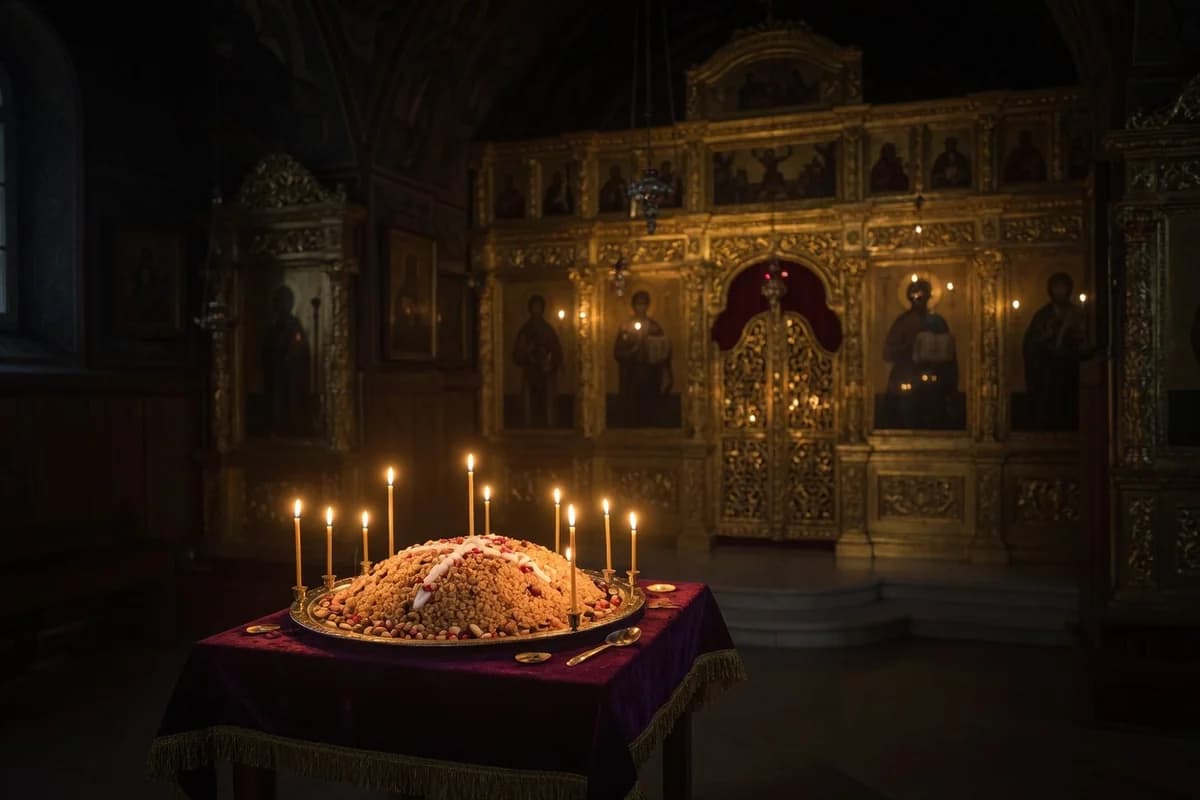
What to prepare for the parastas
The 40-day parastas requires more extensive preparations than the monthly commemorations that follow, because extended family and close friends attend. Here is what is typically prepared:
- Koliva — boiled wheat with walnuts and sugar, decorated with a cross and a candle; the symbol of resurrection
- Colaci — ritual breads for blessing and distribution
- Wine — for blessing and the memorial toast
- Candles — one for each participant at the service
- The pomelnic with the name of the departed — given to the priest before the service
- Memorial meal or food parcels — for those present
- Clothing and items of the departed to be distributed as alms — according to local custom
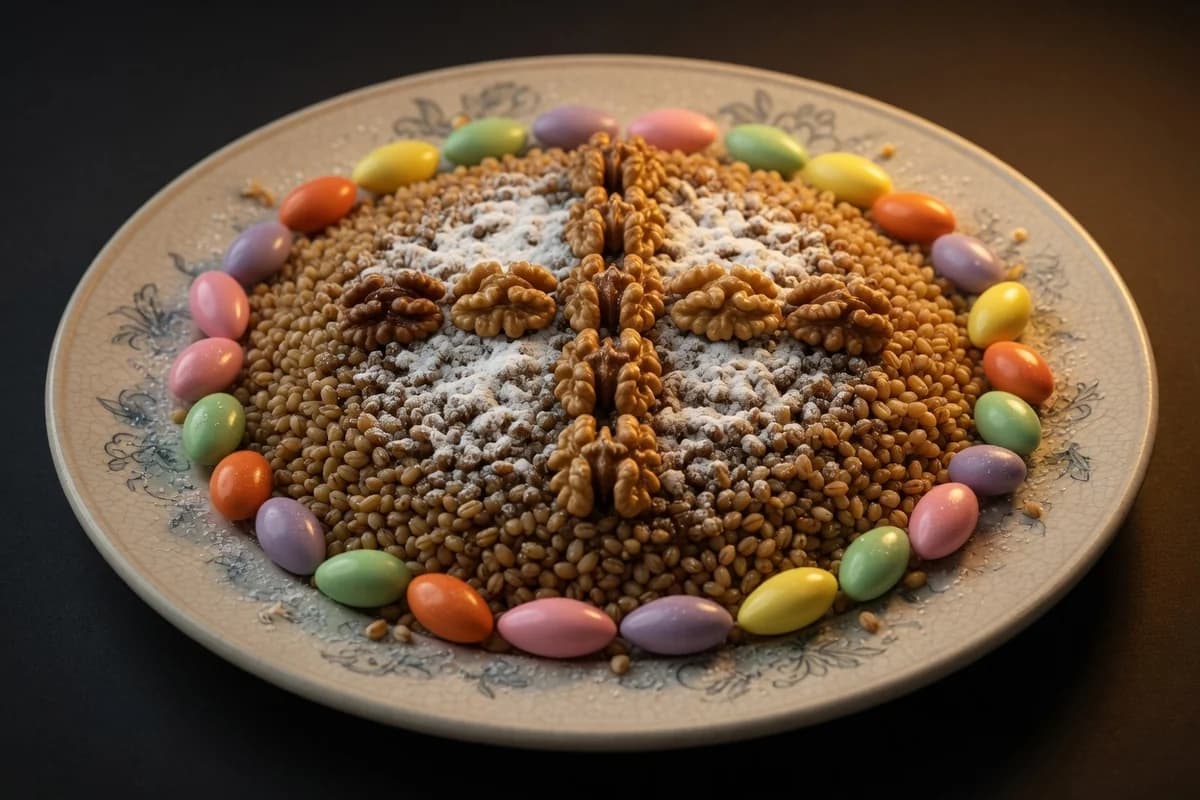
The service and memorial meal
The service takes place at church, usually after the Saturday morning Liturgy. The family brings the koliva and colaci, hands the pomelnic to the priest, and lights the candles. The priest conducts the parastas — the memorial service for the departed.
The memorial meal follows the service: at home, at a restaurant, at the parish hall, or in the form of food parcels distributed to guests and those at church. At the memorial calendar we organise the koliva, colaci, the meal, and church coordination, so the family does not bear all the burdens alone.
| Commemoration | When | Scale |
|---|---|---|
| 3 days | At the burial | Large |
| 9 days | After 9 days | Small |
| 40 days | After 40 days | Large — the most important |
| 3, 6, 9 months | In the following months | Small |
| 1 year | At one year | Large |
Who organises the parastas?
Organising the 40-day parastas can be exhausting during a period of mourning. We help with everything related to the preparations: koliva and colaci according to tradition, the memorial meal or food parcels, arrangements, and coordination with the priest.
The family only chooses the number of guests and the location of the meal; we handle the rest. For a no-obligation conversation, call us or see our questions at no cost page.
Customs at 40 days
Beyond the church service, many families visit the grave, where candles are lit and flowers are placed. The grave is tended and sprinkled with wine and holy water, according to local custom.
Customs vary from region to region, but several elements recur almost everywhere:
- Distribution of the departed's clothing and belongings as charitable alms
- Lighting candles at the grave and at church
- Sprinkling the grave with wine and holy water
- Pomelnice (memorial lists) given to several churches for commemoration
- Food parcels or a meal for those in need and for participants