MEMORIAL SERVICES · COMMEMORATIONS · 7 YEARS

Seven-year parastas: date, significance, and what to prepare

The seven-year parastas is the last special commemoration in Orthodox tradition, held at the completion of seven years from the date of death. After this point, commemoration continues at the general days of the departed, and tradition permits exhumation for the gathering and reinterment of the remains.

Updated:

When is the seven-year parastas held?

The date is counted from the day of death, at the completion of seven years. If it does not fall on a Saturday, the parastas is moved to the nearest Saturday — the day appointed for commemorating the departed.

As with all commemorations, if the date falls during Great Lent or a special liturgical period, the priest sets a suitable nearby Saturday.

The seven-year parastas closes the series of annual commemorations, which begins after the first year and passes through the 3-year service. The calendar of 2026 Saturdays for commemoration is in the commemorations guide.

Why seven years matters

In Orthodox tradition, seven years marks a cycle of commemoration. The seven-year parastas is the last special commemoration held for the departed, as the conclusion of the prescribed period of remembrance.

After this point, the soul is not forgotten — commemoration continues at the Saturdays of the Dead and at the Moșii (Days of the Departed), alongside the other departed of the family. The seven-year commemoration is, however, the last held individually, with full solemnity.
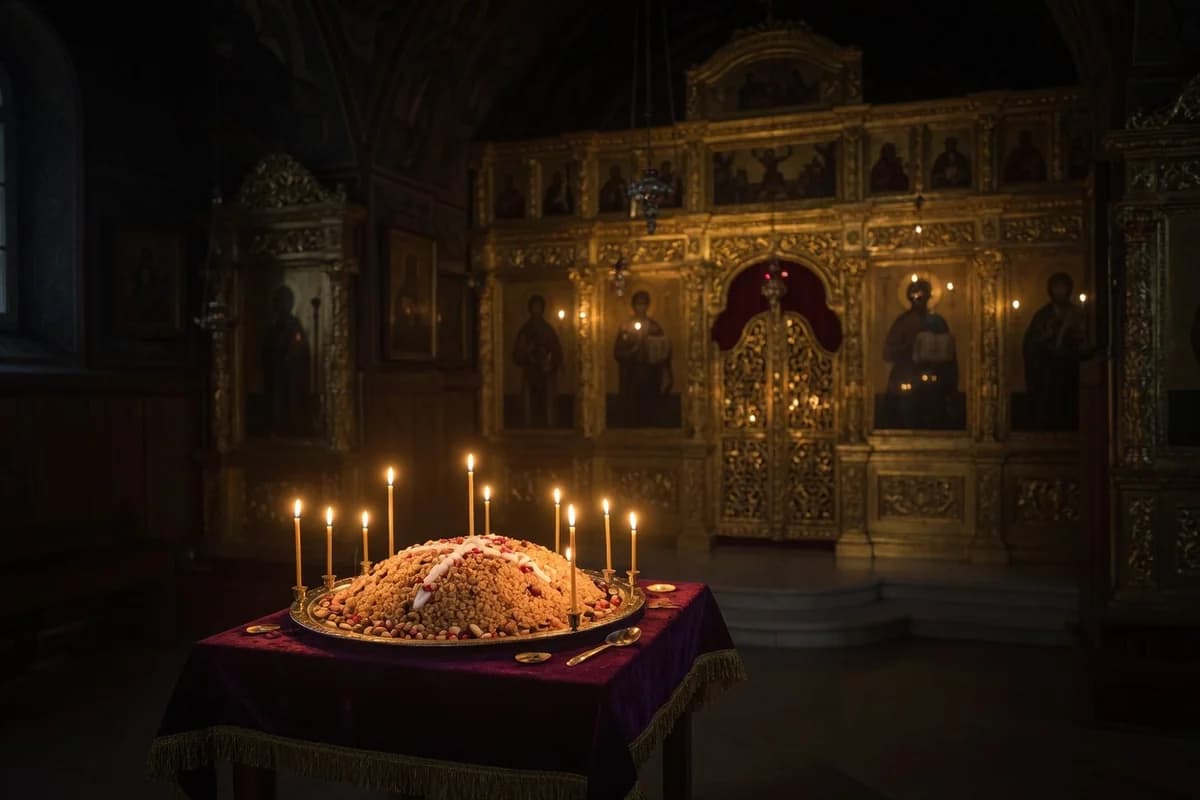
Orthodox church interior with a small memorial table holding koliva and lit candles before the altar
Illustrative image: parastas service at an Orthodox church.

The connection with exhumation and the remains

At seven years, tradition and law also permit exhumation. After this term, the remains may be gathered into an ossuary, to free the burial plot or to be reinterred in a family vault.

Many families link the exhumation to the seven-year commemoration, with a special service. The procedure, conditions, and cost of exhumation are explained on the dedicated page: exhumation prices.

What to prepare

Being a significant commemoration, the seven-year parastas is generally observed with more care than the intermediate annual services:

  • Koliva — boiled wheat with walnuts and sugar, decorated with a cross and a candle
  • Colaci — ritual breads for blessing and distribution
  • Wine — for blessing and commemoration
  • Candles — for those present at the service
  • The pomelnic with the name of the departed
  • Memorial meal or food parcels for those present
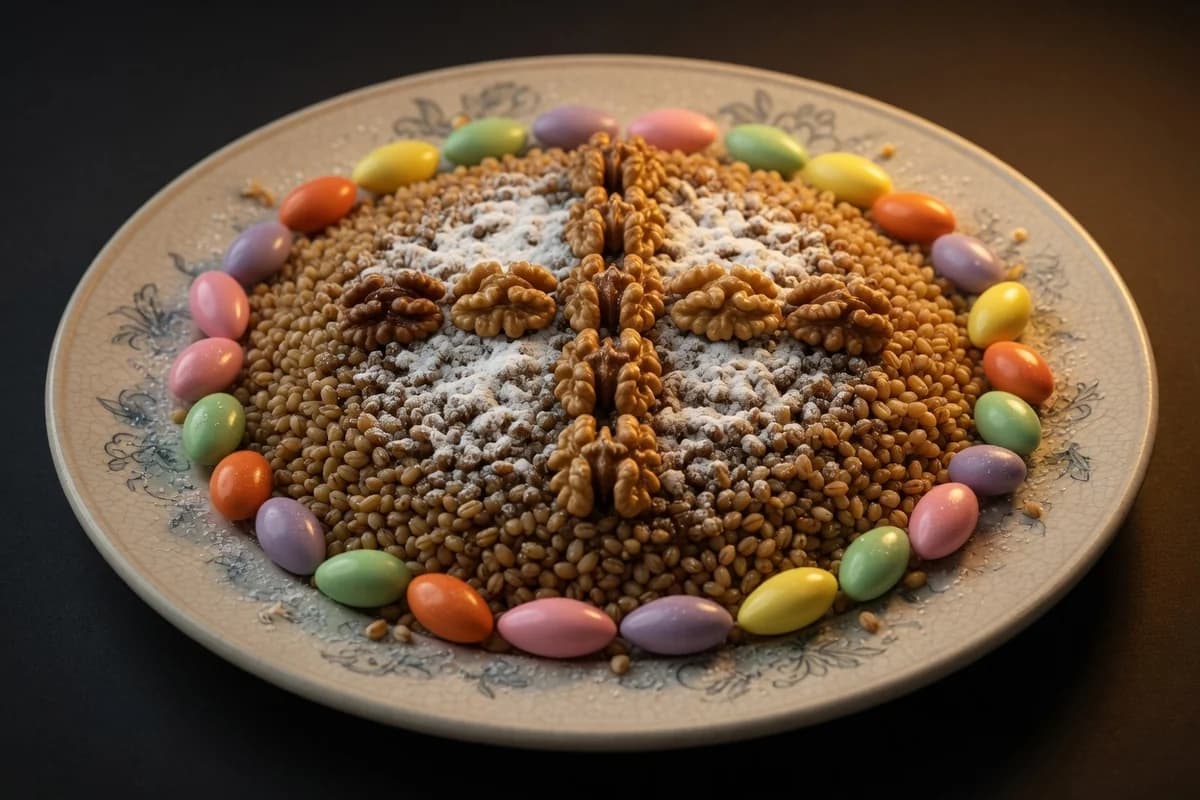
Traditional koliva close-up: boiled wheat with a walnut cross and powdered sugar, coloured sweets around the edge
Illustrative image: koliva decorated with a cross, prepared for a parastas.

The service and memorial meal

The service takes place at church, after the Saturday Liturgy. The family brings the koliva and colaci, hands the pomelnic to the priest, and lights the candles; the priest conducts the parastas for the departed.

The memorial meal follows the service. At parastase și pomeni we prepare the koliva, colaci, memorial meal, and church coordination, so the family can pray in peace.

What comes after 7 years

After the seven-year parastas, the commemoration of the departed does not cease. It continues at the Saturdays of the Dead, at the Winter, Summer, and Autumn Moșii, alongside the other departed of the family.

Several forms of commemoration remain through the years:

  • Pomelnice given at church on general days of commemoration
  • Koliva and food parcels taken to the Moșii and the Saturdays of the Dead
  • Tending the grave and relighting the oil lamp
  • Charitable alms and prayer in the name of the departed

Who organises the parastas?

We help with the preparations for the seven-year commemoration: koliva and colaci, the meal or food parcels, coordination with the priest, and — if needed — organisation of the exhumation.

The family chooses what they wish; we handle the rest. For a no-obligation conversation, call us or see the free consultation page.

FREQUENT QUESTIONS

Answers to frequent questions

  • How is the date of the seven-year parastas calculated?

    Count seven years from the date of death. If the day does not fall on a Saturday, move the parastas to the nearest Saturday, following the priest's guidance.

  • Why is the seven-year parastas special?

    It is the last special commemoration held individually, with full solemnity, as the conclusion of the prescribed cycle. After it, commemoration continues at the general days of the departed.

  • Is exhumation carried out at seven years?

    Tradition and law permit exhumation after seven years. Many families link it to the seven-year commemoration, for gathering the remains into an ossuary or for reinterment.

  • Does commemoration stop after 7 years?

    No. The special individual commemoration concludes, but the departed continues to be remembered at the Saturdays of the Dead and at the Moșii, alongside the other departed of the family.

  • What is brought to church for the seven-year parastas?

    Koliva, colaci, wine, candles, and the pomelnic with the name of the departed. Many families also bring flowers for the grave.

  • How much does exhumation at seven years cost?

    Exhumation with reinterment of the remains generally costs between 1,500 and 4,000 lei. Details are on the exhumation prices page.

  • Is an authorisation required for exhumation at seven years?

    After seven years, exhumation can be carried out without authorisation from the Public Health Directorate, with the consent of the cemetery administration. Under 7 years, the rules are stricter.

  • How much does organising a seven-year parastas cost?

    It depends on the number of guests and on what you choose. We give you a clear estimate in advance, with no hidden costs, for koliva, colaci, and the meal or food parcels.

  • Can the parastas be held on a day other than Saturday?

    Saturday is the traditional day. In special cases, the priest may set another day — for instance when linked to an exhumation or when the family comes from another town.

  • What goes into koliva?

    Boiled wheat, ground walnuts, and sugar, sometimes with cocoa or flavouring, decorated with powdered sugar and a cross. Wheat is the symbol of resurrection.

  • Is the seven-year commemoration held for those who were cremated?

    Yes. The tradition of commemorations is the same for burial and for cremation. The seven-year parastas is held identically, although with cremation the question of exhumation does not arise.

  • What flowers are brought to the seven-year commemoration?

    Sober flowers for the grave — chrysanthemums, carnations, or lilies. The old flowers are replaced and the oil lamp is relit.

  • Who prepares the koliva and colaci?

    The family can prepare them, or we prepare them according to tradition and deliver them to the church or the location of the meal.

  • How long does the parastas service last at seven years?

    The parastas generally lasts 20–40 minutes, after the Liturgy. If an exhumation is also carried out, the day is longer, with an additional service at the grave.

  • What is done with the remains after exhumation?

    They are gathered into an ossuary and reinterred in the same place, in a family vault, or in the cemetery's communal ossuary, according to the family's wishes and the cemetery's regulations.

  • Am I required to carry out exhumation at seven years?

    No. Exhumation is a possibility, not an obligation. The grave may remain undisturbed; the seven-year parastas is held in any case, as the last special occasion.

  • Who conducts the service at exhumation?

    The priest, with a brief service at the grave when the remains are raised. Tradition requires prayer and blessing at their reinterment.

  • Is the departed still commemorated after 7 years?

    Yes. The special individual commemoration concludes, but the departed continues to be remembered at the Saturdays of the Dead and at the Moșii, alongside the other departed.

  • Can the grave be moved to another location at seven years?

    Yes. After seven years, the remains can be transferred to another cemetery or into a family vault, with the consent of both cemetery administrations. We coordinate the entire procedure.

SEE ALSO

Related services or pages

  • Memorial services and commemorations

    Full organisation: koliva, colaci, memorial meal, church coordination.

    View details
  • Three-year parastas

    Annual commemoration for the departed.

    View details
  • Exhumation prices

    Cost and conditions for exhumation after 7 years.

    View details
  • 2026 commemorations calendar

    Exact dates of the Saturdays for commemoration in 2026.

    View details

QUESTIONS?

We answer day and night

Consultation is free. We answer any question specific to your family's situation.

0739 592 835WhatsApp