MEMORIAL SERVICES · COMMEMORATIONS · MEMORIAL MEAL

Memorial meal (masa de pomană): organisation, menu, and customs

The memorial meal (masa de pomană) is the commemorative lunch given after the service, in memory of the departed. It is held at home, at the parish hall, or at a restaurant, with a traditional menu, and is a form of charitable alms for those present and for those in need.

Updated:

What is the memorial meal?

The memorial meal is the lunch offered after the burial service or the parastas, in memory of the departed. The food is blessed, and those present pray for the repose of the soul.

It is a form of charitable giving: through the meal, the family shares with others in the name of the departed. It is held at the burial and at every commemoration — from the 40-day service to the annual commemorations.
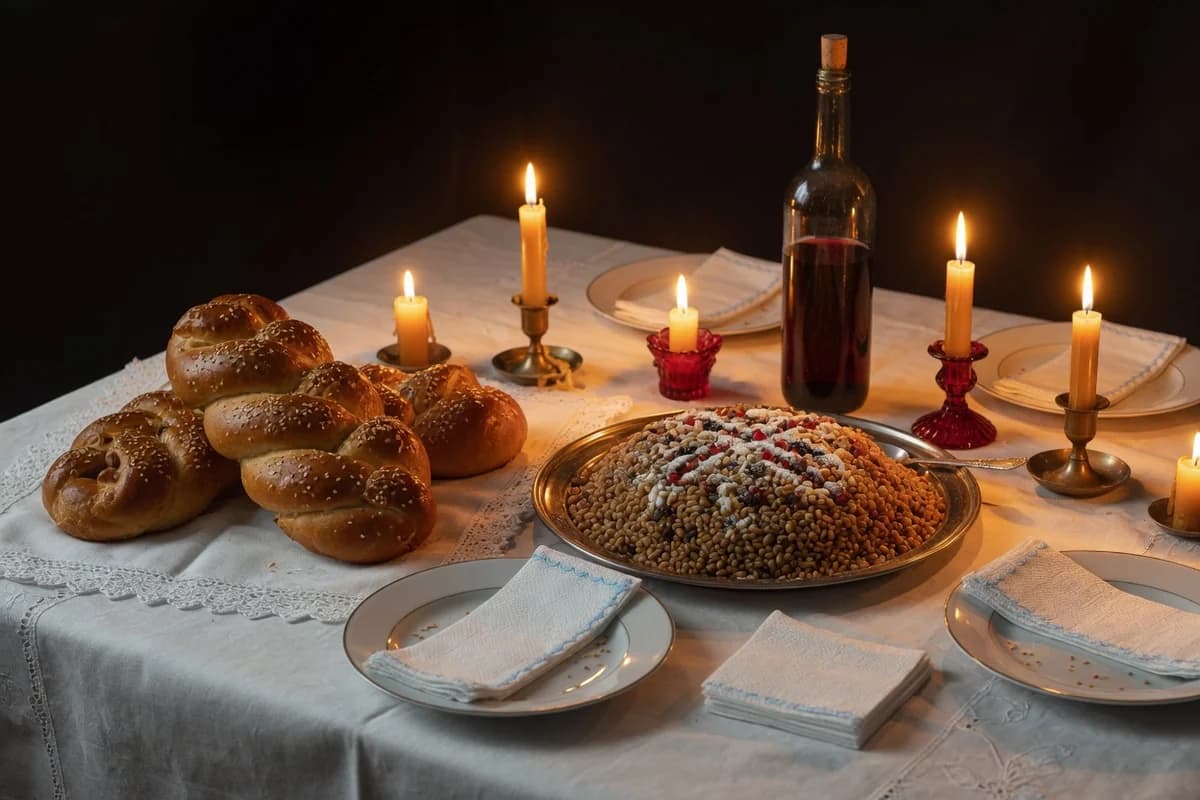
Romanian parastas table: braided loaves, koliva, red wine, candles and plates on white cloth — no people
Illustrative image: memorial table laid for those present.

Where is the memorial meal held?

The location depends on the number of guests and the family's preference. The most common options are:

  • At home — for a small, intimate circle of family
  • At the parish hall — close to the church, practical for many guests
  • At a restaurant — without the burden of preparation, with an agreed menu
  • Through food parcels — distributed to guests when there are many or they travel from afar
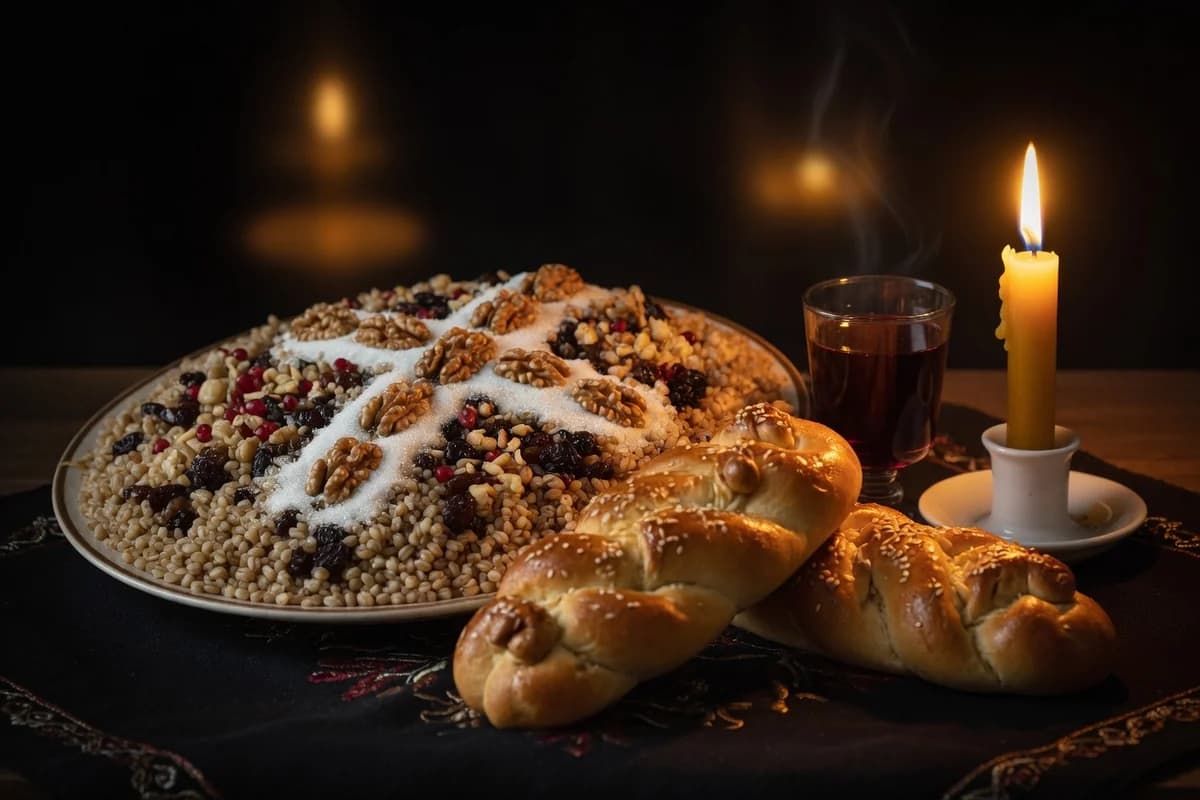
Romanian memorial table: koliva with cross, braided loaves, red wine, lit candle
Illustrative image: table and parcels prepared for pomană.

The traditional menu

The menu of the memorial meal follows tradition and accounts for fasting periods. It typically includes:

  • Koliva — the central element, blessed during the service
  • Colaci and bread — for blessing and distribution
  • Soup or sour soup (ciorbă) — a warm first course
  • Stuffed cabbage rolls (sarmale) or roast meat — the main course (non-fasting, outside fasting periods)
  • Fasting dishes — when the commemoration falls during a fasting period
  • Wine — for the memorial toast
  • Sweets and fruit — to finish

How many guests are invited?

The number depends on the commemoration. At the burial and at the 40-day service, extended family and close friends attend; at the monthly and annual commemorations, the circle is smaller.

For a large number of guests, food parcels are a practical alternative to a seated meal. Many families combine both — a seated meal for close family, parcels for the rest.

Customs and etiquette at the memorial meal

The memorial meal has a few unwritten rules, preserved by tradition:

  • The food is blessed before the meal begins
  • The toast is made with wine, in memory of the departed — not with spirits
  • The atmosphere remains sober, without music or celebration
  • The first portion and a candle are offered in memory of the departed
  • Leftover food is distributed to those present or to those in need

Meal or food parcels — how to choose

A seated meal is appropriate when guests are close and can stay together. Food parcels are more practical when there are many guests, when they travel from afar, or when space does not allow a large gathering.

A pomană parcel typically contains colaci, koliva, fruit, sweets, and a candle. The form of pomană is chosen according to each family's situation.

Organising the memorial meal

Organising a memorial meal during a period of mourning can be exhausting. We take care of everything: the koliva and colaci, the menu, the location, delivery, and food parcels, according to the number of guests.

The family chooses the location and the number of people; we handle the rest. For a clear estimate, call us or see the free consultation page.

FREQUENT QUESTIONS

Answers to frequent questions

  • What is the memorial meal?

    It is the commemorative lunch given after the service, in memory of the departed. The food is blessed, those present pray for the repose of the soul, and it is a form of charitable giving.

  • What is served at the memorial meal?

    Usually koliva, colaci, soup or sour soup, stuffed cabbage rolls or roast meat, wine, and sweets. When the commemoration falls during a fasting period, the menu is fasting food, without meat or dairy.

  • Where is the memorial meal held?

    At home, at the parish hall, or at a restaurant, depending on the number of guests. For many participants, food parcels are a practical alternative.

  • How many guests are invited to the memorial meal?

    It depends on the commemoration. At the burial and at 40 days, extended family attends; at the annual commemorations, the circle is smaller — just immediate family.

  • Is the memorial meal held during a fasting period?

    Yes, but with a fasting menu — without meat, dairy, or eggs. Fasting dishes are prepared, and the koliva and colaci remain the same.

  • What goes into a pomană parcel?

    Usually colaci, koliva, fruit, sweets, and a candle. The contents are adapted to local custom and to the budget.

  • Meal or food parcels — which is more appropriate?

    A meal is appropriate for close guests who can stay together. Parcels are practical when there are many guests or they travel from afar. Many families combine both.

  • Is alcohol served at the memorial meal?

    The memorial toast is made soberly with wine. Spirits and a festive atmosphere are not appropriate at a meal of commemoration.

  • Who blesses the food at the memorial meal?

    The priest, at the service, or through a prayer before the meal. The koliva and colaci are blessed at church during the parastas.

  • What is done with the leftover food?

    It is distributed to those present or to those in need, as pomană. Blessed food is not discarded; it is passed on with the same thought of charity.

  • How much does a memorial meal cost?

    It depends on the number of guests, the menu, and the location. We prepare the meal or food parcels to your budget, with a clear price communicated in advance.

  • Can the memorial meal be ordered ready-prepared?

    Yes. We prepare it according to tradition and deliver it to the chosen location, or we organise food parcels. It is a practical solution for families in mourning.

  • How soon after the service is the meal held?

    Usually immediately after the service, on the same day. Guests go directly from the church or the cemetery to the location of the meal.

  • Must everyone who attended the service be invited?

    It is not an obligation, but tradition calls for those present at the service to be offered something, at least a food parcel. The number is determined by what is possible.

  • Is a memorial meal held for those who were cremated?

    Yes. The tradition of the memorial meal is the same for burial and for cremation. It is held after the service, with the same menu and customs.

  • What drinks are served at the memorial meal?

    Usually wine for the memorial toast, water, and soft drinks. Spirits and a festive atmosphere are not appropriate at a meal of commemoration.

  • How long does a memorial meal last?

    Usually one to two hours. The atmosphere remains sober, and the meal concludes without celebration, with a final prayer for the departed.

  • Can I order only the koliva and colaci, without a meal?

    Yes. We prepare only the koliva and colaci for the service, if you do not wish to hold a meal. These can always be complemented with food parcels for those present.

  • Can stuffed cabbage rolls and roast meat be served at the memorial meal?

    Yes, outside fasting periods. Stuffed cabbage rolls and roast meat are common dishes at the memorial meal. During a fasting period the menu changes to fasting food.

  • Who prepares the food for the memorial meal?

    The family can prepare it, a restaurant can cater it, or we prepare it according to tradition and deliver it to the chosen location. We spare the family from organising during a difficult time.

SEE ALSO

Related services or pages

  • Memorial services and commemorations

    Full organisation: koliva, colaci, memorial meal, church coordination.

    View details
  • Pomană — alms for the soul

    The gift given in memory of the departed — what is given, to whom, and when.

    View details
  • Koliva for commemoration

    What koliva is and how it is prepared.

    View details
  • 40-day parastas

    The most important commemoration of the first year.

    View details

QUESTIONS?

We answer day and night

Consultation is free. We answer any question specific to your family's situation.

0739 592 835WhatsApp