
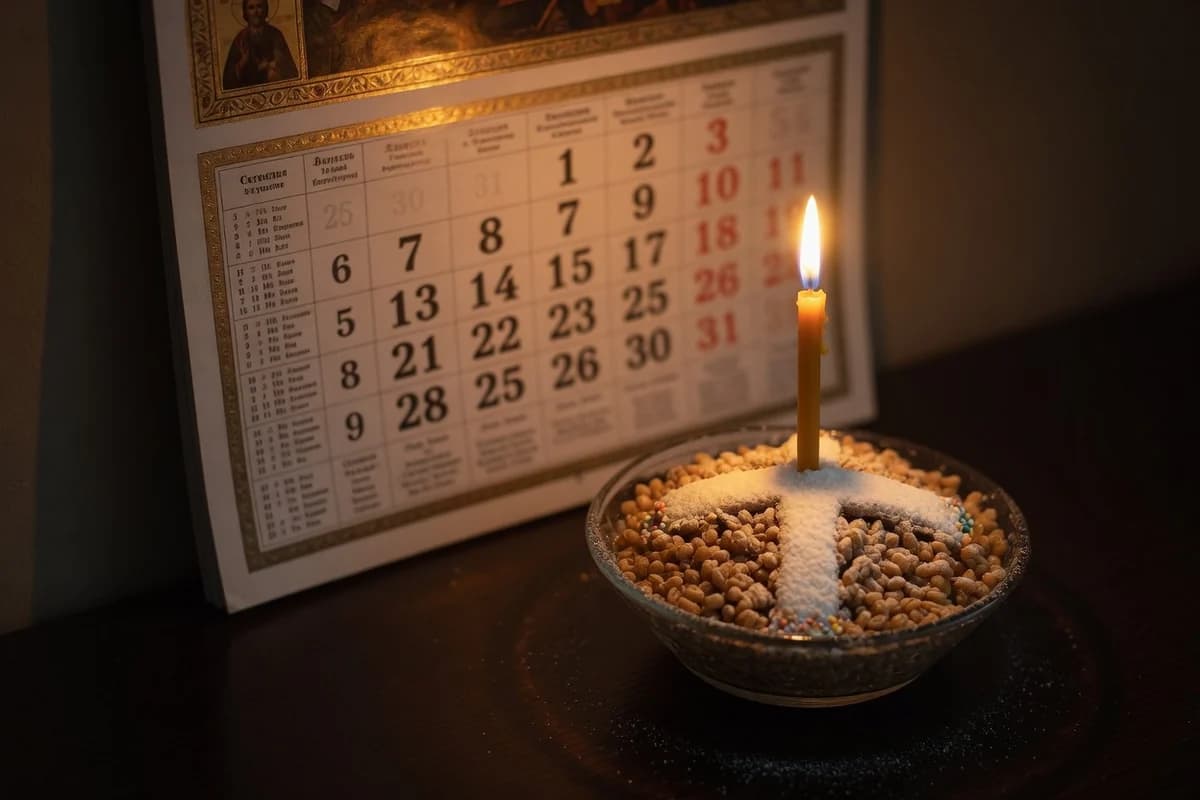
What moși and 'memorial Saturdays' are
Moși are the days when the Orthodox Church commemorates all the departed at once — not one person, but everyone's dead. The two major dates are Winter Moși (the Saturday before the Sunday of the Last Judgment) and Summer Moși (the Saturday before Pentecost).
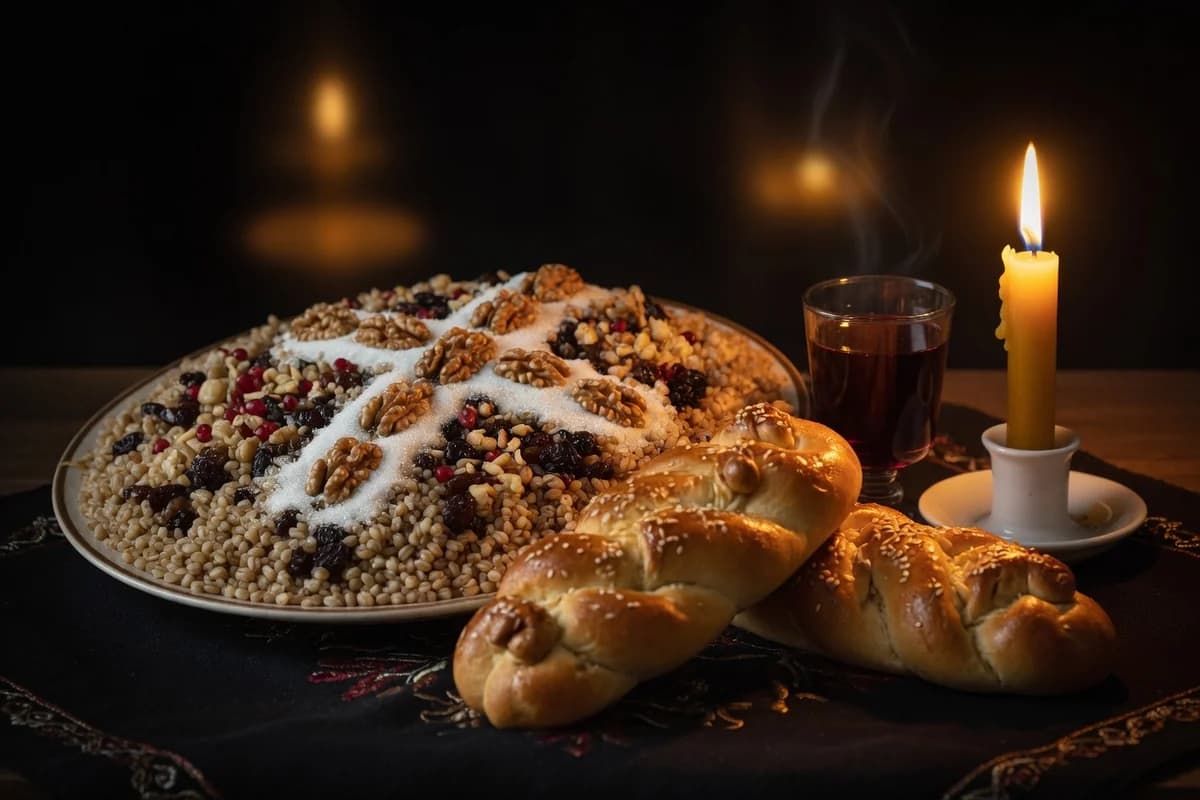
Saturday is the liturgical day of the departed — which is why almost every general commemoration falls on a Saturday. Families bring koliva (boiled sweetened wheat), ceremonial bread, and wine to church, give alms, and have the names of their departed read at the Liturgy.
Summer Moși — the general commemoration of the departed (crestinortodox.ro)The 2026 dates
The year at a glance: Winter Moși — February 14. The memorial Saturdays of Great Lent — March 7, 14, and 21, the Lenten days set aside for remembering all the departed. Orthodox Easter — April 12. Paștele Blajinilor — April 20, the Monday after Thomas Sunday (a strong folk custom, especially in Moldova — not an official liturgical feast). Summer Moși — May 30, the Saturday before Pentecost (May 31). Autumn Moși — traditionally the first Saturday of November, November 7, 2026.
The full table, with what to prepare for each date, is further down the page.
What to prepare
The essentials are the same for every memorial:
- Koliva — boiled wheat, sweetened, decorated with a cross. The symbol of resurrection.
- Ceremonial bread (colaci) and wine — taken to church for the memorial service.
- Candles — lit at church and at the grave.
- Alms (pomană) — dishes, towels, or food packages given in memory of the departed. Our organising memorials has full details on organising a pomană.
- The list of names — handed to the priest to be read at the Liturgy.
How individual memorials are counted
Individual memorials are counted from the day of death: 3 days (usually the funeral itself), 9 days, 40 days — the most important one — then 3, 6, and 9 months, one year, and yearly until the seventh year.
If a memorial falls on a Sunday or a major feast, it moves a day or two earlier, to the Saturday. During Great Lent, memorial services are held only on Saturdays, never on weekdays. The practical rule that never fails: confirm the exact date with the parish priest.
If you live abroad and can't travel for every memorial, the service can be held in Romania with the family that's here — we organize the koliva, the church service, and the alms packages, and you join by video call if you wish. No pressure either way; each family finds its own rhythm. The amount and procedure can also be used to offset the first memorial costs.
When memorials are NOT held
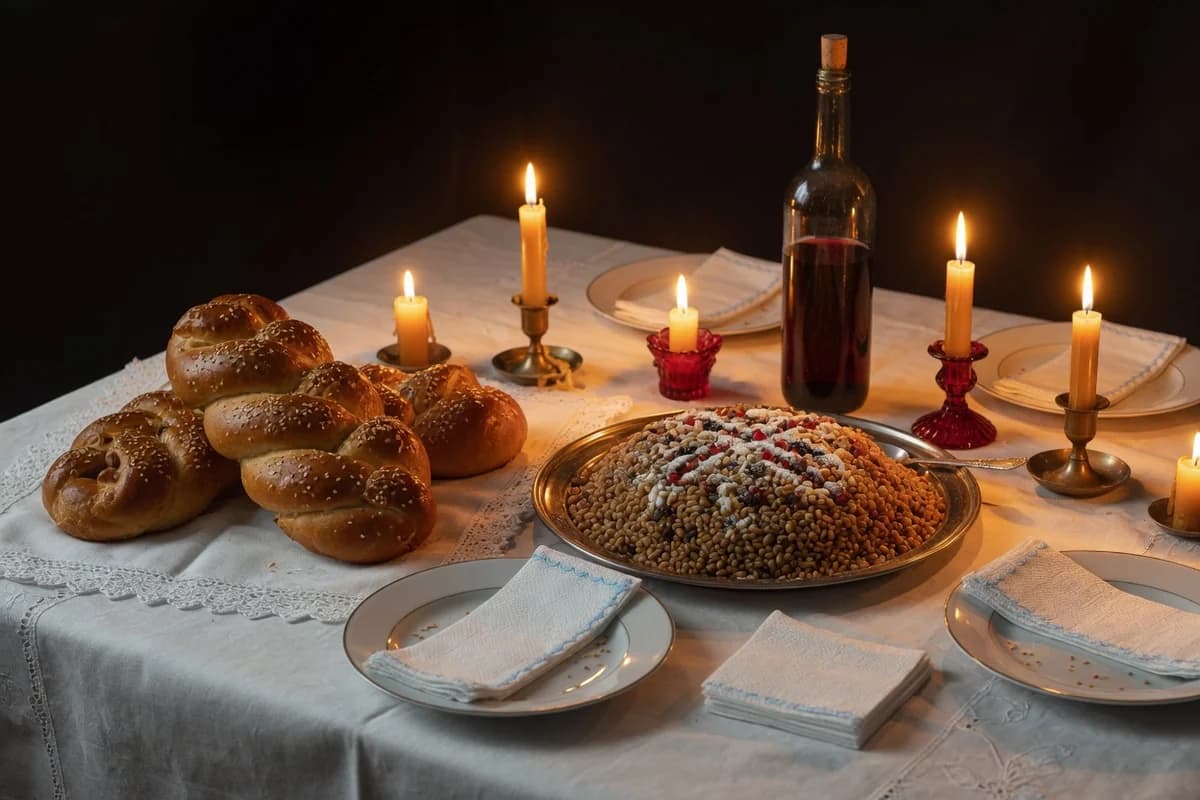
Memorial services are not held on Sundays, on weekdays during Great Lent (Saturdays only), from Palm Sunday to Thomas Sunday, between Christmas and Epiphany, or on the great feasts. If your calculated date lands on one of these, the priest picks another day — usually the nearest Saturday. The exact 2026 dates are in the next section.
That's exactly why this calendar matters: it saves you a trip made in vain and a memorial meal planned for a day when no service can be held.
Winter Moși — commemoration of the departed (crestinortodox.ro)When memorial services are not held in 2026
In 2026, no memorial services (parastase) are held on any Sunday; on weekdays during Great Lent, February 23 – April 3; from Palm Sunday to Thomas Sunday, April 5–19; on the great feasts; and between Christmas and Epiphany — January 1–6 and from December 25. The list follows the calendar published by the Romanian Patriarchate.
The reason is liturgical. Sundays and great feasts are days of joy, while a parastas is a service of prayer and mourning for the departed. The dead aren't forgotten on these days: their names can be given to the priest to be read at the proskomedia, the preparation part of the Liturgy, and remembered in prayer at home. The full service, with koliva and bread, is held on a permitted day agreed with the priest.
Two great feasts fall on a Saturday in 2026: August 15 (the Dormition of the Mother of God) and November 21 (her Entry into the Temple). No memorial services are held on those two Saturdays.
| Period | 2026 dates | What happens instead |
|---|---|---|
| Sundays | Every Sunday of the year | The service usually moves to the Saturday before |
| Weekdays of Great Lent | Monday–Friday, February 23 – April 3 | Only a short prayer (litia mică); the full service on Saturday |
| Palm Sunday to Thomas Sunday | April 5–19 (Holy Week and Bright Week) | Names read at the proskomedia; services resume on April 20 |
| The great feasts | January 6, February 2, March 25, May 21, May 31, August 6, August 15, September 8, September 14, November 21, December 25 (Palm Sunday, April 5, is covered by the row above) | The service moves to another day agreed with the priest |
| Christmas to Epiphany | January 1–6, 2026 and December 25, 2026 – January 6, 2027 | Names read at the proskomedia and remembered in prayer |
| Days without a Liturgy | Set by each parish's schedule | The priest tells you which day works |
Great Lent 2026: when memorial services can be held
Great Lent runs in 2026 from Monday, February 23, to Saturday, April 11. From Monday to Friday there are no memorial services, because the full Divine Liturgy isn't celebrated on those days. Only a short prayer for the departed (litia mică) may be said.
Lenten memorial services are held on Saturdays, from St Theodore's Saturday (February 28) to Lazarus Saturday (April 4). Three of them are the memorial Saturdays — March 7, 14 and 21 — when many families bring koliva to church for all their departed. Some parishes no longer hold them on Lazarus Saturday, so ask the priest.
If the 9-day or 40-day memorial falls on a Lenten weekday, it's usually held on the nearest Saturday, and the memorial meal is made with fasting food. See what's prepared for the 40-day memorial.
Commemorating the departed during Great Lent (basilica.ro, in Romanian)Holy Week and Bright Week 2026
No memorial services are held between Palm Sunday (April 5) and Thomas Sunday (April 19, 2026). Holy Week (April 6–11) is given over to Christ's Passion. Orthodox Easter falls on April 12, and Bright Week (April 13–18) is kept as one continuous day of Easter joy.
Memorial services resume on Monday, April 20 — the same day many families in Moldova and Bessarabia keep Paștele Blajinilor. A 9-day or 40-day memorial that falls within these two weeks is held earlier or later, on a day agreed with the priest.
The rule covers memorial services, not funerals. If a death occurs in these days, the funeral goes ahead, and the priest sets the day and the order of service. In Bright Week the funeral follows a special Easter order: 'Christ is risen' and the Easter canon are sung, and the priest wears white. More in our guide to the Orthodox funeral service.
The funeral service in Bright Week (ziarullumina.ro, in Romanian)The other fasts, and how parishes differ
The Nativity Fast (November 15 – December 24), the Apostles' Fast (June 8–28, 2026) and the Dormition Fast (August 1–14) aren't on the list of days without memorial services. During these fasts, services are held as usual on any permitted day — Sundays and great feasts excepted — and the memorial meal follows the fast.
Some parishes are stricter. They also skip the days just before and after the great feasts, or start the Christmas break on December 20. Practice varies from one church to another, so the final date is the parish priest's call. If you're arranging a memorial from abroad, we can check the date with the priest for you — see memorials after the funeral.
When the departed are commemorated, and when memorial services are not held (ziarullumina.ro, in Romanian)