MEMORIAL SERVICES · COMMEMORATIONS · POMANĂ

Pomană — alms for the soul: what is given, to whom, and when

Pomană is the gift given in memory of the departed, for the repose of the soul. Food, household items, clothing, or food parcels are given to relatives and friends or to those in need, at the burial and at every commemoration.

Updated:

What is pomană and what does it mean?

Pomană is an act of charity performed for the soul of the departed. In Orthodox tradition, the good done in his name — a gift, a meal, a helping hand — is counted as a benefit to the soul and to its repose.

Pomană accompanies every commemoration, from the burial to the annual services. It is not about wealth: what matters is the thought and the prayer with which it is given, not the value of the gift.
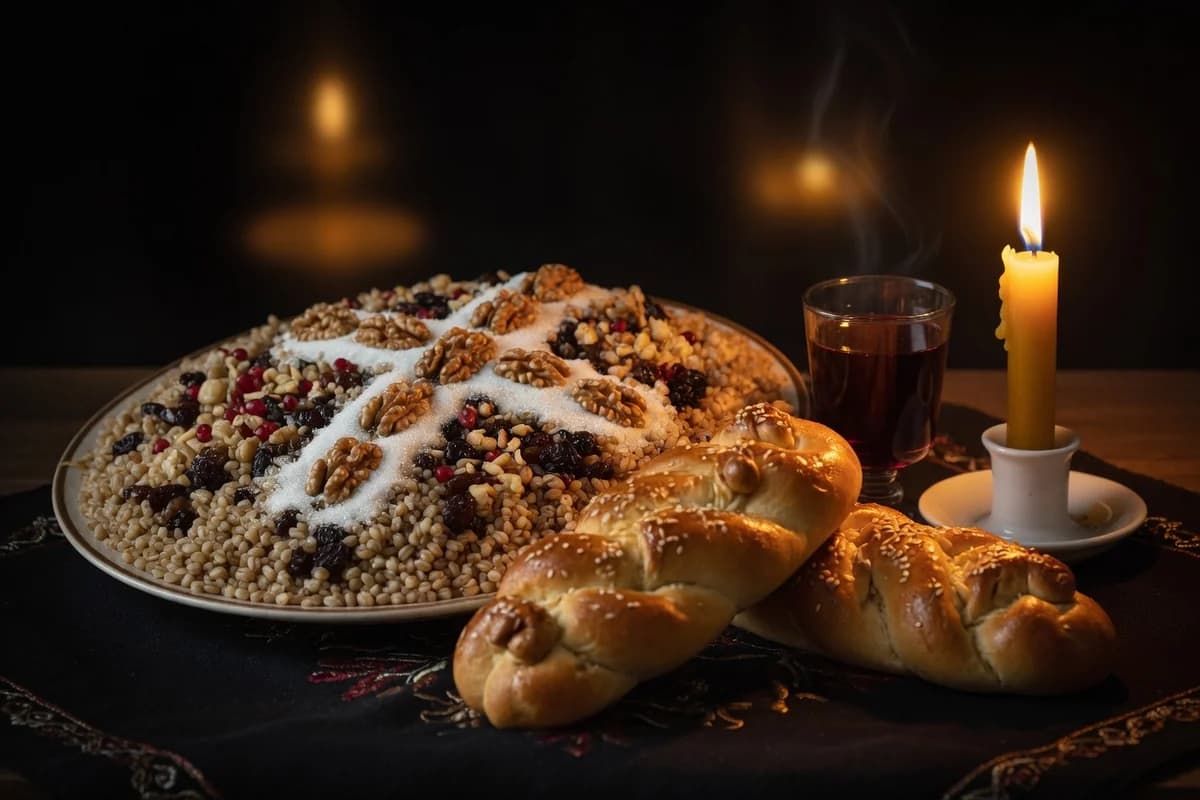
Romanian memorial table: koliva with cross, braided loaves, red wine, lit candle
Illustrative image: table and parcels prepared for pomană.

What is given as pomană?

Pomană takes several forms, according to the occasion and to what is possible. The most common are:

  • Food — the memorial meal or food parcels for those present
  • Koliva and colaci — distributed at church and at the meal
  • Clothing and belongings of the departed — given at 40 days as charitable alms
  • Household items, towels, candles — given together with food
  • Money or assistance — for those in need, in the name of the departed
  • Candles and flowers — brought to church and to the grave

To whom and when is pomană given?

Pomană is given to those present at the service and at the meal, to people at church, and especially to those in need. Tradition places emphasis on charity towards the poor — they pray for the departed.

The principal occasions are the burial, the 40-day parastas, the first-year and annual commemorations. At 40 days it is customary to distribute the departed's clothing. At every Saturday of the Dead, koliva and food parcels are taken to church.

Food parcels and the memorial meal

For those present, pomană is given either as a memorial meal — a shared lunch after the service — or as food parcels, which are easier to offer when there are many guests or they come from far away.

A pomană parcel typically contains colaci, koliva, fruit, sweets, a candle, and sometimes a vessel or a towel. At parastase și pomeni we prepare the parcels according to the number of guests and local tradition.
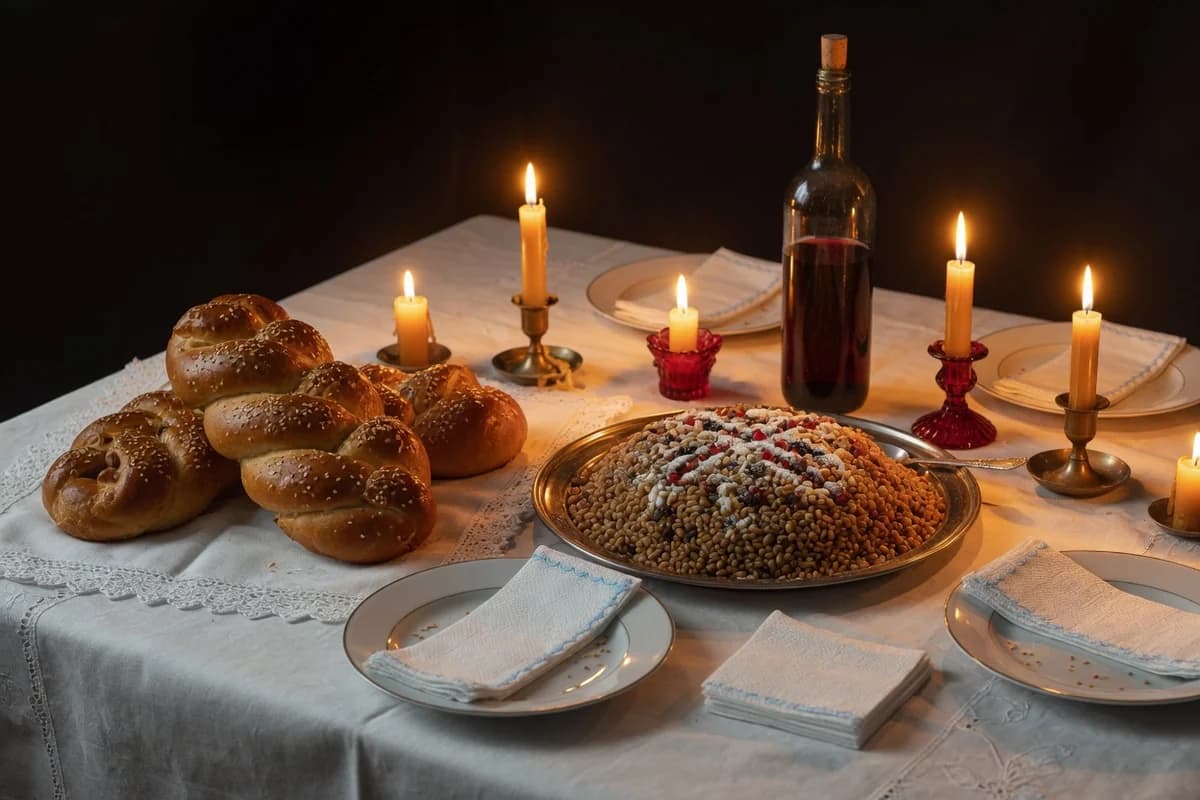
Romanian parastas table: braided loaves, koliva, red wine, candles and plates on white cloth — no people
Illustrative image: memorial table laid for those present.

How we help with pomană

We prepare everything related to pomană: the koliva, colaci, food parcels, and the meal, delivered to the church or the chosen location. We spare the family from organising during a difficult time.

The family chooses the number of parcels or guests; we handle the rest. Call us for an estimate — the consultation is free.

Pomană at the Moșii and the Saturdays of the Dead

Beyond individual commemorations, Orthodox tradition has general days of remembrance — the Winter, Summer, and Autumn Moșii. On these days, pomană is given for all the departed of the family.

Koliva, colaci, and food parcels are taken to church, and at home a meal is prepared for close relatives and for those in need. The 2026 dates are in the commemorations calendar.

What is good to know about pomană

Pomană is not about fasting but about a pure thought and prayer. A small gift offered from the heart has the same worth as a large one. What matters is that the gift reaches those who need it.

A few practical points help the family:

  • Food given as pomană is blessed at church or by the priest
  • The departed's clothing is given clean, usually at 40 days
  • Pomană can also be given by others, in the name of the departed
  • Charity towards those in need is the most valued form

FREQUENT QUESTIONS

Answers to frequent questions

  • What does pomană for the soul mean?

    It is an act of charity performed in memory of the departed, for the repose of the soul. The good done in his name is counted as a benefit to him, according to Orthodox tradition.

  • What is given as pomană?

    Food (a meal or food parcels), koliva and colaci, the departed's clothing and belongings, household items, towels, candles, and assistance for those in need.

  • To whom is pomană given?

    To those present at the service and at the meal, to people at church, and especially to those in need. Tradition places emphasis on charity towards the poor.

  • When is pomană given?

    At the burial, at 40 days, at the first-year and annual commemorations, as well as at the Saturdays of the Dead and at the Moșii.

  • Is the departed's clothing distributed?

    Yes, usually at 40 days. Clothing and personal belongings are given as pomană to those in need or to relatives, for the repose of the soul.

  • What does a pomană parcel contain?

    Usually colaci, koliva, fruit, sweets, a candle, and sometimes a vessel or a towel. The contents are adapted to local custom and the number of guests.

  • Memorial meal or food parcels — which to choose?

    The meal is appropriate when guests are close and can stay together; parcels are better when there are many guests or they come from far away. Many families combine both.

  • Does pomană have to be expensive?

    No. What matters is the thought and prayer with which it is given, not the value of the gift. Pomană is proportioned to the means of each family.

  • Is pomană given only at church?

    No. It is given at church, at the memorial meal, but also at home or directly to those in need. Food is blessed at church or by the priest.

  • Can pomană be given for someone who died long ago?

    Yes. Pomană can be given at any time, in memory of the departed, not only at scheduled commemorations. At the Moșii and the Saturdays of the Dead, it is given for all the family's departed.

  • What is done with the food left over from pomană?

    It is distributed to those present or to those in need, as pomană. Blessed food is not discarded; it is passed on with the same thought of charity.

  • Is pomană given at Christmas or at Pascha as well?

    Yes. Many families give pomană at the great feasts, in memory of the departed. At Pascha, red eggs and cozonac are also taken to the grave and to church.

  • Is a priest required to give pomană?

    Not for the gesture itself. For the blessing of the food and for commemoration during the service, however, the priest conducts the Church's rite.

  • How much does a pomană parcel cost?

    It depends on the contents and the number of parcels. We prepare the parcels according to local tradition and budget, with a clear price communicated in advance.

  • What is said when giving pomană?

    Usually a commemorative formula, such as "May it be received" or "May God grant him rest," and the recipient responds in kind. The gesture is accompanied by a thought of prayer for the departed.

  • Must the clothing given as pomană be new?

    No. It can be the departed's clothing or everyday items, but clean and in good condition. What matters is that they are useful to the person who receives them.

  • Can pomană be given to just one person?

    Yes. Pomană can be given to a single person in need, not only to groups or at church. What matters is the thought of charity, not the number of recipients.

  • Can pomană be given for more than one departed person at once?

    Yes. At the Moșii and the Saturdays of the Dead, pomană is given for all the family's departed, with a pomelnic that includes all their names.

SEE ALSO

Related services or pages

  • Memorial services and commemorations

    Full organisation: koliva, colaci, memorial meal, church coordination.

    View details
  • One-year parastas

    The close of the year of mourning — service, koliva, memorial meal.

    View details
  • Koliva for commemoration

    What koliva is and how it is prepared.

    View details
  • 40-day parastas

    The most important commemoration of the first year.

    View details

QUESTIONS?

We answer day and night

Consultation is free. We answer any question specific to your family's situation.

0739 592 835WhatsApp