GUIDE · MEMORIAL TRADITIONS

Romanian memorial traditions: how the departed are remembered

Romanian Orthodox memorials are prayer services for the souls of the departed, held at set intervals after death and throughout the year. The most significant fall at three days, nine days, forty days, six months, and one year, then annually. They are accompanied by coliva — boiled wheat symbolising resurrection — colaci (ritual breads), and pomană (alms given in the name of the deceased). Alongside individual memorials, the Church marks several communal days of remembrance called Moșii, when all the departed are prayed for together. This guide explains each memorial, its meaning, and how to prepare for it.

Updated: 22 June 20261,700 wordsReviewed by Andrei
sobru.ro — Romanian funeral services
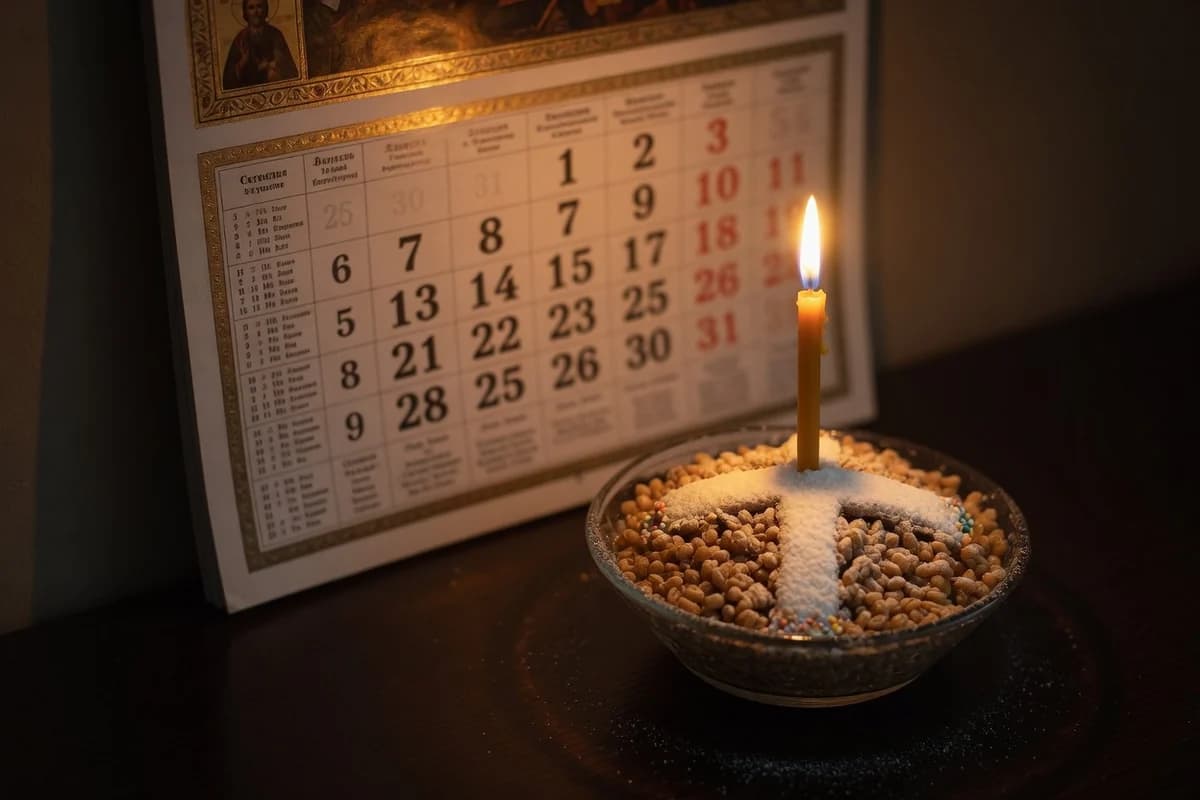
Illustrative image for the guide above.

What are memorial services?

Memorial services (pomeniri) are moments of prayer for the souls of those who have fallen asleep in faith, held at appointed dates after death and through the liturgical year. Through them, the living honour and keep alive the memory of those who have departed.

In Orthodox tradition, memorials also bring consolation to the family. Gathering around the coliva and the memorial table keeps the bond with the departed alive and gives grief a structured, communal form.
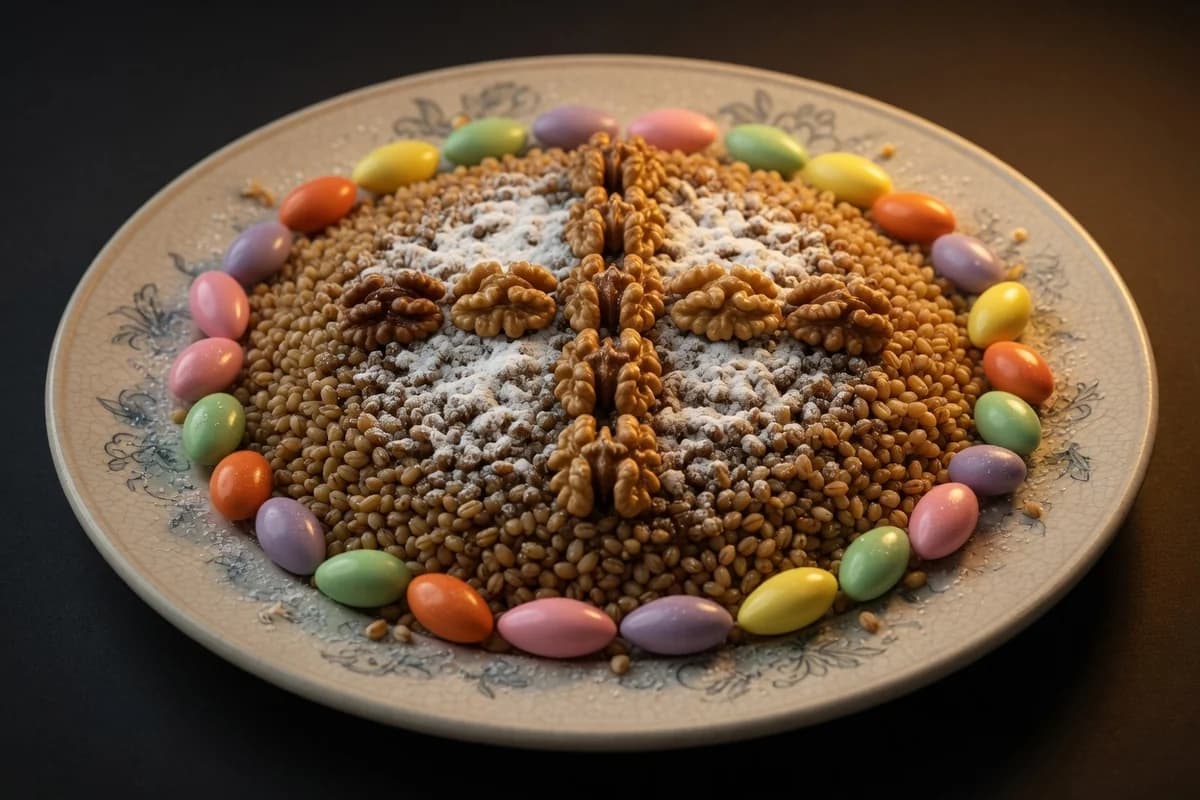
Traditional koliva close-up: boiled wheat with a walnut cross and powdered sugar, coloured sweets around the edge
Illustrative image: coliva prepared for a memorial service, the traditional symbol of resurrection in Romanian Orthodox practice.

Coliva and what it represents

Coliva is made from boiled wheat, sweetened with honey or sugar and decorated — often with a cross traced in powdered sugar or chocolate. The wheat grain that falls into the ground and rises again is, in Christian belief, the image of resurrection.

The coliva is blessed by the priest at the memorial service and distributed to everyone present as an act of remembrance for the departed. See also the page on coliva.

Colaci and pomană

Alongside the coliva, ritual breads (colaci), food, and other goods are prepared and given as pomană — charitable gifts made in the name and for the soul of the departed, according to the family's means.

Pomană can include food, drink, and objects such as vessels, clothing, or candles. See also the pages on colaci and on pomană.

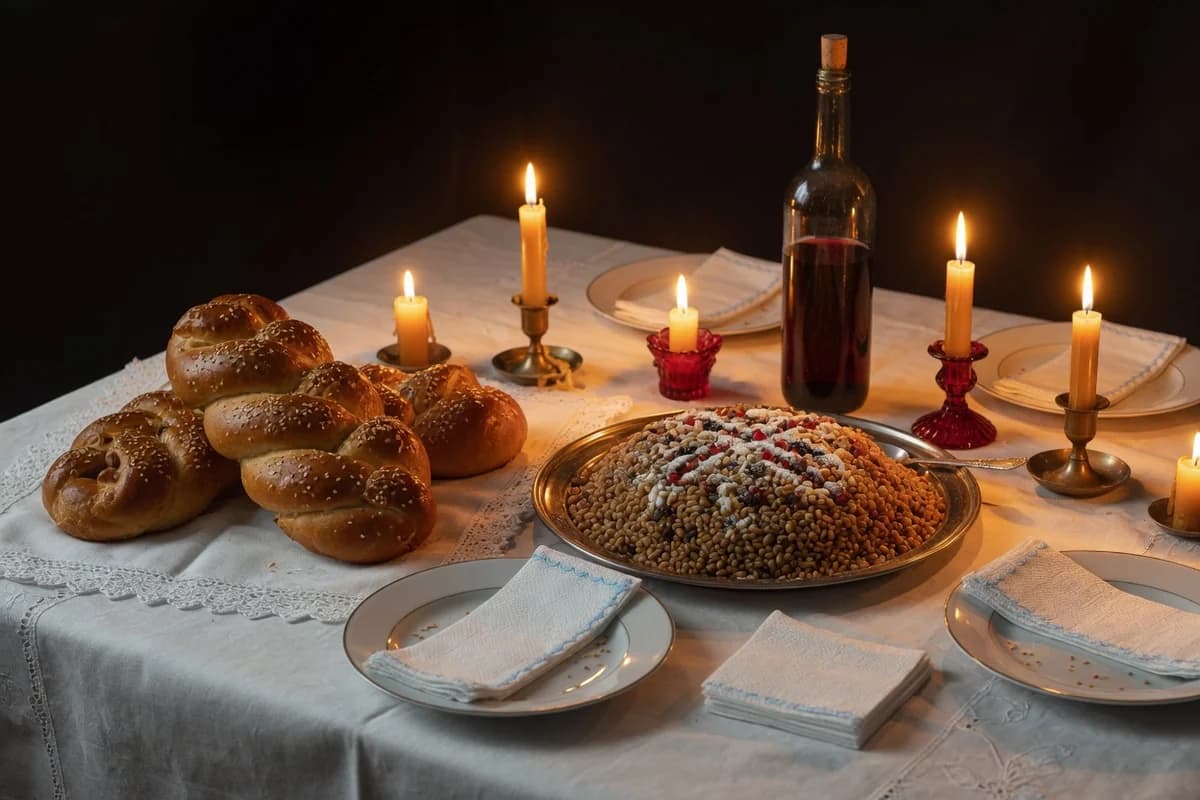
Romanian parastas table: braided loaves, koliva, red wine, candles and plates on white cloth — no people
Illustrative image: a memorial meal table set for those present at the parastas service.

The memorial calendar

Memorials are held at well-established intervals, following Church tradition:

MemorialWhenSignificance
3-day memorialAfter deathLinked to the Resurrection on the third day
9-day memorialAfter deathCommemoration of the nine ranks of angels
40-day memorialAfter deathThe most important; marks the soul's journey
6-month and 1-yearAfter deathMilestone memorials
3 and 7 yearsAfter deathLater memorials, observed by tradition
The principal memorials after death. After the first anniversary, the memorial is held annually on the date of death.

The Moșii and the Saturdays of the Dead

Beyond individual memorials, the Church appoints days of communal remembrance for all the departed, known as Moșii. The best-known are the Winter Moșii, the Summer Moșii (before Pentecost), and the recurring Saturdays of the Dead throughout the year.

On these days, families bring coliva, colaci, and pomană to church for all the departed members of their family. They are days of collective, not individual, commemoration.

Romanian Orthodox Church — Patriarchate of Romania

How to prepare a memorial

A memorial requires several preparations that the family arranges in advance:

  • Coliva — boiled wheat, sweetened and decorated
  • Colaci and bread for the pomană
  • Food for the memorial meal
  • Candles and, where customary, wine for the blessing
  • Coordination with the priest for the day and time of the service

The memorial at church

At the memorial service, the priest performs the parastas, reads the name of the departed, and blesses the coliva and the pomană. Family and those close to the deceased pray together.

The names of the departed are written on a pomelnic (list of names) given to the priest to read during the service. The parastas service is the heart of the tradition, alongside the coliva and pomană.
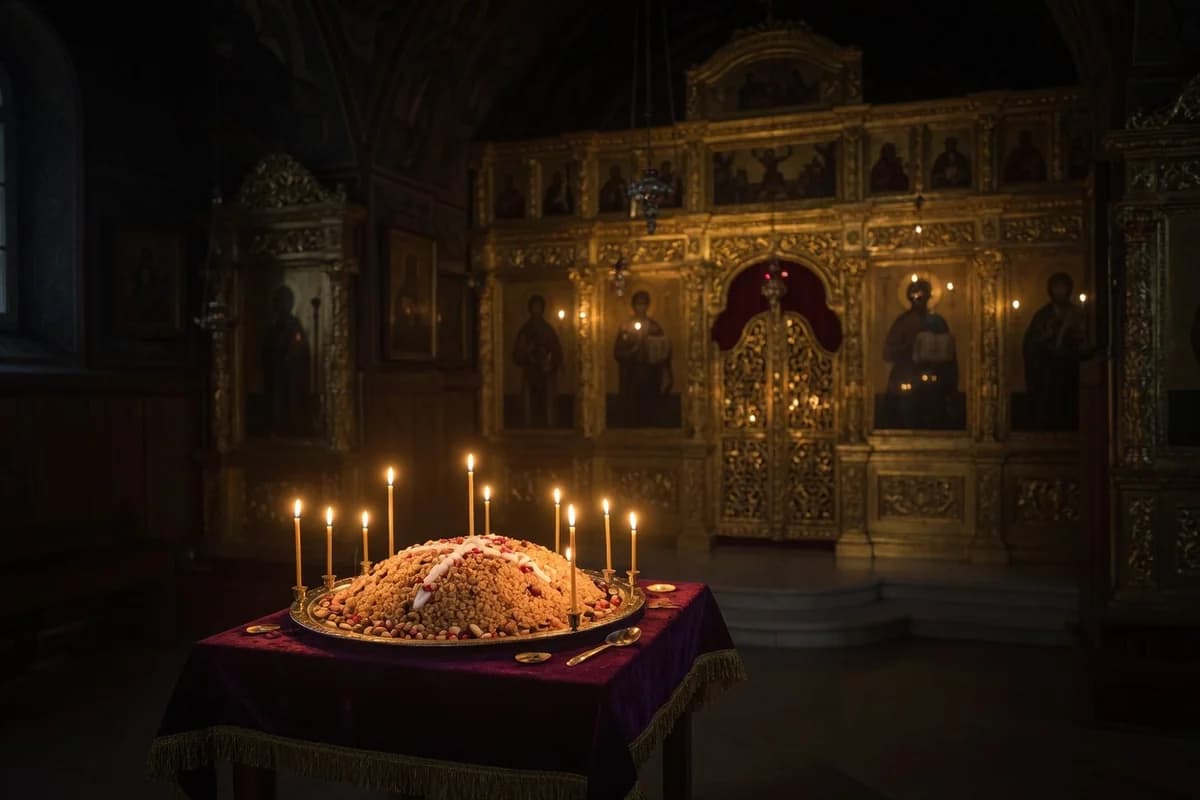
Orthodox church interior with a small memorial table holding koliva and lit candles before the altar
Illustrative image: a parastas service, with the reading of the departed person's name.

Memorials in other traditions

Remembering the dead exists across all traditions, in different forms. Catholic, Protestant, and other Christian communities also mark days and services for the dead.

In Romania, the Orthodox tradition sets the pattern, but every family commemorates according to its own faith. What matters is the act of remembrance and prayer for those who have gone.

Memorial traditions today

The customs are kept alive even as daily life has changed. Many families observe the most significant memorials — forty days, one year — and bring coliva to the Moșii, maintaining the bond with those who have departed.

For those living far away, organising a memorial from a distance can be difficult. We can help prepare what is needed and coordinate the service with the priest.

How we can help

We help you prepare the coliva, colaci, and memorial meal, and coordinate with the priest for the day and time of the service. We also take care of the grave site before the memorial.

We are available day and night. For a no-obligation conversation, call us or see the full page on parastase and memorials.

OFFICIAL SOURCES

Information verified with

FREQUENT QUESTIONS

What families ask most often

  • What are Romanian memorial services?

    They are prayer services for the souls of the departed, held at set dates after death and throughout the year, accompanied by coliva, colaci, and pomană.

  • When are memorials held?

    The most significant fall at three days, nine days, forty days, six months, and one year after death, then annually. Added to these are the Moșii and the Saturdays of the Dead.

  • What is coliva?

    Coliva is boiled wheat, sweetened and decorated — the symbol of resurrection in Christian belief. It is blessed by the priest and distributed to all present as a sign of remembrance for the departed.

  • Why is coliva made from wheat?

    Because the wheat grain that dies in the ground and rises again is, in Christian belief, the image of resurrection. That is why coliva is prepared from boiled wheat.

  • What does pomană mean?

    Pomană is a charitable gift made in the name of the departed — food, drink, colaci, and also objects such as vessels, clothing, or candles — given according to the family's means.

  • Why is the forty-day memorial the most important?

    It is the most significant individual memorial, connected in Orthodox belief to the soul's journey. It also marks the end of the main mourning period.

  • What are the Moșii?

    They are the Church-appointed days of communal remembrance for all the departed — the Winter Moșii, the Summer Moșii before Pentecost, and the Saturdays of the Dead. Families bring coliva and pomană on those days.

  • What goes on the pomelnic?

    The names of the departed members of the family, given to the priest to read during the service. The pomelnic is how a person's name is formally commemorated at church.

  • Who blesses the coliva?

    The priest, at the parastas or memorial service. After the blessing, the coliva is distributed to everyone present as a sign of remembrance for the departed.

  • Are memorials held after the first year?

    Yes. After the first anniversary, the memorial is held annually on the date of death. Tradition also marks memorials at three and seven years.

  • What needs to be prepared for a memorial?

    Coliva, colaci and bread for the pomană, food for the meal, candles, and where customary wine for the blessing — plus coordination with the priest for the service.

  • Can a memorial be held at home or at church?

    It can be held at church, at the cemetery, or at home with a priest. The core is the parastas service, with the blessing of the coliva and the pomană.

  • What if I cannot attend the memorial?

    You can send a pomelnic and the necessary items to the church, through family or with our help, so that the departed person's name is read at the service.

  • Are memorials legally required?

    No. They are a tradition and a way of honouring and praying for those who have gone. Each family observes them according to its faith and circumstances.

  • What is the difference between parastas and pomană?

    The parastas is the memorial service performed by the priest; the pomană is the charitable gift of food and objects made in the name of the departed. They are usually held together.

  • How can you help with memorials?

    We help you prepare the coliva, colaci, and memorial meal, coordinate with the priest for the service, and care for the grave before the memorial.

  • What is placed on the memorial table?

    Traditional dishes — fasting or non-fasting depending on the day — colaci, coliva, wine, and water. The specific foods vary by region and whether it is a fast day.

  • Is wine used at a memorial?

    Yes. Wine is used for the blessing of the coliva and given as pomană. Tradition also calls for a glass of water for the soul of the departed.

  • What does it mean to give an object as pomană?

    It means giving something — a vessel, a garment, a candle — in the name of the departed. The gift is usually made to someone in need or to a close friend.

  • Who prepares the coliva?

    Usually the women of the family or someone experienced in the tradition. Coliva can also be ordered ready-made. We can also help you prepare it.

  • Is the grave visited at a memorial?

    Yes. At memorials, the family goes to the grave, lights a candle, burns incense, and lays flowers, alongside the church service.

  • What is the Saturday of the Dead?

    A day of communal remembrance for all the departed, appointed by the Church several times a year, when coliva and pomană are brought to church.

  • Does the forty-day memorial have to fall exactly on the fortieth day?

    It is typically held around that date — often on the nearest weekend so the family can gather. The priest helps you choose the right day.

  • Can several departed people be commemorated at once?

    Yes. At the Moșii and the Saturdays of the Dead, all the departed members of a family are commemorated together, listed on a pomelnic given to the priest.

  • What do I bring to church for the Moșii?

    Coliva or colaci, fruit, sweets, a candle, and a pomelnic with the names of the departed. These are given as pomană after the service.

  • Why is the coliva shared with everyone present?

    So that all those present pray for the soul of the departed by partaking of the coliva. It is an act of communal remembrance.

READ ALSO

Related guides

QUESTIONS?

Call us for guidance

We answer day and night. We explain your family's specific situation with no commercial pressure.

0739 592 835WhatsApp