GUIDE · FUNERAL SERVICE

The Orthodox funeral service: the prohod and its order

The Romanian Orthodox funeral service, known as the prohod, is the rite through which the priest accompanies the departed on their final journey, with prayer and the hope of resurrection. It has three moments: the prayers at the wake (priveghi), the service at the church or chapel, and the committal at the cemetery with prayers at the graveside. The full service typically lasts between one and a half and two hours. This guide explains the order of the service, step by step, and how to prepare for it.

Updated: 22 June 20261,650 wordsReviewed by Andrei
sobru.ro — Romanian funeral services
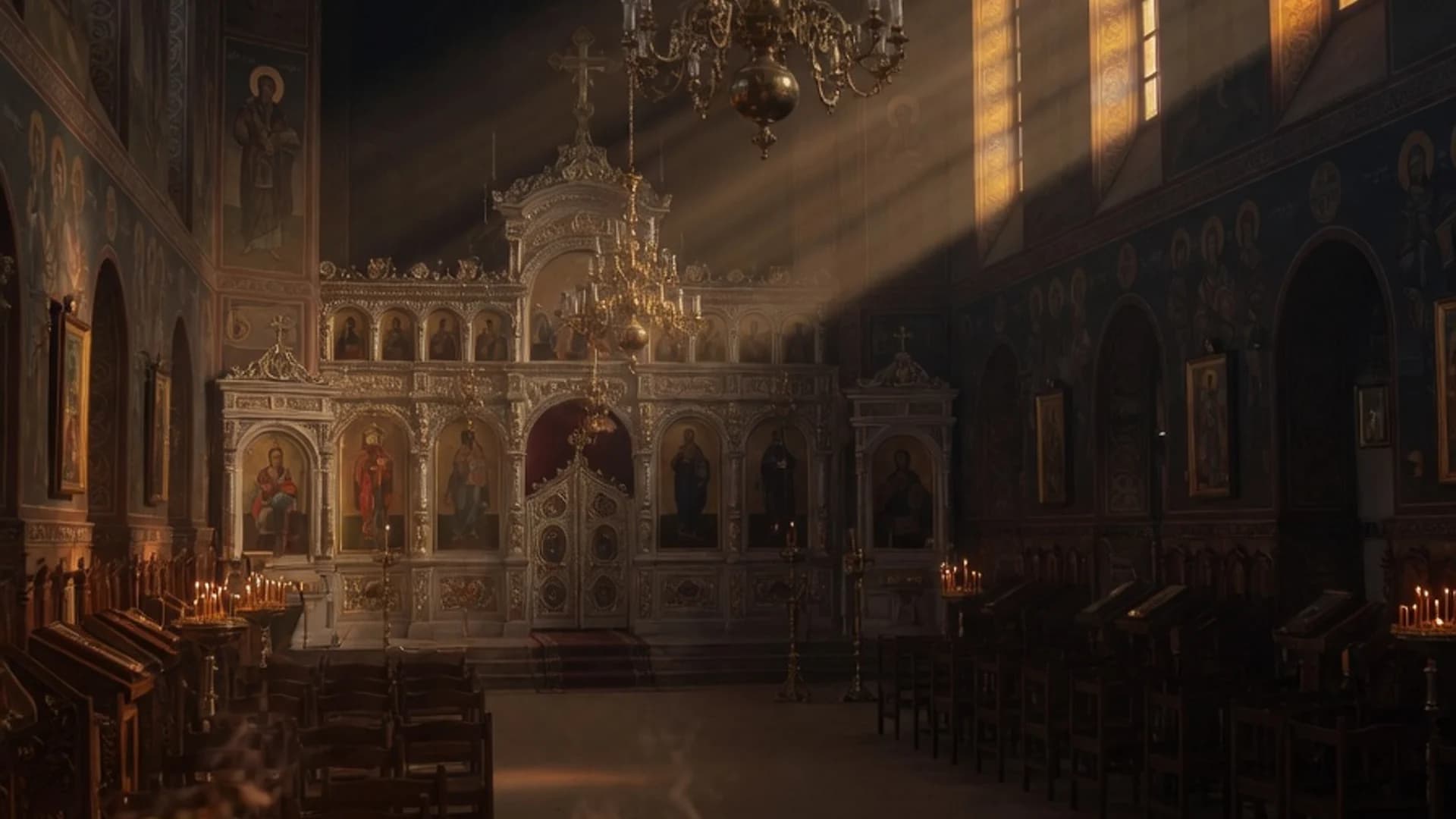
Illustrative image for the guide above.

What is the funeral service?

The funeral service — the prohod — is the Church's rite by which the departed is accompanied on the final journey. The priest prays for the forgiveness and rest of the soul.

The service brings comfort to the family and expresses the hope of resurrection. It is the central moment of an Orthodox Christian funeral.
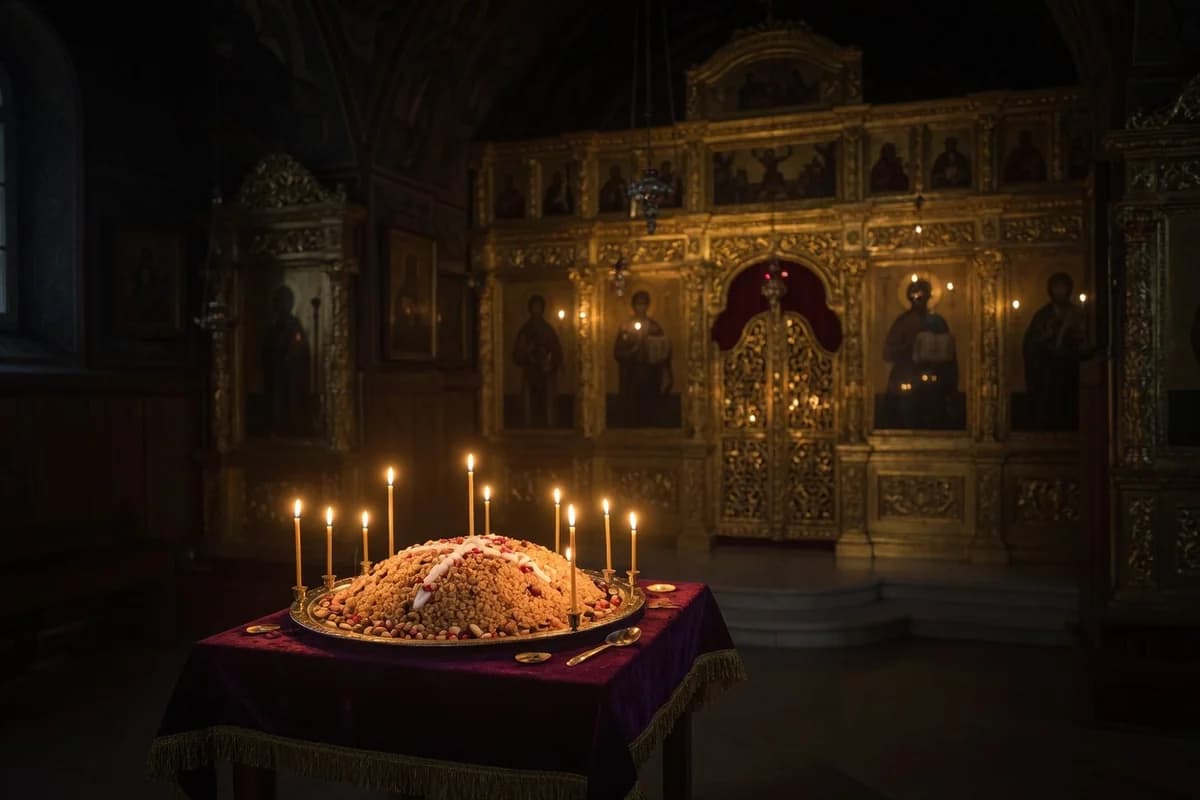
Orthodox church interior with a small memorial table holding koliva and lit candles before the altar
Illustrative image: the funeral service performed by a priest.

The prohod

The prohod is the funeral service proper — prayers, chants, and readings from Scripture. It includes the prayer for forgiveness for the departed and the prayer for the rest of the soul.

The service follows a well-established order performed by the priest. Family and those close to the deceased pray together, holding lit candles.

Prayers at the wake

On the evening before the funeral, the priest says prayers at the wake (priveghi), beside the casket. It is a time of vigil and prayer, held at home or at a chapel.

Scripture is read at the wake and candles are kept burning. See also the page on organising the wake.

The church service

On the day of the funeral, the casket is brought to the church or to the cemetery chapel, where the prohod is performed. The casket is placed with the face towards the altar.

The service includes prayers, chants, a reading from the Gospel, and a word of remembrance. At the end, those present take their final farewell from the departed.

Romanian Orthodox Church — Patriarchate of Romania

The committal at the cemetery

After the church service, the funeral procession goes to the cemetery. At the graveside, the priest says the final prayers and earth is sprinkled over the casket.

The casket is lowered into the grave, and family members and close friends sprinkle earth and lay flowers. See also the service for lowering the casket.
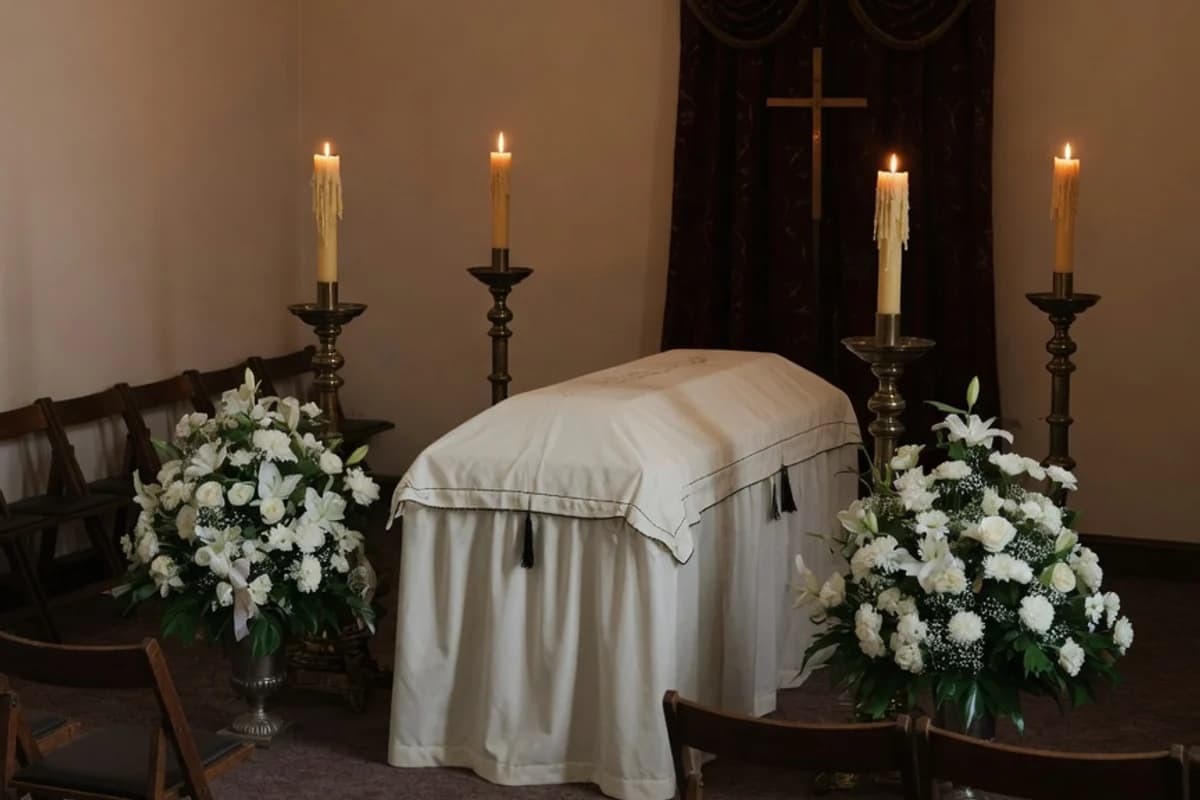
Chapel prepared for a wake: catafalque, candles, flowers
Illustrative image: prayers at the graveside, after the funeral service.

The coliva and the memorial

At the funeral service, the priest blesses the coliva — the symbol of resurrection — and reads the name of the departed. The coliva is then distributed to all present.

After the funeral come the memorial services: the parastase at the appointed dates.

How long does the service last?

The full prohod typically lasts between one and a half and two hours. At the family's request, an abbreviated service can be performed, which is shorter.

The duration of the service is in addition to the wake the evening before and the committal at the cemetery. We work with the priest to plan the full order together.

Special circumstances

The funeral service is performed for baptised Orthodox Christians. In certain special circumstances the order may differ; the priest guides the family in each case.

For those of another faith or for a farewell without a religious service, there is also the option of a civil ceremony. We advise you with respect for your wishes.

What is used at the service

Several liturgical objects are used at the funeral service, each with its own meaning:

  • Candles, lit by those present
  • The coliva and colaci, for blessing
  • Wine and oil, for the final anointing
  • The cross and the religious banners (prapuri), carried in the procession
  • Incense (tămâie), for the censing

How we help

We coordinate with the priest on the day and time of the service, prepare the coliva, candles, and everything needed, and handle transport and the cemetery arrangements so the family can pray in peace.

We are available day and night. For a no-obligation conversation, call us or see the page on organising the ceremony.

STEP BY STEP

Steps summary

  1. 01

    Speak with the priest

    Agree on the day and time of the service and the venue — the parish church or the cemetery chapel.

  2. 02

    Prepare the wake

    On the evening before the funeral, the priest says prayers at the wake beside the casket.

  3. 03

    Attend the prohod

    At the church or chapel, the priest performs the funeral service with prayers, chants, and the Gospel reading.

  4. 04

    The committal at the grave

    At the cemetery, the priest says the final prayers, earth is sprinkled, and the casket is lowered into the grave.

OFFICIAL SOURCES

Information verified with

FREQUENT QUESTIONS

What families ask most often

  • What is the Orthodox funeral service?

    It is the prohod — the Church's rite through which the priest accompanies the departed, with prayer and the hope of resurrection, at the wake, at the church, and at the graveside.

  • What is the prohod?

    The prohod is the funeral service proper, with prayers, chants, and readings from Scripture, through which forgiveness and rest for the soul of the departed are sought.

  • How long does the funeral service last?

    The full prohod typically lasts between one and a half and two hours. At the family's request, an abbreviated version can be performed, which is shorter.

  • Where is the service held?

    At the parish church or at the cemetery chapel. The casket is placed with the face towards the altar, and at the end the procession goes to the grave.

  • Who performs the service?

    The priest — usually the priest of the parish to which the deceased or the family belongs. If you do not have a priest, we can help you contact the parish.

  • What happens at the wake?

    On the evening before the funeral, the priest says prayers beside the casket, Scripture is read, and candles are kept burning. It is a time of vigil and prayer.

  • What happens at the cemetery?

    After the church service, the procession goes to the cemetery. The priest says the final prayers, earth is sprinkled over the casket, and the casket is lowered into the grave.

  • What is the role of the coliva at the service?

    The coliva — the symbol of resurrection — is blessed by the priest at the service and distributed to everyone present as a sign of remembrance for the departed.

  • Can an abbreviated service be performed?

    Yes, at the family's request. The abbreviated service is shorter than the full prohod. The order is agreed with the priest according to the family's wishes and circumstances.

  • For whom is the funeral service performed?

    For baptised Orthodox Christians. In special circumstances the order may differ; the priest guides the family in each case.

  • What is read at the service?

    Prayers, psalms, and the Gospel. The service also includes a word of remembrance in which the priest recalls the departed and brings comfort to the family.

  • Does the family speak at the service?

    Usually the word of remembrance is spoken by the priest. Those close to the deceased may say a few words, according to the parish's practice and the family's wishes.

  • What do I need to prepare for the service?

    The coliva, colaci, candles, and wine for the blessing, plus the clothing chosen for the departed. We prepare all of this at your request.

  • Can the funeral service be held at a cremation?

    The Romanian Orthodox Church does not perform the prohod at cremation. We will explain the situation and help you find a solution that respects the family's faith.

  • How do you help with the funeral service?

    We coordinate with the priest on the day and time, prepare the coliva and everything needed, and handle transport and the cemetery so the family can pray in peace.

  • Who pays the priest for the service?

    The family gives the priest a sum according to their means and local custom. There is no fixed fee — it is a gift for the ministry rendered, settled at the church.

  • Can the funeral service be filmed?

    At the family's wish and with the priest's agreement, yes — discreetly. Some families prefer a sober recording; others prefer complete privacy. We respect your choice.

  • Is the casket open at the service?

    Usually yes, until the end, for a final farewell. It is closed before the casket is lowered into the grave, or before cremation.

  • Can I bring a priest from another parish?

    Yes. If the family has a close priest or a spiritual father, the service can be performed by him, with the agreement of the local parish where appropriate.

  • What is censing (cădirea)?

    Censing is the act by which the priest honours the casket and those present with incense smoke, as a prayer rising to God.

  • How many priests officiate at a funeral?

    Usually one. At the family's request and depending on circumstances, more priests may officiate, especially for a more solemn service.

  • Can the service be held outdoors?

    Yes, at the cemetery or at an open chapel. The committal at the grave always takes place outdoors, with the prayers for lowering the casket.

  • Can children attend the service?

    Yes. Children can be present alongside the family. With age-appropriate preparation, being present helps them say their farewell.

  • What happens to the candles after the service?

    The candles are carefully extinguished or allowed to burn down, according to custom. Some are given as pomană alongside the coliva and colaci.

  • Can a service be held for someone who died abroad?

    Yes. The service is held at repatriation, in Romania, or, if the burial is abroad, a memorial service can be held here. We help you coordinate.

  • What is the abbreviated prohod?

    A shorter version of the funeral service, performed at the family's request or in certain circumstances. The priest advises when it is appropriate.

  • Is the service different for a priest or a monk?

    Yes, there are specific rites for the burial of priests and monks. For a lay person, the standard prohod is followed.

  • What time is the service held?

    Usually during the day, in line with the church and cemetery schedules. We agree the time with the priest, taking into account the procession and the memorial meal.

  • What passage from the Gospel is read?

    A passage on resurrection and eternal life, chosen according to the order of the funeral service. The Gospel brings the hope of resurrection into the midst of grief.

  • What is the final anointing at the funeral?

    At the end, the priest pours oil and wine over the departed in the shape of a cross, as a sign of God's mercy. It is a gesture from the order of the prohod.

READ ALSO

Related guides

QUESTIONS?

Call us for guidance

We answer day and night. We explain your family's specific situation with no commercial pressure.

0739 592 835WhatsApp