Wake arrangements: tradition, duration, and what to prepare
A wake (also called a vigil) is the keeping of watch over the deceased in the night or nights before the funeral, at home or in a chapel. Family and friends come to pay their last respects beside the open casket, with candles lit. We prepare the casket, the chapel, the candles, and everything else that is needed.
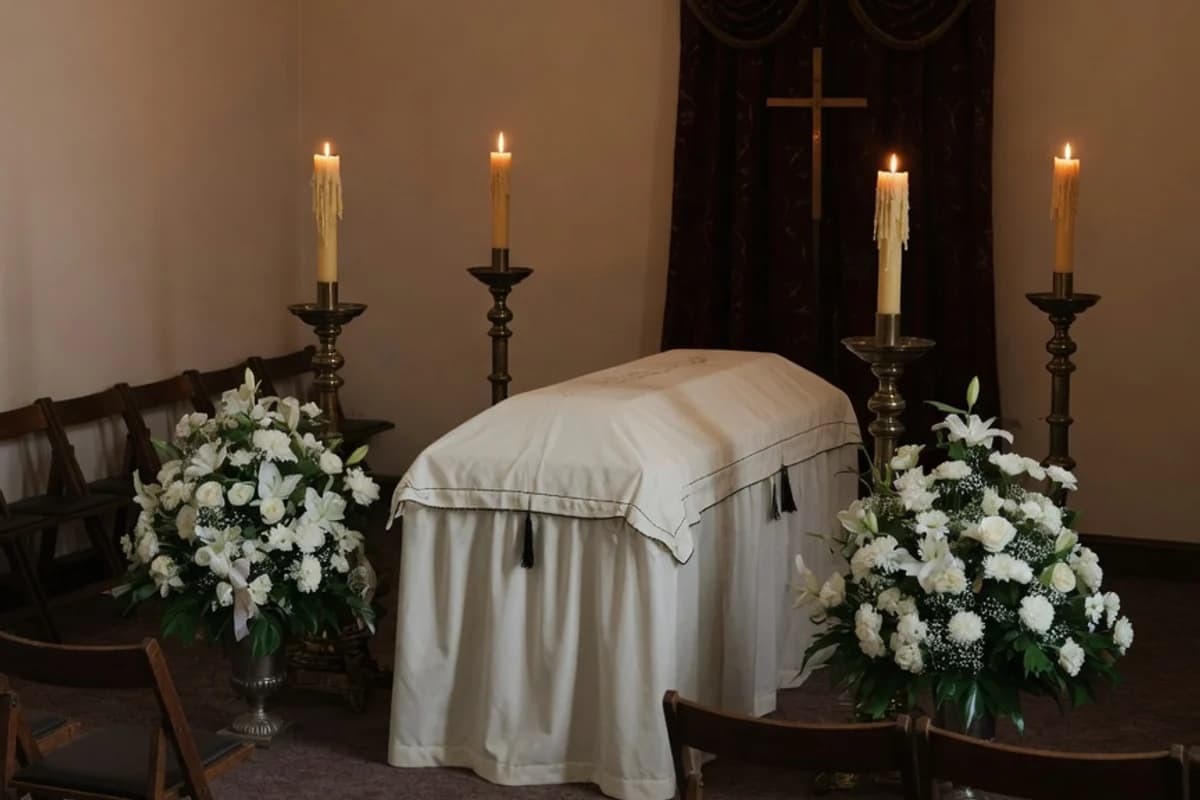
wake — vigil before the funeral. Illustrative image.
What a wake is
A wake is the keeping of watch over the deceased in the night before the funeral. The casket is open, with candles burning at each of the four corners, while family and friends come to pray and say their last goodbye.
It is a moment of mourning and of respect, maintained by tradition. The wake is held at home or in a hired chapel, depending on the family's preference and available space.
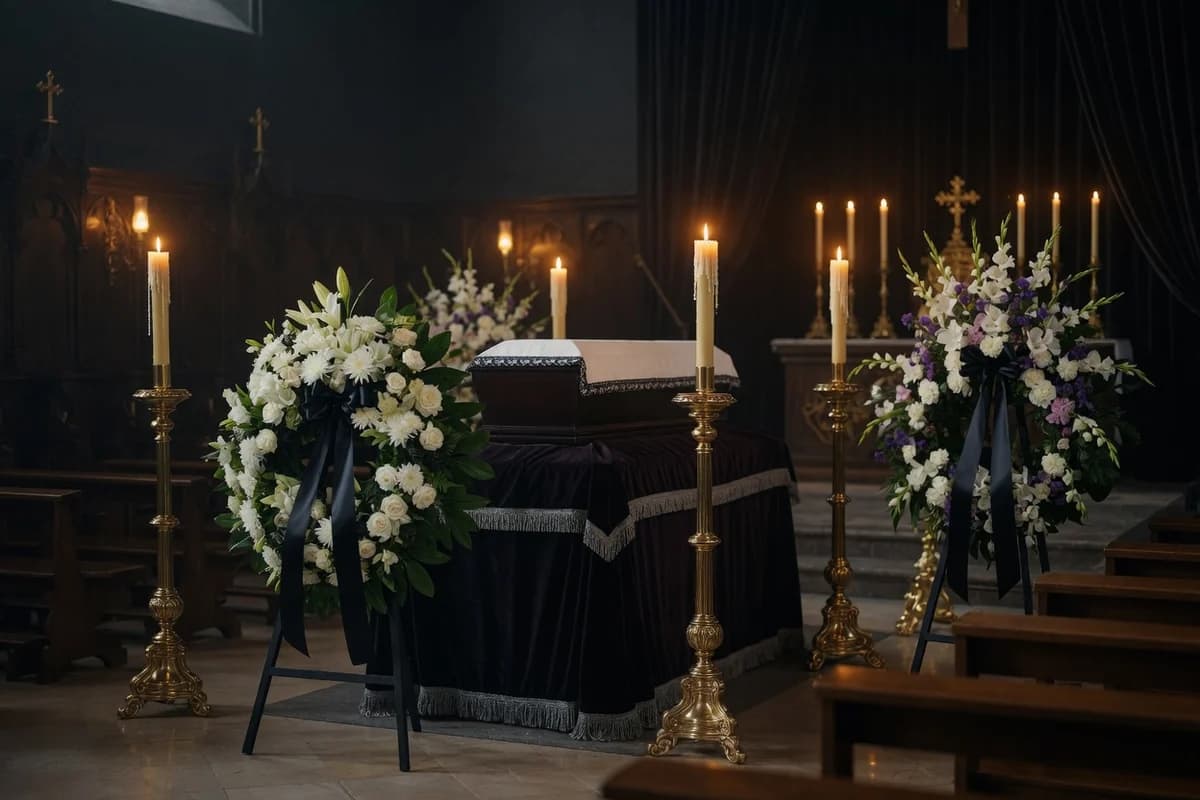
Illustrative image: a chapel prepared and laid out for a wake.
What “priveghi” means and where the custom comes from
The Romanian word for a wake, “priveghi”, comes from the verb “a priveghea” — to keep watch. The Romanian dictionary defines it plainly as watching over the deceased at night, before the burial. The verb goes back to the Latin “pervigilare”, to stay awake all night.
In Orthodox tradition, the wake is not simply waiting for the funeral. It is time given to prayer for the person who has died. The Church teaches that the departed can no longer pray for themselves, and that those left behind help them through prayer. That is why the Psalms are read, candles are kept burning, and the priest is called.
The wake matters for the living as well. Relatives, neighbours, and friends come to sit with the family. The family is not left alone in the first days, and everyone who knew the person says goodbye together.
How long it lasts differs by region. In many villages the deceased stays at home until the third day, with two nights of vigil. In towns and cities, a single night at a chapel is more common. There is no single rule for the whole country: the family follows local custom and agrees the details with the parish priest.
Wake rules: what is done and what is avoided
At a Romanian wake, the deceased is never left alone, candles stay lit, the Psalms are read, and people speak quietly. These rules come from Orthodox tradition and from plain good sense. Some customs change from one village to the next; these are the ones observed almost everywhere.
The deceased is never left alone. Those closest take turns keeping watch, especially at night.
Candles stay lit beside the casket. Someone makes sure they are replaced in time.
The Psalms are read aloud, by a church reader or by a family member who reads clearly and reverently.
People speak quietly. No jokes, no loud laughter, and no smoking near the deceased.
Alcohol is kept within limits. Any food or drink stays simple and sober.
Photographs only with the family's consent. Romanian law prohibits photographing a deceased person without the consent of the next of kin (Government Decision 741/2016, art. 4).
Customs such as covering mirrors vary by region. If you are unsure what is done locally, ask the parish priest or the older members of the family.
The prayer service at the wake: stâlpi and the Psalter
In the evening, the family can ask the priest to hold a short service beside the casket. In many regions it is called “stâlpii” — literally “the pillars”. At its heart is the reading of the Gospel: passages from all four Gospels.
The number of passages read differs by region: eleven or twelve in some places, more in others. The service is usually held at dusk, but it can take place at another time of day. The priest will tell you how it is done in his parish.
How long is the prayer service? It is a short prayer. The exact length depends on local practice and on how many Gospel passages are read, so ask the priest when you arrange it. Between services, a church reader or someone close to the family reads from the Psalter.
During the service, those present stand quietly with a lit candle and pray with the priest. Keep your candle away from other people's clothing. We can arrange the priest for you. For what happens the next day, see our guide to the Orthodox funeral service.
Visiting a wake: what to bring, wear, and do
To visit a Romanian wake, bring a candle and, if you wish, flowers, and wear simple, dark clothes. Nothing else is needed. What matters is to come with respect and, if you are not family, not to stay too long.
What to bring: a candle and, if you wish, flowers — by custom, in an even number. Wreaths are usually sent for the funeral itself, though they can be brought to the wake. In some regions, close friends leave the family an envelope with money to help with costs. See which flowers are appropriate.
What to wear: simple, dark clothing — black, navy, or grey. Nothing bright or festive.
When you arrive: approach the casket, make the sign of the cross if you are Orthodox, light your candle, and pray briefly in silence.
What to say: little, and simply. Romanians often say “Dumnezeu să-l ierte” (May God forgive him) or “Condoleanțe”. In English, “I am so sorry for your loss” is enough. Do not ask how the death happened. More wording is in our guide to condolence messages.
How long to stay: a few minutes if you are not close to the family. Family and close friends stay longer, sometimes through the night.
If you are not Orthodox: follow what others do and quietly ask a relative what is appropriate. Nobody expects you to make religious gestures that are not your own.
The wake and grief
The wake is usually the first time after the death that the family receives visitors: relatives, neighbours, and friends come, memories are shared, and prayers are said together.
Grief continues long after the funeral. Our guide on what mourning means explains the customs and how long they last. If the grief becomes hard to carry, you can talk to a specialist — see bereavement counselling.
How long a wake lasts
A wake normally lasts one or two nights, between the death and the funeral. Tradition holds that the deceased should not be left alone — the family takes turns keeping watch, particularly through the night.
The duration depends on local custom, the day of the funeral, and how long relatives travelling from elsewhere need to arrive. A mortuary cold store allows the wake to be extended when necessary.
Where the wake is held
The wake can be held at home, in a room prepared for the purpose, or at a funeral chapel. Each option has its advantages:
At home — intimate, personal, in keeping with the family's own tradition
At a chapel — practical, with room for many visitors, without transforming the home
At the cemetery chapel — close to the burial site
Location
What sets it apart
At home
Intimate and personal, in keeping with the family's own tradition; requires space and transforms the home for several days
At a funeral chapel
Practical, with room for many visitors, without transforming the home
At the cemetery chapel
Close to the burial site
Where a wake can be held — at a glance We advise on what fits your situation — family size, expected visitors, and available space.
What is prepared for a wake
Preparations follow tradition and are arranged for the comfort of those keeping watch:
The casket, placed on a stand, with the deceased properly laid out
Candles at each of the four corners of the casket
A vigil lamp and an icon at the head
A veil over the casket, with flowers or a wreath
Seating for those keeping vigil
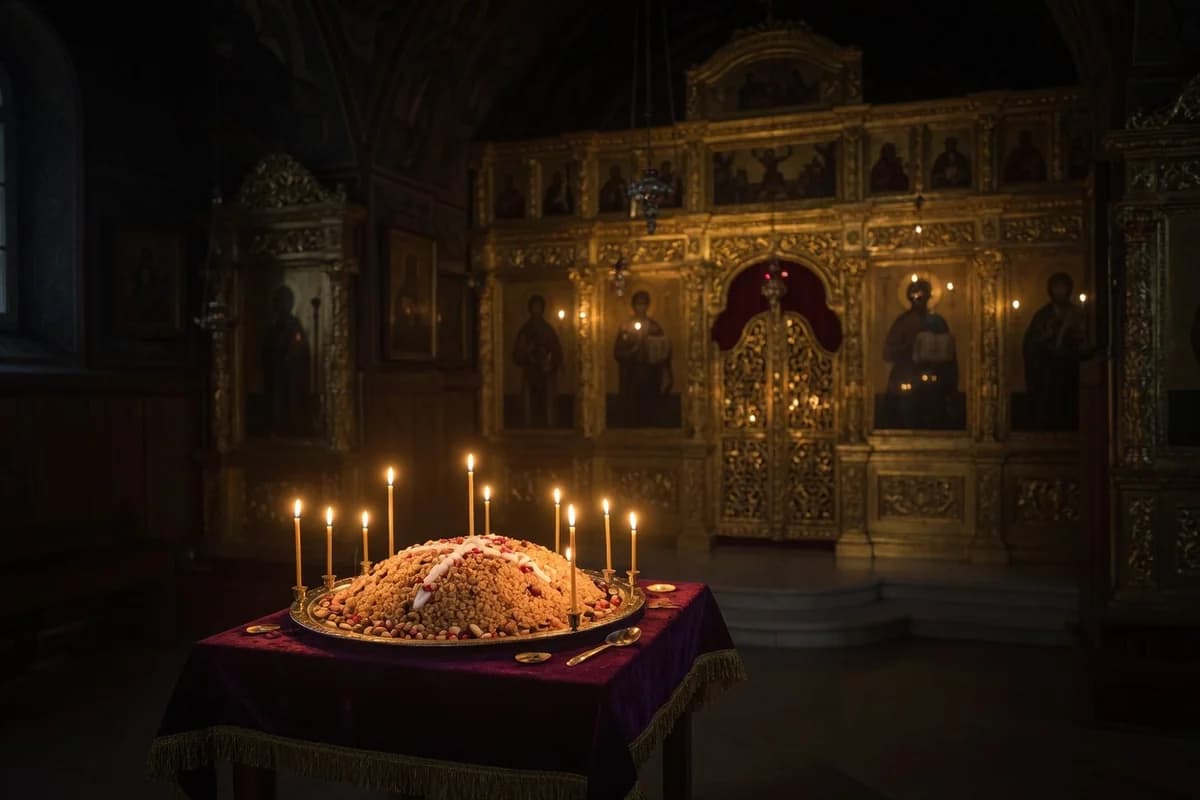
A table with bread rolls, boiled wheat (colivă), and drinks for visitors, according to custom
Illustrative image: candles and preparations for the vigil over the deceased.
Customs at the wake
The wake follows customs preserved by tradition. Psalms or prayers are read, candles are kept burning, and a calm atmosphere of quiet reflection is maintained.
Visitors bring flowers and candles, bow before the casket, and offer condolences to the family. Noise and levity are avoided; the wake remains a sober occasion.
What we include in wake arrangements
We prepare everything that the wake requires, so the family can focus on grieving:
The casket and preparation of the deceased
A hired chapel, if the wake is not held at home
Candles, vigil lamp, icon, veil, and casket stand
The wreath and floral arrangements
The bread rolls, boiled wheat, and refreshment table for visitors, on request
Coordination with the priest for prayers
Home or chapel wake
A home wake preserves tradition and is more personal, but requires space and transforms the home for several days. A chapel is more practical when many visitors are expected.
We advise on what fits your situation — family size, expected number of visitors, and available space. See also hiring a chapel.
Who handles everything
Tell us where you want the wake and which traditions to observe, and we prepare everything — casket, chapel, candles, flowers, and the refreshment table.
We answer day and night. For a no-obligation conversation, call us or see our page on full ceremony arrangements.
LOCAL COVERAGE
Where do we provide wake organisation in Bucharest and Ilfov?
We cover all six sectors of Bucharest and the towns of Ilfov county. Pick your area for local details: cemeteries, churches and the neighbourhoods we cover.
Select Bucharest or Ilfov for local wake organisation pages.
FREQUENT QUESTIONS
What families ask about wake arrangements: tradition, duration, and what to prepare
What is a funeral wake?
A wake (or vigil) is the keeping of watch over the deceased in the night before the funeral, beside the open casket with candles lit. Family and friends come to pray and say goodbye.
How long does a wake last?
Usually one or two nights, between the death and the funeral. In many Romanian villages the deceased stays at home until the third day. The length depends on local custom and how long relatives travelling from elsewhere need.
What does the Romanian word “priveghi” mean?
It comes from “a priveghea”, to keep watch, which goes back to the Latin “pervigilare”. The dictionary defines it as watching over the deceased at night, before the burial — in English, a wake or vigil.
How long is the prayer service at a wake?
It is a short prayer held by the priest beside the casket, usually in the evening. The length depends on local practice and on how many Gospel passages are read. Ask the priest when you arrange it.
What should you not do at a Romanian wake?
Do not leave the deceased alone, joke, laugh loudly, smoke, or drink heavily near the casket. Take photographs only with the family's consent.
What should I wear to a wake in Romania?
Simple, dark clothing: black, navy, or grey. Avoid bright colours and eye-catching accessories.
Where is a wake held?
At home, at a funeral chapel, or at the cemetery chapel. Home is more personal; a chapel is more practical when many visitors are expected.
What is prepared for a wake?
The casket with the deceased laid out, candles at each corner, a vigil lamp, an icon, a veil, flowers, and seating. On request, a table with bread rolls, boiled wheat, and drinks for visitors.
Why are candles lit at the wake?
Candles symbolise light and prayer for the deceased. They are lit at each of the four corners of the casket and kept burning throughout the vigil.
Does someone need to keep watch through the night?
Tradition holds that the deceased should not be left alone. The family takes turns through the night, reading prayers and keeping the candles burning.
What is read at the wake?
Usually the Psalms or prayer books. At some wakes the priest comes for a short prayer service; otherwise a family member or a reader leads.
What do you bring to a wake in Romania?
A candle and, if you wish, flowers — by custom, in an even number. In some regions, close friends leave the family an envelope with money for costs, or a gift for distribution to the poor (pomană). Visitors bow before the casket and offer condolences to the family.
Is food offered at a wake?
By tradition, yes. A table is laid with bread rolls, boiled wheat, coffee, and drinks for those keeping watch and for visitors. In some regions pomană is already given at the wake; what is served varies by region. The atmosphere remains sober.
Home or chapel — which is better?
It depends on available space and expected visitors. Home is more personal; a chapel is more practical and does not transform the family home. We advise on what fits.
What does organising a wake cost?
It depends on the location (home or chapel), the duration, and what is included — flowers, refreshment table, accessories. We give a clear quote in advance, with no hidden costs.
Can a wake be held before a cremation?
Yes. A wake before cremation follows the same arrangements as before a burial. The tradition of keeping vigil is the same, whichever option is chosen.
How large does the chapel need to be?
It depends on the number of visitors. A typical chapel holds several dozen people. We help you choose a chapel suited to the number you expect.
Who prepares the casket for the wake?
We do. We lay out the deceased, position the casket on its stand, light the candles, and arrange the flowers, icon, and veil according to tradition.
Can the wake be held for just one night?
Yes. A single night's wake is common when the funeral takes place the next day. The length is decided by the family, in keeping with custom and scheduling.
How do you help with wake arrangements?
We prepare the casket, chapel, candles, flowers, and refreshment table, and coordinate with the priest. The family tells us what they want; we take care of the rest.
Are mirrors covered during the wake?
In many regions, yes. Covering mirrors is a custom observed during the mourning period. The practice varies from one region to another.
What clothes are chosen for the deceased?
The family chooses the outfit — usually sober and neat: a suit or a dress. We dress the deceased in the chosen clothes during the preparation.
Who can come to the wake?
A wake is open — family, neighbours, colleagues, and friends are all welcome. Visitors bow before the casket, light a candle, and offer condolences.
How long do visitors stay at a wake?
Usually a short while — they come, bow, light a candle, and spend a few minutes with the family. Those closest may stay longer, especially overnight for the vigil.
Is there a prayer service at the wake?
In the evening, the priest may come for a short prayer service (sometimes called stâlpi in some regions). At other times, a family member or a reader reads from the Psalms.
Are photographs taken at a wake?
Not usually. A wake is a time of quiet reflection and mourning, not an occasion for photographs. Tradition calls for discretion and respect.
RELATED SERVICES
Related services we provide
Wake organisation in Bucharest
Local page by district: neighbourhoods, cemeteries, collection times. 24/7 funeral home.