
What is a parastas?
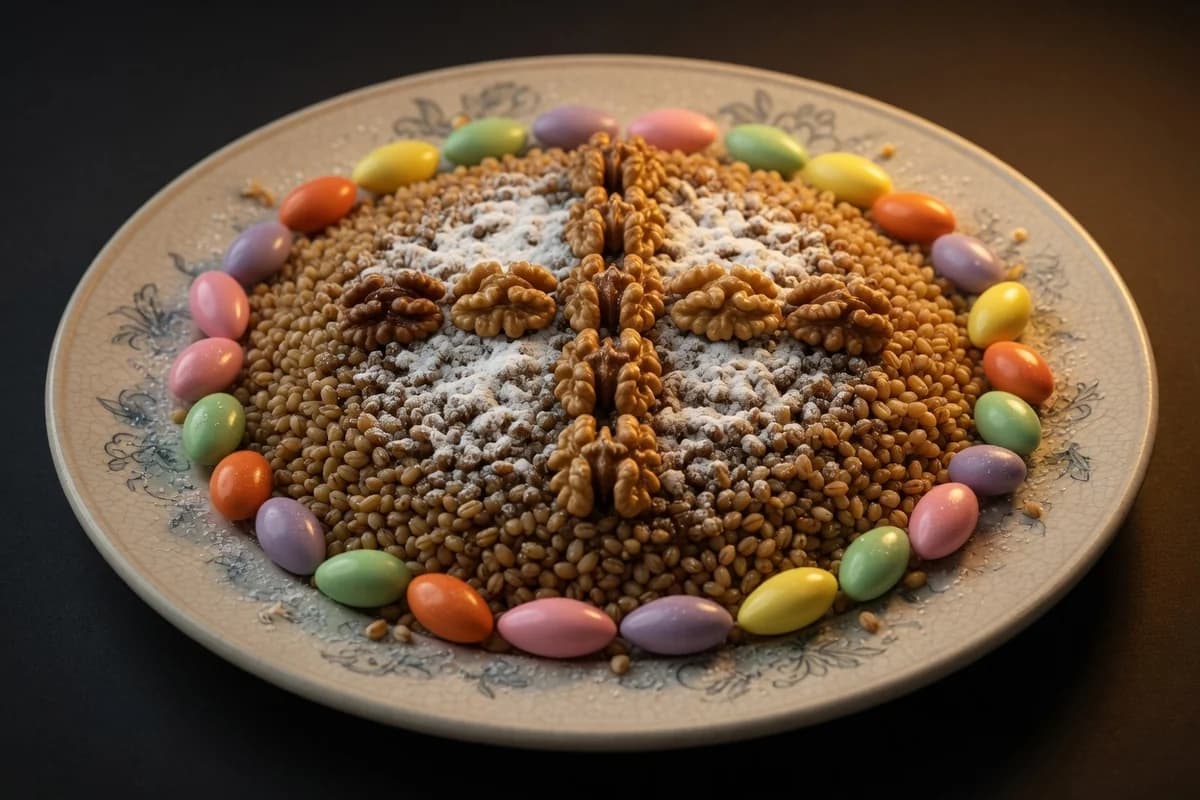
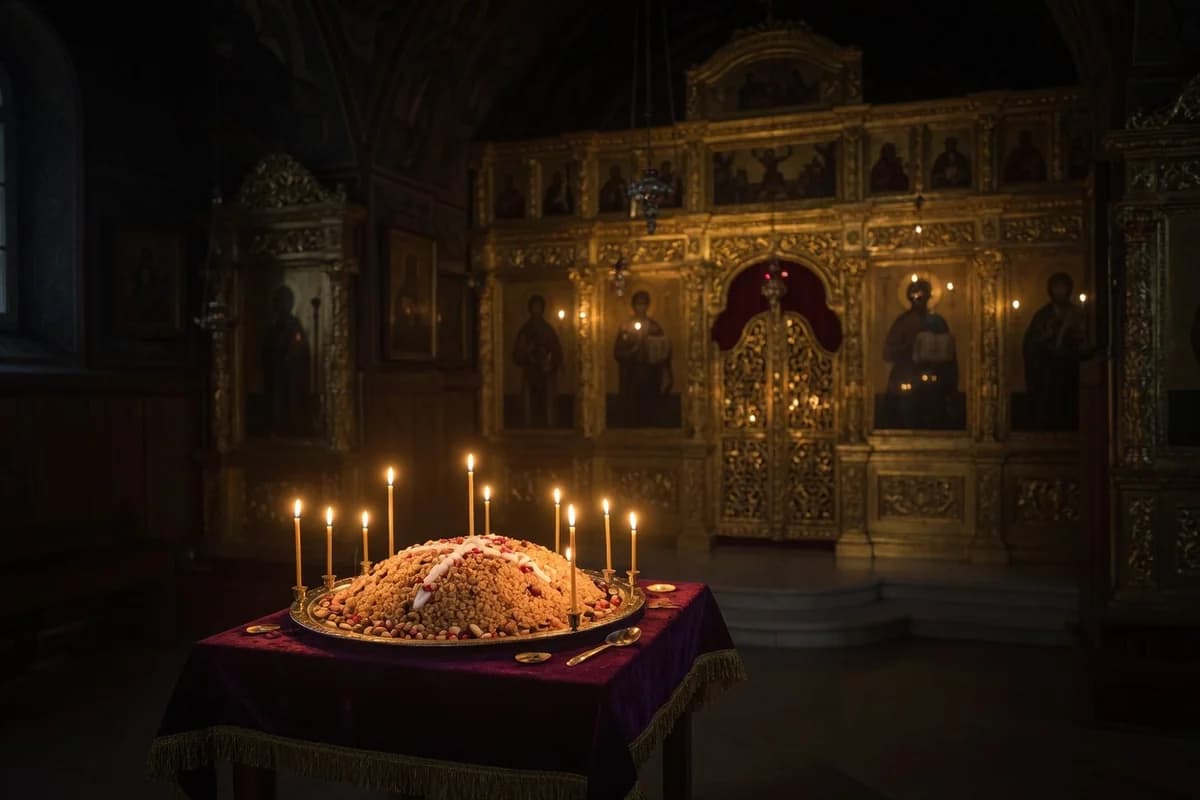
A parastas is the memorial prayer service performed by a priest for the soul of the departed. It consists of prayers, the reading of the departed person's name, and the blessing of the coliva.
It is held at church, at the cemetery, or at home, at set intervals after death. The parastas is the religious core of the memorial — the prayer part.
What is a pomană?
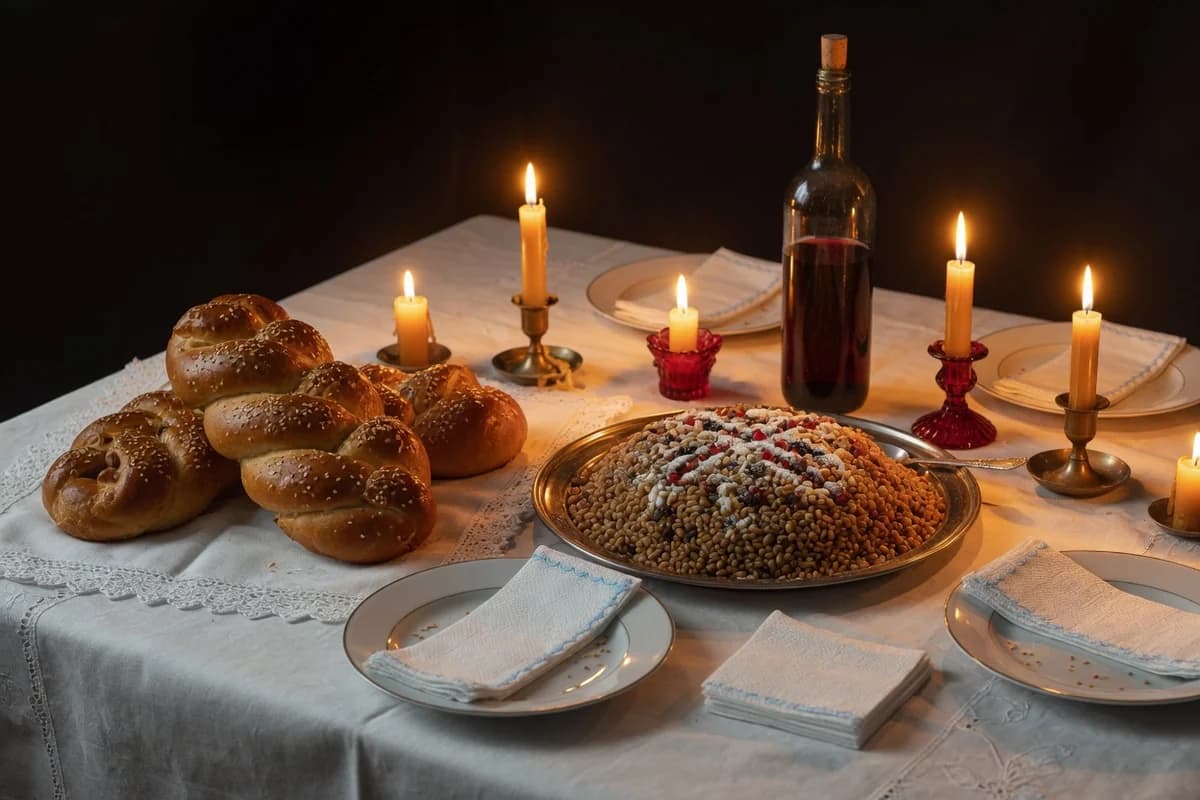
Pomană is a charitable gift made in the name of the departed's soul — food, drink, colaci, and also objects such as vessels, clothing, or candles — given as an act of almsgiving, usually to someone in need or to those close to the family.
The pomană is the charitable dimension of the memorial. Through the gift given to others in the name of the departed, the family honours his or her memory.
The difference at a glance
The parastas is the service; the pomană is the gift. One belongs to prayer, the other to charity. Here is the distinction in brief:
| Aspect | Parastas | Pomană |
|---|---|---|
| What it is | Memorial prayer service | Charitable gift for the soul |
| Who performs it | The priest | The family |
| Consists of | Prayer, coliva | Food, objects |
| Its role | Prayer | Almsgiving |
When are they held?
The parastas and pomană are almost always held together, on the same dates — at three days, nine days, forty days, six months, and one year after death, then annually.
Added to these are the Moșii and the Saturdays of the Dead, the communal days of remembrance. See also the organising memorials.
Coliva and colaci
Coliva, made from boiled wheat, is the symbol of resurrection and accompanies the parastas. It is blessed by the priest and distributed to everyone present.
The colaci, bread, and food are part of the pomană. See also the pages on how koliva is made and colaci.
Food pomană or object pomană?
The pomană can take the form of food — the memorial meal, colaci, dishes — or objects — vessels, clothing, candles — given to someone in need.
Tradition also recognises the large pomană (pomana mare) given at certain major memorials, with more substantial objects. The form remains at the family's discretion and means.
How to prepare
For the parastas, the family coordinates with the priest on the day and time, and prepares the coliva, colaci, and candles. For the pomană, they prepare the meal and the gifts.
We can help with all of this — coliva, colaci, the memorial meal — and with coordinating the service with the priest.
Practical things to know
A few points that help families prepare well:
- The parastas should be arranged with the priest in advance
- Prepare enough coliva for the number of people expected
- The pomană can be given even to a single person in need
- Dates can be moved to the nearest weekend so the family can attend
- The pomelnic with the names of the departed is given to the priest
How we help
We coordinate the parastas service with the priest and prepare everything needed for the pomană — coliva, colaci, the memorial meal — so the family can pray in peace.
We are available day and night. For a no-obligation conversation, call us or see the memorial calendar.