
What is the food parcel for pomană?
The food parcel for pomană is a form of pomană by which the family distributes food in memory of the departed. It is the alternative to the seated meal, easier to offer when there are many guests or they travel from afar.
The parcel is given after the service or at the grave, as a charitable offering. Those who receive it pray for the repose of the one being commemorated, according to Orthodox custom.
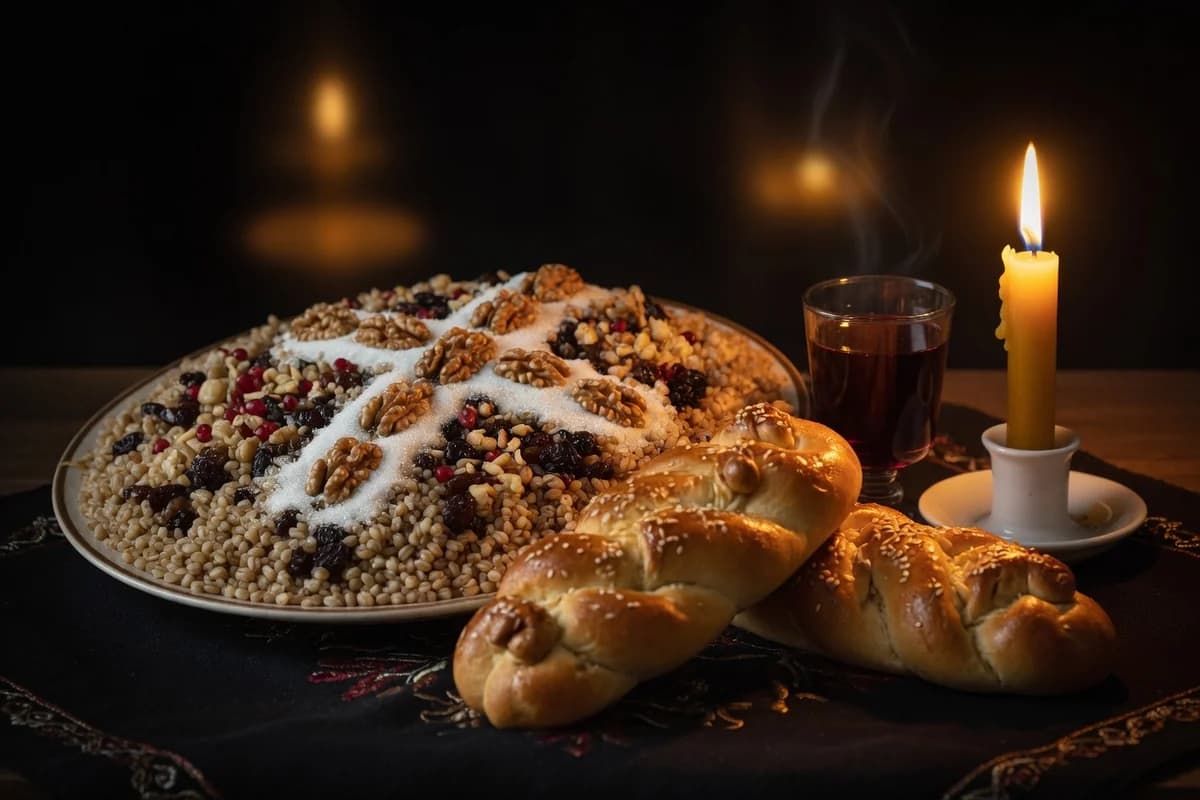
What does a food parcel contain?
The contents vary according to local tradition and the budget. A typical parcel contains:
- Colaci or bread — for blessing and distribution
- Koliva — in a small portion, packaged
- Sweets — biscuits, wafers, sweets
- Fruit — apples, oranges, bananas
- A candle — for prayer
- Sometimes a small bottle of wine or juice, or staple foods
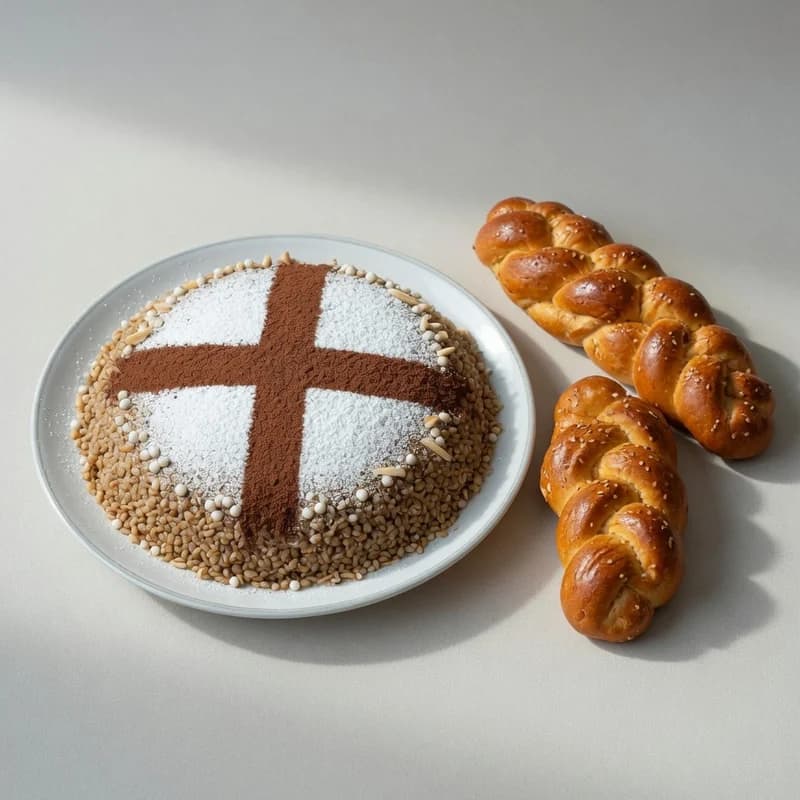
Ready-to-eat parcel or staple foods
There are two kinds of parcels. The first contains ready-to-eat food — colaci, sweets, fruit — for those present at the commemoration.
The second contains staple foods — oil, flour, sugar, rice — given mainly to those in need, as lasting assistance. The choice depends on who the parcel is intended for.
How it differs from the memorial meal
The memorial meal page is a seated lunch at which guests remain together. The parcel is an individual portion to take home.
The parcel is practical when there are many guests, when they travel from afar, or when there is no space for a large gathering. Many families combine both — a meal for close family, parcels for the rest.
| Aspect | Memorial meal | Food parcel |
|---|---|---|
| Format | Seated lunch — guests remain together | Individual portion to take home |
| Best suited for | Close guests who stay for the meal | Many guests, or guests travelling from afar |
| Space needed | Room for a large gathering | None — given after the service or at the grave |
| Common combination | Meal for close family | Parcels for the rest |
To whom are the parcels given?
The parcels are given to participants at the service and at the pomană, to people at church, and especially to those in need. Tradition places emphasis on charity towards the poor.
At large commemorations, every person present receives a parcel. At smaller ones, parcels are given only to those who are not staying for the meal.
When are the food parcels given?
Parcels are offered at every commemorative occasion:
- At the burial — for those present who are not staying for the meal
- At the 40-day parastas and the other first-year commemorations
- At the annual commemorations, through 7 years
- At the Moșii and the Saturdays of the Dead, for all the family's departed
How many parcels are made for a parastas?
The Church does not require a set number. Romanian Orthodox church rules do not say how many parcels or colaci to give. The number changes nothing for the soul of the departed; what counts is the prayer and the almsgiving.
In practice, you count people. Make one parcel for each person who comes to the service or the grave and is not staying for the meal. Add a few for people at church and for those in need in the parish. A large commemoration needs dozens of parcels; a small one, just a few.
There is also a custom of giving plates, cups, and spoons in sets of 6, 12, or 24. Church rules do not require it, but many families keep to it. If you are unsure what is usual in your family's area of Romania, ask the parish priest or the older relatives.
We help you estimate correctly, so there are neither too few nor too many left over. Leftover parcels are given to those in need.
Colaci and parcels at each commemoration
Commemorations are held at 3, 9, and 40 days, at 3, 6, and 9 months, at one year, and then every year up to seven years. What is prepared changes from one commemoration to the next and from one region to another. The table shows common practice, not a rule.
Each occasion has its own page: the 40-day memorial, the six-month memorial, and the one-year memorial.
| Commemoration | Colaci | Parcels |
|---|---|---|
| The funeral | Braided colaci, each with a candle. In some regions the căpețel of 43 colaci is made: the 3 large ones go to the priest, the 40 small ones are handed out after the service. | One for each mourner not staying for the meal, plus a few for those in need |
| 3 and 9 days | Colaci and koliva at the service. The 3-day commemoration usually falls on the day of the funeral. Where the căpețel is kept, it may also be made for memorial services. | According to the number present |
| 40 days | Colaci for the service and small colaci for those present. An icon and a colac are also prepared; in some places this memorial is called the raising of the Panaghia. Where the căpețel is made: 3 large colaci and 40 small ones. | One per person, from the guest list, plus a few for those in need |
| 3, 6, and 9 months | Colaci for the service and small colaci for those present. The family decides the number. | According to the number present; a smaller gathering than at 40 days |
| One year | Colaci for the service and small colaci for those present. | According to the number of guests |
| Every year, up to 7 years | A colac and koliva at church. | According to the number present |
The căpețel: the custom of 43 colaci
Some regions of Romania keep the custom of the căpețel. A căpețel is 43 colaci: 3 large ones and 40 small ones. It is placed at the head of the departed or given as alms, at the funeral and at memorial services. The 3 large colaci go to the priest, and the 40 small ones are handed out after the service. This is where the figure of 43 colaci comes from, often quoted for the 40-day memorial too.
Each large colac has a name. God's colac has three crosses. The Archangel's colac has four crosses. The third, the Angel's colac, has a loop divided into five. Each of the 40 small colaci holds a candle. They recall the 40 years the people of Israel wandered in the desert, or the 40 days the Saviour fasted. The lit candles recall the Resurrection.
The căpețel is a folk custom. It does not appear in the funeral service in the Molitfelnic, the Romanian Orthodox book of services, and it is not kept everywhere. If your family wants to keep it, the priest will tell you how it is done at your church. The kinds of colaci and what each is for are explained on the ritual bread page.
Parcels prepared by us
We prepare the pomană parcels according to local tradition and the budget, neatly packaged and ready to distribute. We coordinate them with the koliva, colaci, and the rest of the preparations.
The family chooses the number and the contents; we handle the rest. For a clear estimate, call us or see the questions at no cost page.
Food parcels at the major feasts
Pomană parcels are not given only at commemorations. At the major feasts, many families prepare parcels for those in need, in memory of the departed. The contents are suited to the feast:
- At Pascha — red eggs, cozonac (sweet bread), and pască, alongside colaci
- At Christmas — cozonac, festive sweets, and colaci
- At the Moșii — koliva, colaci, fruit, and staple foods
- At the Saturdays of the Dead — colaci and sweets, for all the departed