MEMORIAL SERVICES · COMMEMORATIONS · 3 YEARS

Three-year parastas: date, service, and what to prepare

The three-year parastas is held at the completion of three years from the date of death, on the nearest Saturday. It is one of the annual commemorations held after the first year, with a church service, koliva, and a meal or food parcels for close family.

Updated:

When is the three-year parastas held?

The date is counted from the day of death, at the completion of three years. If it does not fall on a Saturday, the parastas is moved to the nearest Saturday — the day appointed for commemorating the departed.

As with all commemorations, if the date falls during Great Lent or a special liturgical period, the priest sets a suitable Saturday. Book the service in good time.

The three-year parastas is an annual commemoration, held after the first-year series has concluded. The annual commemorations continue through 7 years — the last special commemoration in the tradition.

Annual commemorations after the first year

After the one-year parastas, the departed is commemorated annually, at each anniversary of the death. These commemorations are smaller than those of the first year, but just as important as a sign of remembrance.

The three-year commemoration is one of these. The tradition keeps the memory of the departed alive through service, koliva, and prayer, year after year, through the completion of seven years.
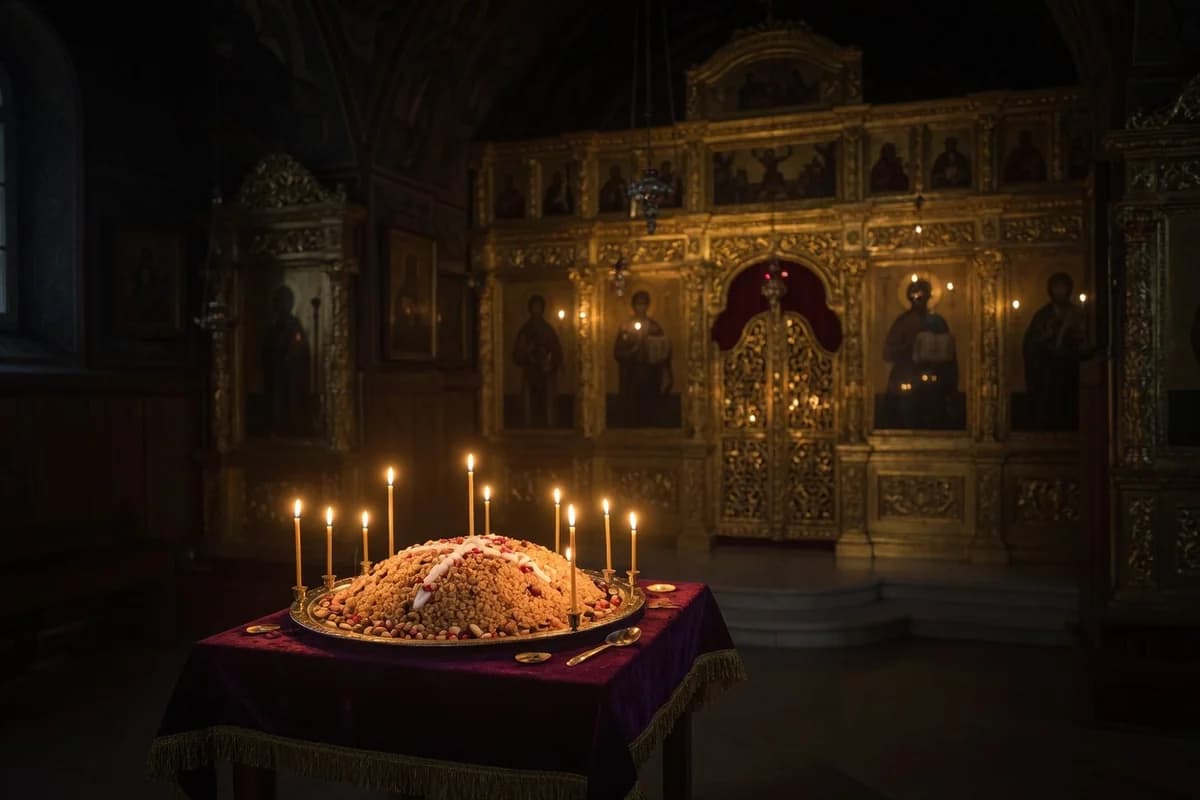
Orthodox church interior with a small memorial table holding koliva and lit candles before the altar
Illustrative image: parastas service at an Orthodox church.

What to prepare

Preparations are similar to those for other commemorations, adapted for a typically intimate circle of guests:

  • Koliva — boiled wheat with walnuts and sugar, decorated with a cross and a candle
  • Colaci — ritual breads for blessing and distribution
  • Wine — for blessing and commemoration
  • Candles — for those present at the service
  • The pomelnic with the name of the departed
  • A meal or food parcels for those present
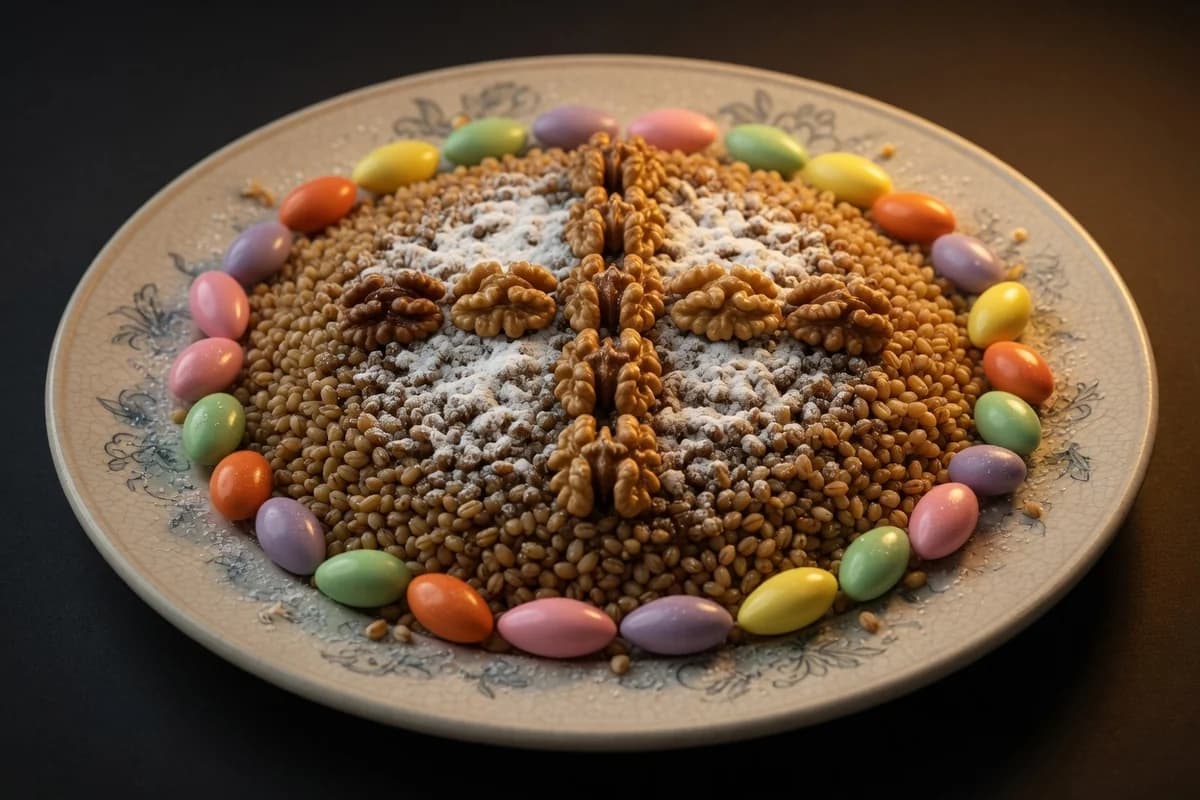
Traditional koliva close-up: boiled wheat with a walnut cross and powdered sugar, coloured sweets around the edge
Illustrative image: koliva decorated with a cross, prepared for a parastas.

The service and memorial meal

The service takes place at church, after the Saturday Liturgy. The family brings the koliva and colaci, hands the pomelnic to the priest, and lights the candles; the priest conducts the parastas for the departed.

The memorial meal follows the service, usually in an intimate setting. At parastase și pomeni we prepare the koliva, colaci, memorial meal, and church coordination.

Visiting the grave

At the annual commemorations, many families visit the grave after the service for prayer, lighting candles, and tending the grave. The flowers are changed and the oil lamp is renewed.

If the monument needs maintenance or a new inscription, the years of commemoration are the right time for such work. See monument prices for guidance.

Customs and charitable alms

Commemoration is not only a service — it is also charity. At every anniversary, pomană is given for the departed: food, parcels, or assistance for those in need.

The usual gestures at an annual commemoration are:

  • The parastas service at church, with koliva and the pomelnic
  • Lighting candles at the grave and at church
  • Pomană — food parcels or a meal for close family and those in need
  • Tending the grave and changing the flowers

Who organises the parastas?

We help with the preparations for the three-year commemoration: koliva and colaci, the meal or food parcels, and coordination with the priest, so the family can pray in peace.

The family chooses the location of the meal and the number of people; we handle the rest. For a cost estimate, call us — the consultation is free.

FREQUENT QUESTIONS

Answers to frequent questions

  • How is the date of the three-year parastas calculated?

    Count three years from the date of death. If the day does not fall on a Saturday, move the parastas to the nearest Saturday, following the priest's guidance.

  • Is the three-year parastas obligatory?

    It is not required by Church canon, but tradition keeps the annual commemoration of the departed as a sign of remembrance and prayer for the soul.

  • How does the three-year commemoration differ from those of the first year?

    It is an annual commemoration, generally smaller than the 40-day or one-year services. The koliva and the service remain the same; the circle of guests is smaller.

  • What is brought to church for the three-year parastas?

    Koliva, colaci, wine, candles, and the pomelnic with the name of the departed. Many families also bring flowers for the grave.

  • Is the grave visited at the three-year commemoration?

    Yes, usually. After the service, the family visits the grave for prayer, lighting candles, and tending the grave.

  • Until when are the annual commemorations held?

    Tradition keeps annual commemorations through the completion of seven years, with the 7-year parastas as the last special occasion. After that, commemoration continues at the general days of the departed.

  • How much does organising a three-year parastas cost?

    It depends on the number of guests and the type of meal. We give you a clear estimate in advance, with no hidden costs, for koliva, colaci, and the meal or food parcels.

  • Can the parastas be held on a day other than Saturday?

    Saturday is the traditional day. In special cases, the priest may set another day — for instance when the family travels from another town.

  • What goes into koliva?

    Boiled wheat, ground walnuts, and sugar, sometimes with cocoa or flavouring, decorated with powdered sugar and a cross. Wheat is the symbol of resurrection.

  • Can the commemoration be combined with work on the monument?

    Yes. The years of commemoration are an appropriate time for monument maintenance or a new inscription. We can coordinate this together with the commemoration.

  • Is the three-year commemoration held for those who were cremated?

    Yes. The tradition of commemorations is the same for burial and for cremation. The three-year parastas is held identically, regardless of the form chosen.

  • Should the priest be contacted in advance?

    Yes, we recommend booking the service early. The priest reserves the service and tells you if the date needs to be adjusted to a nearby Saturday.

  • What flowers are brought to the three-year commemoration?

    Sober flowers for the grave — chrysanthemums, carnations, or lilies. The old flowers are replaced and the oil lamp is relit.

  • How long does the parastas service last at three years?

    The parastas generally lasts 20–40 minutes, after the Liturgy. With the visit to the grave and the memorial meal, the day extends to several hours.

  • Is the departed commemorated every year through 7?

    Yes. After the first year, the commemoration is held at each anniversary of the death, through the completion of seven years, when the last special individual commemoration takes place.

  • Can the three-year commemoration be held at home?

    The parastas service takes place at church. The memorial meal can be held at home, at a restaurant, or at the parish hall, according to the family's preference.

  • What pomelnic is given at the three-year parastas?

    A pomelnic with the name of the departed, together with other departed family members if desired. It is given to the priest before the service.

  • Does it cost less than the 40-day commemoration?

    Usually, yes. With a smaller circle of guests, the meal and preparations are smaller. The koliva, colaci, and service remain the same.

  • Is the three-year commemoration held at the grave?

    Yes, many families visit the grave after the service for prayer, lighting candles, and tending the grave.

  • How do I let relatives know about the three-year commemoration?

    Best by phone, a few days in advance, especially for relatives from other towns, so they can arrange to attend the service and the meal.

SEE ALSO

Related services or pages

  • Memorial services and commemorations

    Full organisation: koliva, colaci, memorial meal, church coordination.

    View details
  • One-year parastas

    The close of the year of mourning.

    View details
  • Seven-year parastas

    The last special commemoration in the tradition.

    View details
  • 2026 commemorations calendar

    Exact dates of the Saturdays for commemoration in 2026.

    View details

QUESTIONS?

We answer day and night

Consultation is free. We answer any question specific to your family's situation.

0739 592 835WhatsApp