

How repatriation from Italy works
It all starts with a phone call. You tell us where the death occurred, and we immediately take over coordination with our local partner in Italy, who collects the deceased and carries out the embalming required for international transport.
In parallel, the documents are prepared: the Italian death certificate (certificato di morte), the legalized translation, and the nulla osta al trasporto — the clearance issued by the local health authority (ASL, Azienda Sanitaria Locale) that authorizes the body to cross municipal and national borders. Because Italy is part of the Schengen area, formalities are relatively simple, and the road journey to Romania takes about a day and a half.
The nulla osta al trasporto — what it is and who issues it
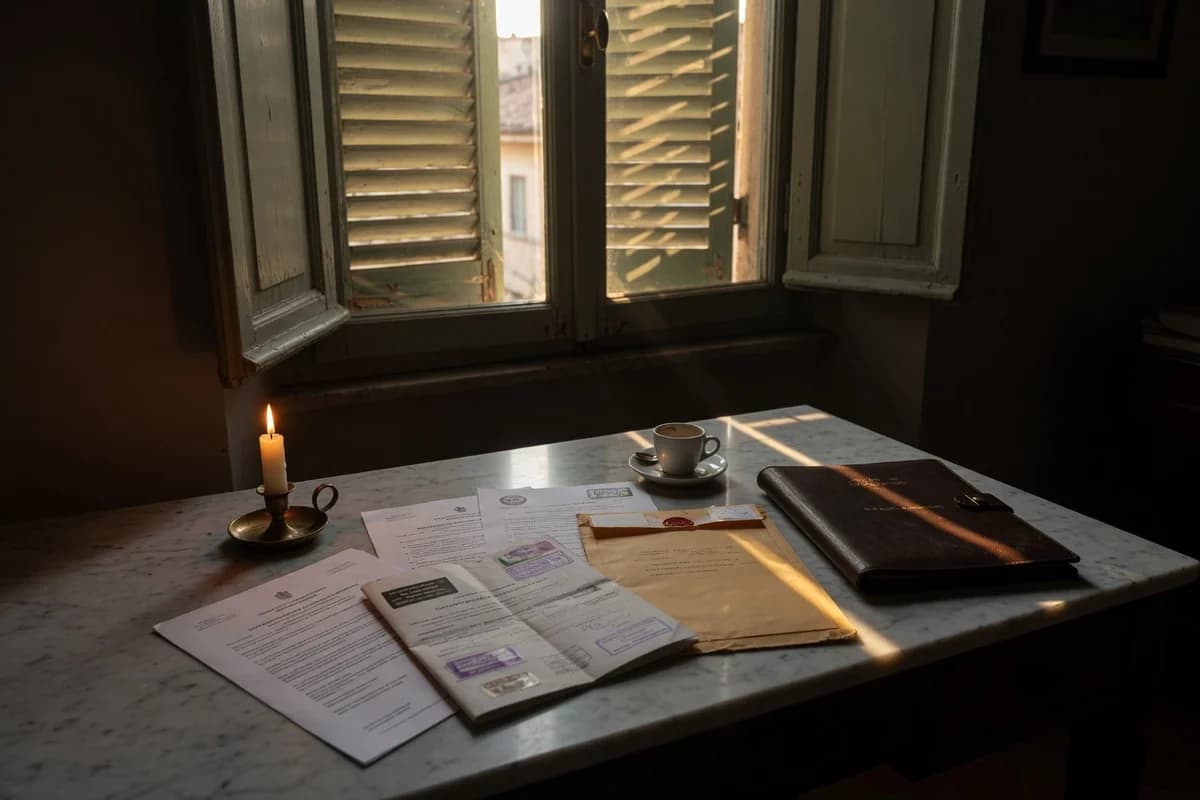
The nulla osta al trasporto is the Italian health clearance required to move a body out of the municipality and, in the case of international transport, out of the country. It is issued by the Prevention Department of the ASL (local health authority) for the area where the death occurred.
Before the nulla osta can be issued, the local comune (municipality) registers the death in the civil registry — this is the certificato di morte. The ASL then certifies that the coffin meets health regulations and that anti-putrefactive treatment (embalming) has been carried out. Both documents are prerequisites for obtaining the mortuary passport from the Romanian Consulate in Italy.
If the death was sudden or the cause is unclear, Italian law may require an examination by the forensic medicine service before the nulla osta is granted. This adds one to two days but is not uncommon, and we factor it into the timeline from the first call.
How long it takes and what it costs
For most cases from Italy, repatriation takes 3–5 days from the first call to arrival in Romania. The total cost, between €2,500 and €4,500, covers embalming, the transport-compliant coffin, the documents, the mortuary passport, and door-to-door transport.
The price difference comes from the departure city (northern Italy is closer), the choice between road and air transport, and any additional formalities. We give you a firm estimate from the very first call.
Third-party fees you should know about
Our quote covers the full service, but some fees are charged directly by Italian authorities or the local funeral home and are worth understanding. The local funeral home in Italy charges for collection, embalming, and coffin preparation — this is included in our coordination. The ASL charges a modest administrative fee for issuing the health certificate; this is typically below €50. If the body is held at a chambre mortuaire (Italian: camera mortuaria) for more than 24–48 hours while documents are processed, a daily storage fee applies — typically €50–100 per day depending on the region.
Once in Romania, the death certificate must be transcribed into the Romanian civil registry (Starea Civilă — the Romanian civil records office). This step is handled by our team and carries no additional charge from us. For the full document checklist, see our required death documents.

The documents required
- The Italian death certificate (certificato di morte), with a legalized translation into Romanian
- The nulla osta al trasporto, issued by the ASL (local health authority)
- The embalming certificate, mandatory for international transport
- The deceased's ID or passport
- The mortuary passport (laissez-passer) issued by the Romanian Consulate in Italy
- Transcription of the death certificate into the Romanian civil registry, on arrival
Romanian consulates in Italy
Romania has an unusually dense consular presence in Italy — there are twelve Romanian diplomatic offices across the country, reflecting the size of the community. The main ones relevant for repatriation are: the Embassy in Rome, the Consulate General in Milan, the Consulate General in Turin, and the Consulate General in Bologna. There are also consulates in Bari, Catania, Florence, Genoa, Naples, Treviso, Trieste, and Trento.
The mortuary passport (pașaportul mortuar) is issued by whichever Romanian consulate has jurisdiction over the area where the death occurred. We contact the correct consulate as part of our standard process — you do not need to make that determination yourself.
What we do for the family
You're one phone call away from a single coordinator. You don't have to deal with several companies, in two languages, in two countries — we manage both ends: the Italian side (collection, embalming, ASL documents, nulla osta) and the Romanian side (transcribing the documents, the ceremony, the burial plot).
We answer day and night. Many families call us from Italy while they're still there, and we prepare everything so that, on arrival in Romania, there's nothing left to chase.
You don't need to fly back to Italy to start the process. Everything can be authorized remotely. We work with a power of attorney or written instruction from the next of kin.