
How repatriation from France works
It all starts with a phone call. We take over coordination with our partner in France, who collects the deceased, prepares them through soins de conservation (the embalming required for transport), and, if needed, holds them at a chambre funéraire while the documents are prepared.
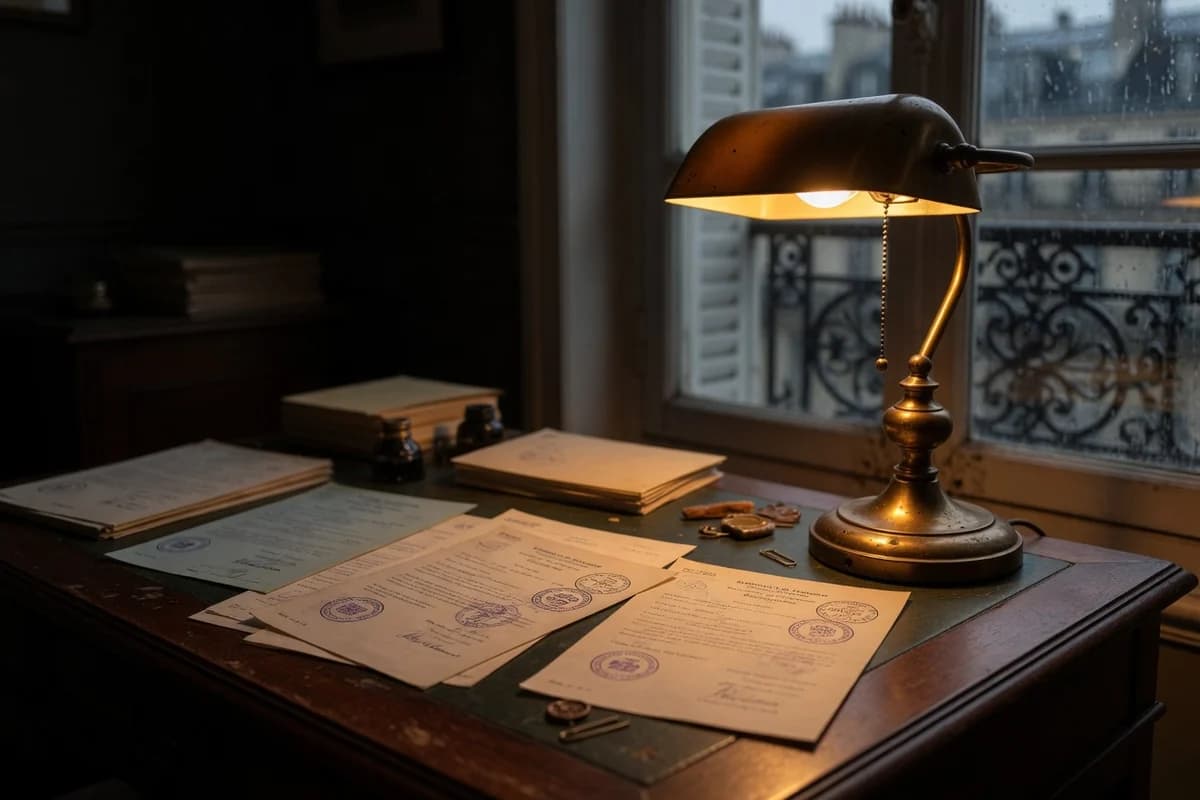
The French death certificate (acte de décès) is obtained from the mairie (town hall) of the commune where the death occurred, within 24 hours of death. The authorization to transport the body across the border (laissez-passer mortuaire) is issued by the préfecture of the département. If the death was sudden or violent, the case may pass through the Institut médico-légal (forensic institute). Since France is in Schengen, the road journey to Romania — through Germany, Austria, and Hungary — takes around two days.
The French documents step by step
Step one is the acte de décès from the mairie. This is the base document — nothing else can proceed without it. The mairie registers the death based on a medical death certificate (certificat de décès) signed by the attending physician.
Step two is the laissez-passer mortuaire from the préfecture. This is France's cross-border transport authorization. The préfecture also authorizes the closure of the coffin, a distinct step in French law that must happen before transport. The funeral home handles both on your behalf.
Step three is the authorization from the mairie to perform soins de conservation (embalming) — this is not automatic in France and requires a separate written authorization from the family. We prompt you for this from the first call.
Step four is the mortuary passport from the Romanian Consulate in France, which allows the deceased to enter Romania. We contact the relevant consulate based on the location of the death.
Third-party fees you should know about
The chambre funéraire (mortuary holding facility) charges a daily rate while documents are processed. Based on French market data, this is typically €80–100 per day, with some Parisian establishments charging at the higher end. If the case passes through the Institut médico-légal, an additional fee applies — in Paris this has been reported at around €173. These costs are uncommon but not rare, and we include them in our estimate when they apply.
The préfecture and mairie administrative fees are relatively modest (typically below €30 combined) and are included in our coordination.
How long it takes and what it costs
For most cases from France, repatriation takes 3–5 days from the first call to arrival in Romania. The total cost, between €2,000 and €3,500, covers embalming, the transport-compliant coffin, the French documents, the mortuary passport, and door-to-door transport.
The price difference comes from the departure region — Paris and northern France are closer than the south — and from any storage fees at the chambre funéraire or the forensic institute. We give you a firm estimate from the very first call.
The documents required
- The acte de décès (French death certificate), issued by the mairie, with a legalized translation into Romanian
- Written family authorization for soins de conservation (embalming)
- The laissez-passer mortuaire (cross-border transport authorization), issued by the préfecture
- The mairie's authorization for coffin closure
- The embalming certificate (soins de conservation), required for international transport
- The forensic institute's clearance, when the death was sudden or unexplained
- The mortuary passport issued by the Romanian Consulate in France
- The deceased's ID or passport
- Transcription of the death certificate into the Romanian civil registry, on arrival
Romanian consulates in France
Romania has four main diplomatic offices in France: the Embassy in Paris, a Consulate General in Lyon, a Consulate General in Marseille, and a Consulate General in Strasbourg. Each covers a defined geographical area of France.
The mortuary passport (pașaportul mortuar) is issued by the Romanian consulate with jurisdiction over the area where the death occurred. We handle this contact and know which consulate is responsible for which region.
What we do for the family
French paperwork passes through several offices — the mairie, the préfecture, sometimes the forensic institute — and is hard to follow from a distance, in another language. We coordinate the French side through our partners and the Romanian side directly, so the family has a single point of contact.
We answer day and night. Many families call us from France, by phone or WhatsApp, while they're still there. We prepare everything in advance, so that on arrival in Romania the family can focus on the ceremony, not the paperwork.