

How repatriation from Germany works
You call us, and we coordinate the collection and compliant embalming with our local partner in Germany. The German authorities are rigorous: the death must be registered at the Standesamt (the civil registry office responsible for the district where the death occurred), and the Gesundheitsamt (public health office) must issue sanitary clearances before the body can leave the country.
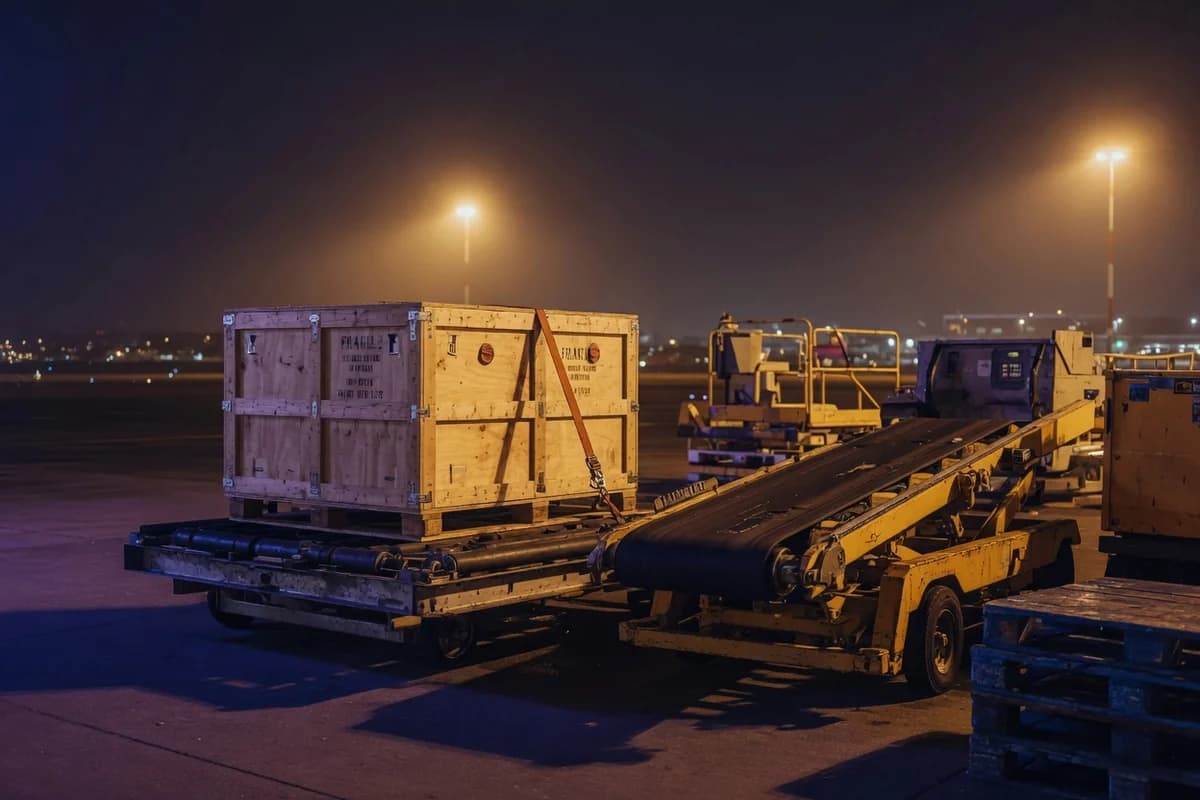
The German mortuary passport (Leichenpass) and a compliant coffin are required for cross-border transport. Since Germany is in the Schengen area, the road journey to Romania is direct, and air transport is an alternative from the major airports.
The Leichenpass — who issues it and what it covers
The Leichenpass is Germany's official cross-border transport document for human remains — roughly the equivalent of a mortuary passport. It is issued by the local Gesundheitsamt (public health authority) or the Ordnungsamt (regulatory office), depending on the federal state (Bundesland). Germany has 16 Bundesländer, each with its own Bestattungsgesetz (funeral law), so procedures vary slightly by region, but the broad structure is consistent.
Before the Leichenpass can be issued, two conditions must be met. First, the Standesamt must have registered the death and issued the Sterbeurkunde (death certificate). Second, in many states — particularly in North Rhine-Westphalia — a Zweite Leichenschau (second medical examination of the body) must be completed by a physician authorized by the health authority, confirming there is no suspicion of unnatural death. Once both steps are done, the Leichenpass is typically issued within one to two working days.
The administrative fee for the Leichenpass itself is modest — in NRW, for example, it is around €25. The Zweite Leichenschau, where required, adds roughly €30. A daily body storage fee at the German funeral home applies while documents are being processed — typically €40–80 per day depending on the region.

How long it takes and what it costs
Repatriation from Germany usually takes 4–7 days, a little longer than from Italy or Spain, because of the German administrative requirements. The total cost, between €3,000 and €5,500, reflects these additional formalities, on top of embalming, the coffin, documents, and transport.
The price difference comes from the departure city, the choice between road and air transport, and the fees of the German authorities. Road transport from southern Germany (Munich, Stuttgart) is quicker and often more economical than from Berlin or the north. We give you a firm estimate from the first call.
Third-party fees you should know about
The German partner funeral home charges for collection, embalming, and coffin preparation. The Gesundheitsamt or Standesamt charges administrative fees (around €25–50 in most states). A Zweite Leichenschau, where required, adds roughly €30. Body storage at the German funeral home runs approximately €40–80 per day while documents are processed. These are all included in the estimate we give you on the first call; there are no surprises at the end.
The documents required
- The German death certificate (Sterbeurkunde), issued by the Standesamt, with a legalized translation into Romanian
- The second medical examination report (Zweite Leichenschau), where required by the Bundesland
- The German mortuary passport (Leichenpass), issued by the Gesundheitsamt or Ordnungsamt
- The embalming certificate, mandatory for international transport
- The compliant coffin, with a sealed metal liner if transport is by air
- The mortuary passport for Romania, issued by the Romanian Consulate in Germany
- Transcription of the death certificate into the Romanian civil registry, on arrival
Romanian consulates in Germany
Romania maintains seven diplomatic offices in Germany: the Embassy in Berlin, Consulate Generals in Munich and Stuttgart, a General Consulate in Bonn, and Honorary Consulates in Hamburg, Leipzig, and Neustadt an der Weinstraße.
The Romanian consulate issues the pașaportul mortuar (mortuary passport) that authorizes the deceased to enter Romania. We contact the relevant consulate based on the location of the death. In emergencies, a dedicated emergency line for Romanian citizens (+49 160 157 9938) connects to the Berlin Embassy's consular section.
What we do for the family
German formalities can be daunting if you don't speak the language and don't know the local procedures. We coordinate the German side through our partners and the Romanian side directly, so the family has a single point of contact.
We answer day and night. We prepare everything in advance, so that on arrival in Romania the family can focus on the ceremony, not on paperwork. You do not need to travel to Germany at any point. Once home, we handle the full ceremony organisation and any applicable funeral allowance.