PRIEST · FUNERAL SERVICE

Priest for a Romanian funeral: the service and memorial prayers

The Orthodox funeral service is conducted by a priest according to the Church's rites. The same applies to the memorial services (parastase) and commemorations that follow. We help find the priest, set the date and time of the service, and coordinate every religious moment with respect for the family's faith.

Updated:

The priest's role at a Romanian funeral

The priest performs the funeral service — the prohod — through which the departed is commended on their final journey according to the Church's rites. The service brings comfort to the family and prayer for the soul of the deceased.

Beyond the funeral service itself, the priest also performs the later memorial prayers — at 40 days, at the parastase, and at the annual commemorations throughout the year.
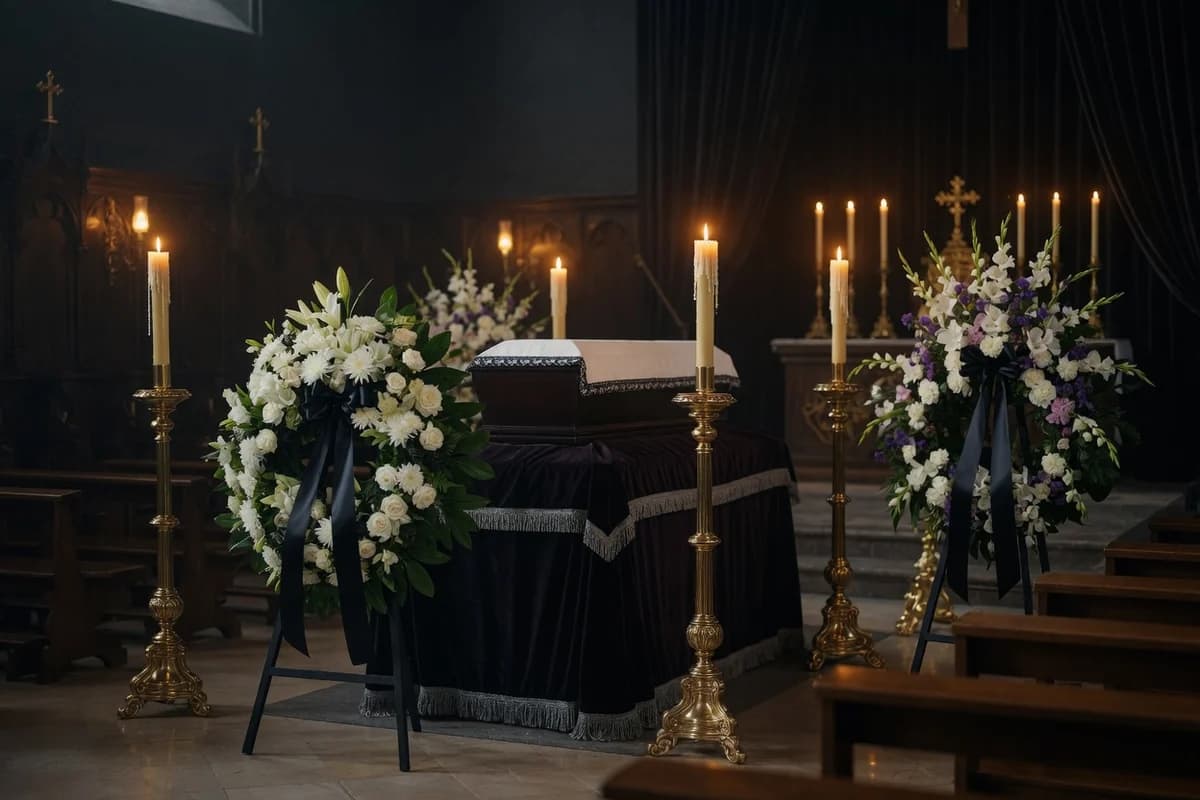
Chapel arranged for a service: tall candles, wreath stands, draped catafalque, no people
Illustrative image: chapel prepared for the Orthodox funeral service.

How we help you find a priest

The service is usually performed by the priest of the parish to which the deceased or the family belonged. If you do not have a priest, we help you make contact with the right parish.

We coordinate the date and time of the service with the priest, the cemetery, and the rest of the ceremony, so everything fits together and the family does not have to chase details.

What the funeral service includes

The service follows a well-established order that the priest performs at the vigil, at the church, and at the graveside:

  • Prayers at the vigil (priveghi) the evening before the funeral
  • The prohod service at church or in the chapel
  • The procession to the cemetery and graveside prayers
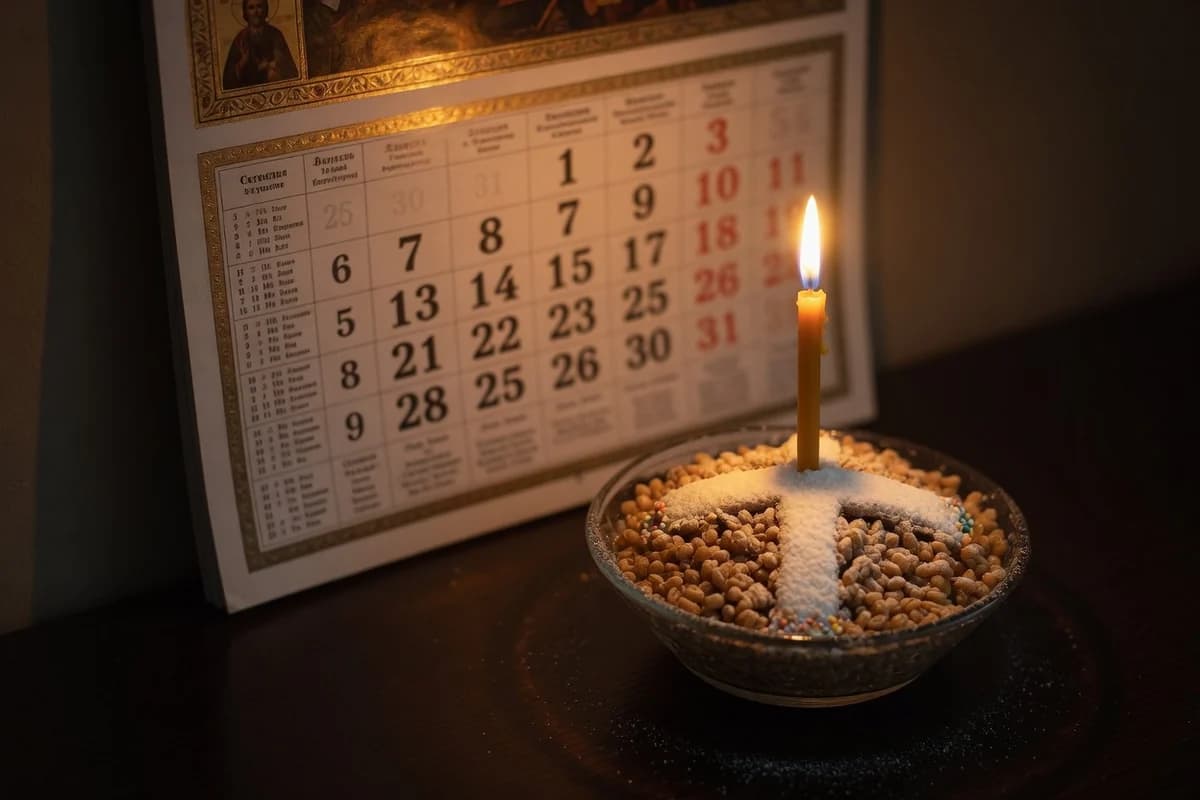
  • Blessing of the coliva (wheat porridge) and the funeral meal

Memorial services (parastase) and commemorations

After the funeral come the commemorations — moments of prayer for the soul of the departed. The most significant are at 40 days, at 6 months, at one year, and at three years.

We help you set the dates for the parastase with the priest and prepare what is needed — the coliva, the ritual bread (colaci), and the funeral meal (pomana).
Religious or civil ceremony?

Most funerals in Romania are religious, with a priest and a service. For those who were not believers, there is also the option of a civil ceremony without a religious service.

We advise on what best matches the faith of the departed and the wishes of the family, without imposing anything. Respect for the deceased's wishes comes first.

What to give the priest

For the service, the family offers the priest a sum according to their means and local custom. There is no fixed tariff — it is a gift for the ministry performed.

We can guide you on the customary amount in the area, so you are not left uncertain at a difficult moment. The decision remains entirely the family's.

What we handle and how we help

We coordinate contact with the priest, the date and time of the service, and every religious moment of the funeral. We also prepare the necessary items — coliva, colaci, candles.

The family simply tells us their wishes; we handle all the coordination with the church and the cemetery.

Annual commemorations

After the funeral, commemorations are held on specific days according to the Church's calendar:

CommemorationWhen it takes place
At 3 and 9 daysIn the first week
At 40 daysThe most significant commemoration
At 3, 6, and 9 monthsDuring the first year
At one year and annually thereafterThe annual memorial
Significant commemorations after a death.

We take care of everything

Call us and we help you find the priest and arrange the service and memorial prayers alongside the rest of the ceremony.

We are available day and night. For a no-obligation conversation, call us or see the full ceremony organisation page.

FREQUENT QUESTIONS

Answers to frequent questions

  • Who performs the Romanian Orthodox funeral service?

    A priest, according to the Church's rites. Usually the priest of the parish to which the deceased or the family belonged. If you do not have one, we help you contact the right parish.

  • What is the prohod?

    The prohod is the Orthodox funeral service performed by the priest, commending the departed on their final journey with prayers for their soul.

  • How do I find a priest for the funeral?

    Usually through the deceased's parish. If you do not have a priest, we help you contact the right parish and coordinate the date and time of the service.

  • What does the funeral service include?

    Prayers at the vigil the evening before, the prohod service at church or in the chapel, the procession to the cemetery with graveside prayers, and the blessing of the coliva and the funeral meal.

  • Which are the most important parastase?

    The most significant memorial services are at 40 days, 6 months, one year, and three years after the death. The priest performs the commemoration service at each.

  • What do I give the priest for the service?

    A sum according to your means and local custom. There is no fixed tariff — it is a gift for the ministry performed. We can guide you on the customary amount in the area.

  • Can the service be held at church or in the chapel?

    Either is possible — at the church, at the cemetery chapel, or at a funeral home chapel. The location is chosen according to the family's wishes and the parish's custom.

  • Can we choose a specific priest?

    Yes. If the family has a confessor or a trusted priest, he can perform the service. We coordinate the date and time with the chosen priest.

  • Does the priest come to the vigil?

    Usually yes. The evening before the funeral, the priest says prayers at the vigil. We arrange this moment together with the priest.

  • What is the commemoration at 40 days?

    It is one of the most important commemorations, held 40 days after the death, with a memorial service, coliva, and a funeral meal for the soul of the departed.

  • Can a funeral be held without a priest?

    Yes, through a civil ceremony without a religious service, for those who were not believers. We advise on what best matches the wishes of the departed.

  • Who blesses the coliva?

    The priest. The coliva and the funeral meal are blessed at the funeral service and at the parastase, as part of the commemoration rite.

  • Does the priest set the dates for the parastase?

    Yes, together with the family. The commemorations are scheduled according to the Church calendar. We help set them and prepare everything needed.

  • What do I need to prepare for the service?

    Typically coliva, colaci (ritual bread), candles, and wine. We prepare these at request, alongside coordinating with the priest and the church.

  • Can the service be held for a cremation?

    The Orthodox Church does not perform the funeral service for cremation. We explain the situation and help find a solution suited to the family's faith.

  • How do you help the family with the priest?

    We help find the priest, coordinate the date and time of the service and religious moments, and prepare what is needed — coliva, colaci, candles.

  • How long does the funeral service take?

    The prohod service typically lasts about an hour at the church or chapel. The procession to the cemetery and graveside prayers add additional time.

  • In what language is the service conducted?

    In Romanian, or in the liturgical language of the parish. For diaspora communities abroad, the service can also be conducted in the local language, depending on the priest.

  • What is the coliva?

    Coliva is sweetened boiled wheat, decorated and blessed by the priest at the funeral and at parastase as a symbol of resurrection. See the page about coliva.

  • Are candles lit during the service?

    Yes. A candle accompanies prayer throughout the service and the vigil. We prepare the necessary candles at the family's request.

  • Can I hold a memorial service later if I missed the date?

    Yes. Commemorations can be held at a later service arranged with the priest. What matters is that the departed's name is prayed for.

  • Who takes the coliva and colaci to church?

    The family or us, at request. We prepare the coliva, colaci, and candles and bring them to the church or cemetery for the blessing.

SEE ALSO

Related services or pages

  • Ceremony organisation

    The complete religious ceremony.

    View details
  • Memorial services and funeral meals

    Commemorations after the funeral.

    View details
  • Civil ceremony

    The option without a religious service.

    View details
  • Funeral services

    All services, coordinated by us.

    View details

QUESTIONS?

We answer day and night

Consultation is free. We answer any question specific to your family's situation.

0739 592 835WhatsApp