CONSULTATION · LEGAL STEPS

Legal steps after a death: where to begin

After the funeral, a handful of legal steps remain: the death certificate, probate at the notary, a possible survivor's pension, and updating contracts in the deceased's name. We are a funeral home, not a law firm — we handle the paperwork within our remit and point you correctly toward a notar (notary), avocat (lawyer), or CNPP (National House of Public Pensions) for everything else. The aim is to spare you from getting lost between institutions.

Updated:

What legal steps follow a death?

Beyond the funeral itself, a death triggers a number of administrative and legal formalities. They do not all have to be resolved on the same day, but knowing their order helps ensure nothing is left undone.

In brief: first the death certificate, then probate at the notary, then any remaining entitlements (survivor's pension, funeral grant), and finally updating contracts and accounts. We take each in turn below. For the very first days, see also what to do when someone dies.

Meeting table with an open folder and two empty chairs facing each other — a no-pressure conversation
Illustrative image: an orientation meeting before the trip to the notary.

The death certificate — the first official step

Nothing can move forward without the death certificate. It is obtained from the Starea Civilă (Civil Registry) on the basis of the medical death certificate, and the death must be declared within 3 calendar days.

It is the key document for everything that follows — probate, pensions, banking, the notary. We can obtain it on your behalf with a simple power of attorney. Full details are in our guide on obtaining the death certificate.

Probate (settling the estate)

Probate establishes who the heirs are and how assets are divided. It is handled by a notar (notary), who issues the certificatul de moștenitor (certificate of inheritance) — the document that allows heirs to use and transfer the assets.

You are not required to act immediately, but a long delay can complicate matters, especially if there is real estate or bank accounts involved. For this, you will need to visit a notar. The exact timescales and costs depend on the specifics of the estate and will be explained by the notary.

Legal stepWho handles it
Death certificateStarea Civilă / Civil Registry (we can handle this for you)
Probate / certificate of inheritanceNotar (notary)
Disputes between heirsAvocat (lawyer), then the court
Survivor's pensionCasa de pensii / CNPP (National House of Public Pensions)
Funeral grantCNPP or the employer
Who to approach for each step We handle funeral paperwork; for probate and disputes we refer you to a notary and lawyer.

Survivor's pension and other entitlements

A surviving spouse and dependent children may be entitled to a survivor's pension. The application is submitted to the Casa de pensii (pension authority), and the conditions and amount are determined by CNPP depending on the individual situation.

Separately, there is the funeral grant — a sum paid at the time of death. We explain how to obtain it and can handle the required paperwork.

Contracts, utilities, and bank accounts

After probate, several practical loose ends remain. They are not urgent, but it is easy to forget them:

  • Utility contracts (electricity, gas, water) — transferred or closed
  • Bank accounts and any outstanding loans — notified to the bank
  • Subscriptions and recurring services — cancelled
  • Insurance policies — checked for any remaining entitlements

How we help

We handle funeral paperwork and the documents we can obtain on your behalf with a power of attorney — the death certificate and the paperwork for the funeral grant. For probate and more complex legal matters, we refer you to a notary and a lawyer.

We do not give legal advice and we do not act as lawyers. Our role is to show you the steps in the right order and tell you who to ask, so you do not waste time or get lost between government offices.
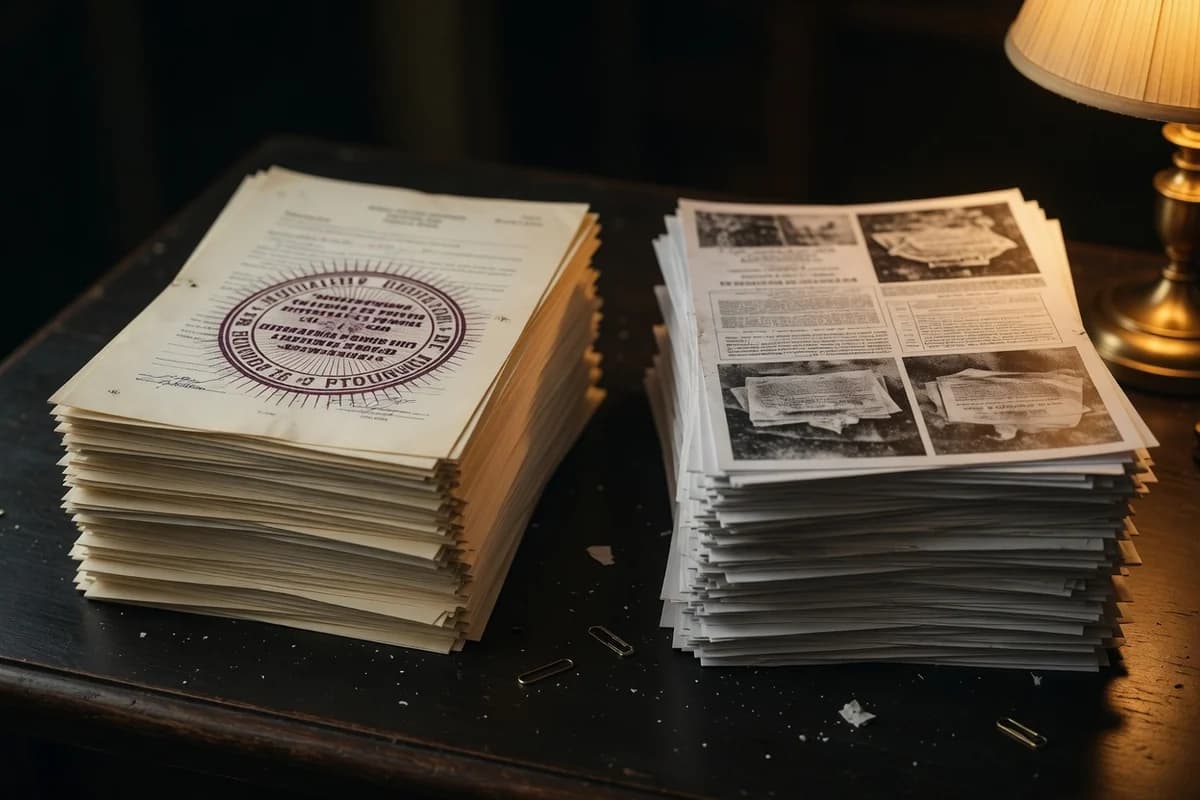
Two document stacks face to face: original with a stamp and black-and-white copies
Illustrative image: originals and copies — each institution requires something different.

FREQUENT QUESTIONS

Answers to frequent questions

  • Do you offer legal advice?

    Not in the sense of legal counsel. We handle funeral paperwork and guide you to the right steps — notary for probate, lawyer for disputes, CNPP for pensions. We do not give legal advice and we do not act as lawyers.

  • Where is probate carried out?

    At the notary. The notar (notary) determines the heirs and issues the certificatul de moștenitor (certificate of inheritance). For disputes between heirs, the next step is a lawyer and, if necessary, the courts.

  • How long do I have to complete probate?

    There is no immediate deadline, but a long delay can complicate matters — especially if there is real estate or bank accounts involved. The notary will explain the exact implications and timescales for your specific situation.

  • What is a survivor's pension?

    An entitlement to pension payments for a surviving spouse and dependent children, subject to certain conditions. The application is submitted to CNPP (National House of Public Pensions), which determines eligibility and the amount.

  • What documents are needed for the legal steps?

    Everything starts from the death certificate. For probate, the notary will ask for the deceased's identity documents, proof of ownership, and family-relationship documents. The exact list depends on the estate and is provided by the notary.

  • Can you obtain the death certificate for us?

    Yes. We can obtain it from the Starea Civilă (Civil Registry) with a simple power of attorney, alongside the other funeral paperwork, so the family does not need to visit government offices.

  • Who is responsible for the deceased's debts?

    Debts are addressed within the probate process at the notary, alongside the assets. Heirs make an informed decision. For complex situations, a lawyer can advise you before you accept the inheritance.

SEE ALSO

Related services or pages

  • Notary services

    Probate and the certificate of inheritance.

    View details
  • Death certificate

    The first official document, on which everything else depends.

    View details
  • Funeral grant

    The sum paid at the time of death and how to claim it.

    View details

QUESTIONS?

We answer day and night

Consultation is free. We answer any question specific to your family's situation.

0739 592 835WhatsApp