
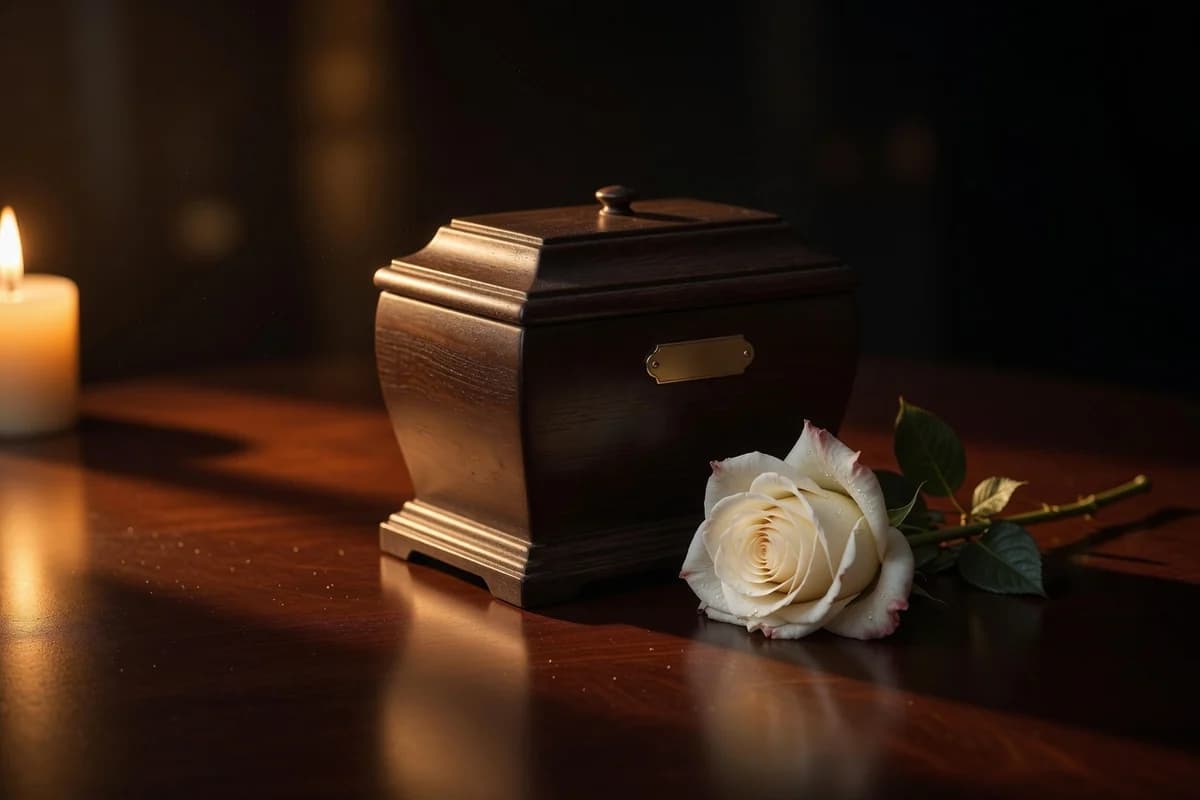
The main options
Once the family receives the urn from the crematorium, there are several keeping options. None is compulsory — what matters is what feels right to the family. The table below gives a quick comparison.
| Option | What it involves | Indicative cost |
|---|---|---|
| At home | The urn is kept in a place of honour in the home | Only the cost of the urn itself |
| Columbarium niche | The urn is placed in a niche at a cemetery or crematorium | More affordable than a burial plot |
| Burial plot | The urn is buried in a grave | Burial plot + possible monument |
| Family vault | The urn is placed in the family crypt (criptă) | The existing construction |
At home
Many families choose to keep the urn at home, in a place of honour — on a shelf, in a niche, or in a quiet room. It is an intimate option that keeps the loved one close.
There is no additional cost beyond the urn itself. Orthodox religious tradition does not encourage this option, however; for matters of faith, it is worth speaking with a priest.
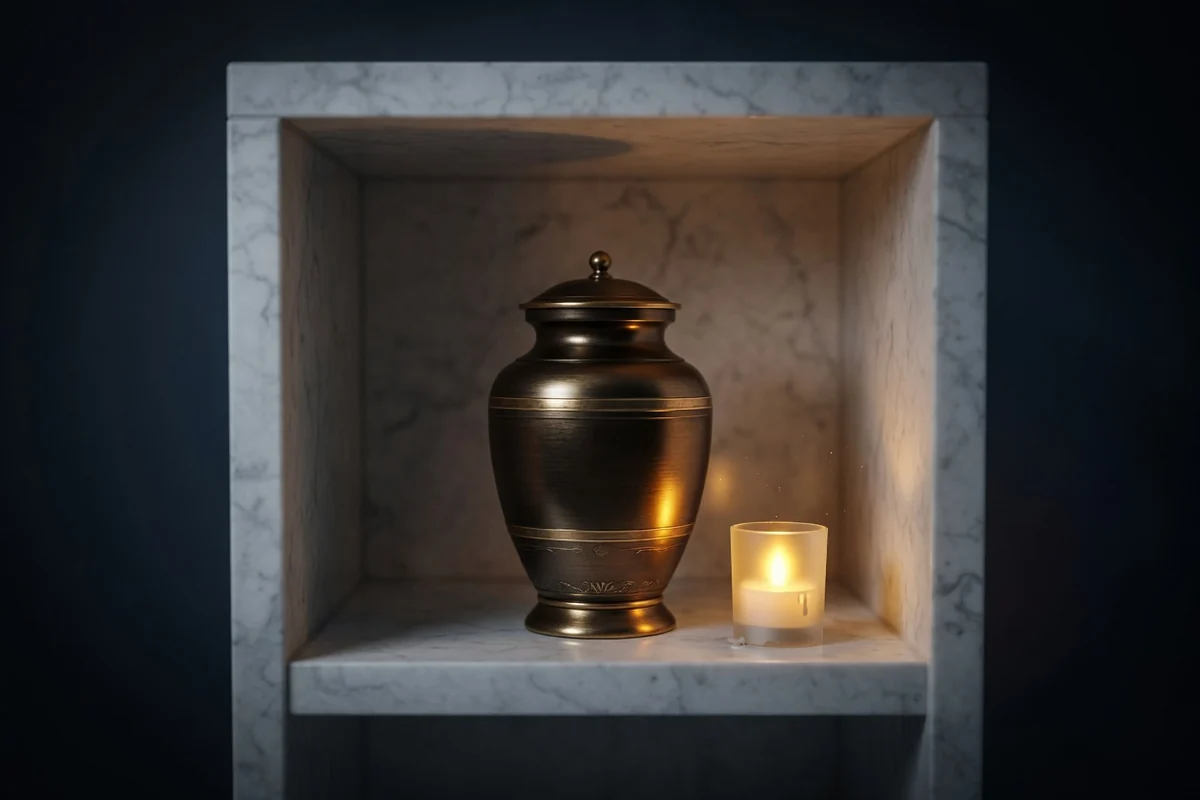
A columbarium niche
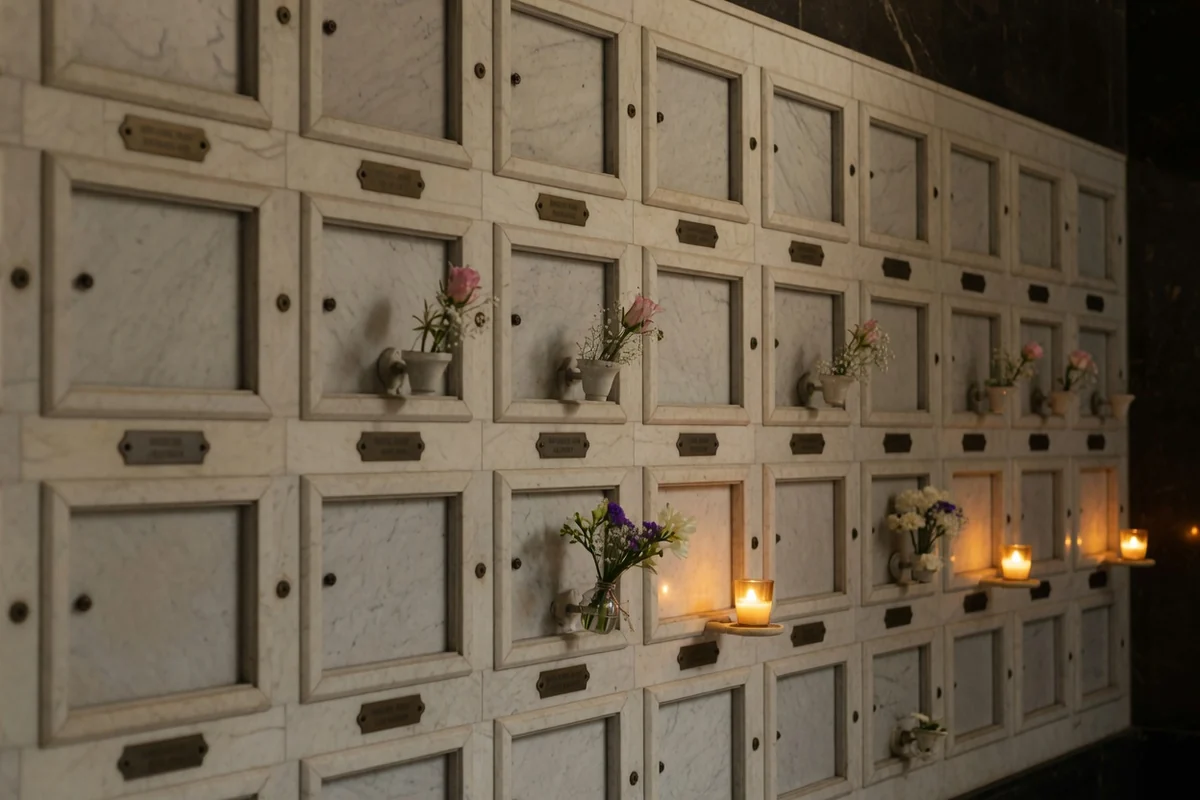
A columbarium (columbar) is a wall of niches, each intended for one or more urns. They are found in cemeteries and, in some cities, next to crematoria. Each niche is sealed with an engraved plate.
A niche is generally more affordable than a burial plot and does not require a monument. Details on obtaining and the rules for a niche are on the columbarium page.
Burying the urn in a cemetery plot
The urn can be buried in a cemetery plot, just as a casket is, but in a smaller space. An existing family plot can be used, or a new one taken out.
For an existing plot, the urn is usually deposited with the agreement of the cemetery administration, generally without the 7-year interval that applies to casket burials. This option preserves a physical grave that can be visited and tended.
A family vault
If the family has a vault (criptă), the urn can be placed there alongside other family members. It is a natural option for those who wish to keep the ashes in a shared family resting place.
Details about this type of structure are on the crypt page. Placement is done with the cemetery administration's agreement.
Scattering the ashes
Some families wish to scatter the ashes in a place dear to the deceased. In Romania, this is not clearly regulated, and rules may differ from one locality to another.
If you are considering this option, first ask the local authority and the crematorium what is permitted. We can guide you to the correct information, so the decision is made with full awareness.
What tradition says
The Romanian Orthodox Church traditionally encourages burial — whether of the body or the urn — and does not encourage keeping ashes at home or scattering them. For this reason, many Orthodox families who choose cremation go on to bury the urn.
This is a matter of faith, not of law. For religious aspects, speak with your priest. Whatever the choice, the tradition of memorial services remains the same — see the memorial services calendar.
How we can help
We help you choose and obtain the right solution — a columbarium niche, a plot for the urn, or placement in an existing vault — and handle the formalities.
See also the guide on how long cremation takes and the our cremation page. We answer day and night, and consultation is free.