
What condolences are
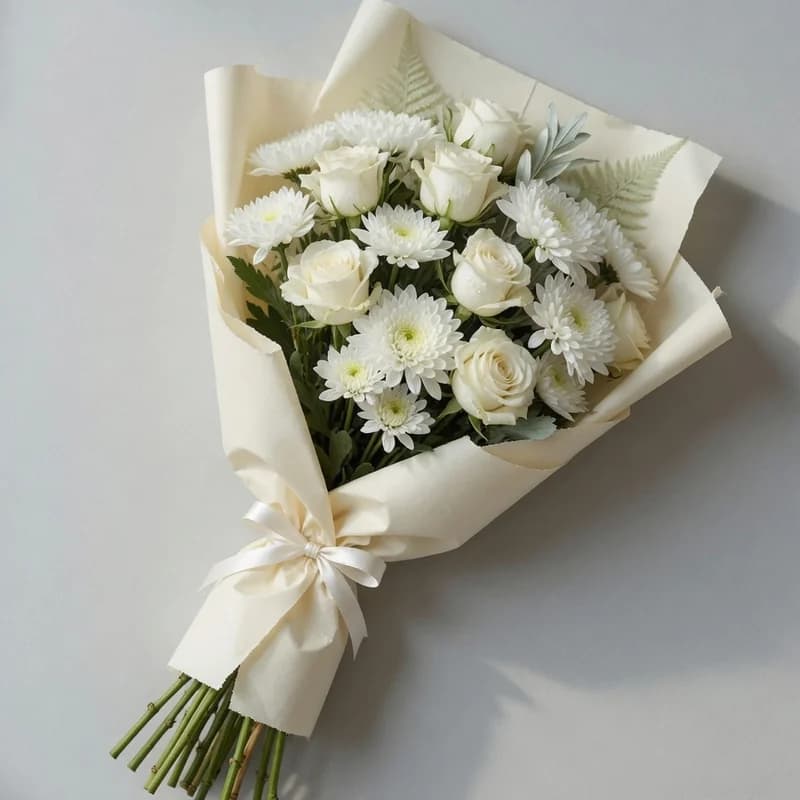
Condolences are the words of compassion you offer to a family who has lost someone they love. Through them, you show that you are standing with the bereaved in a difficult time.
A condolence message doesn't need to be long or elaborate. A few sincere words of support mean more than a lengthy phrase that rings hollow.
How to express condolences
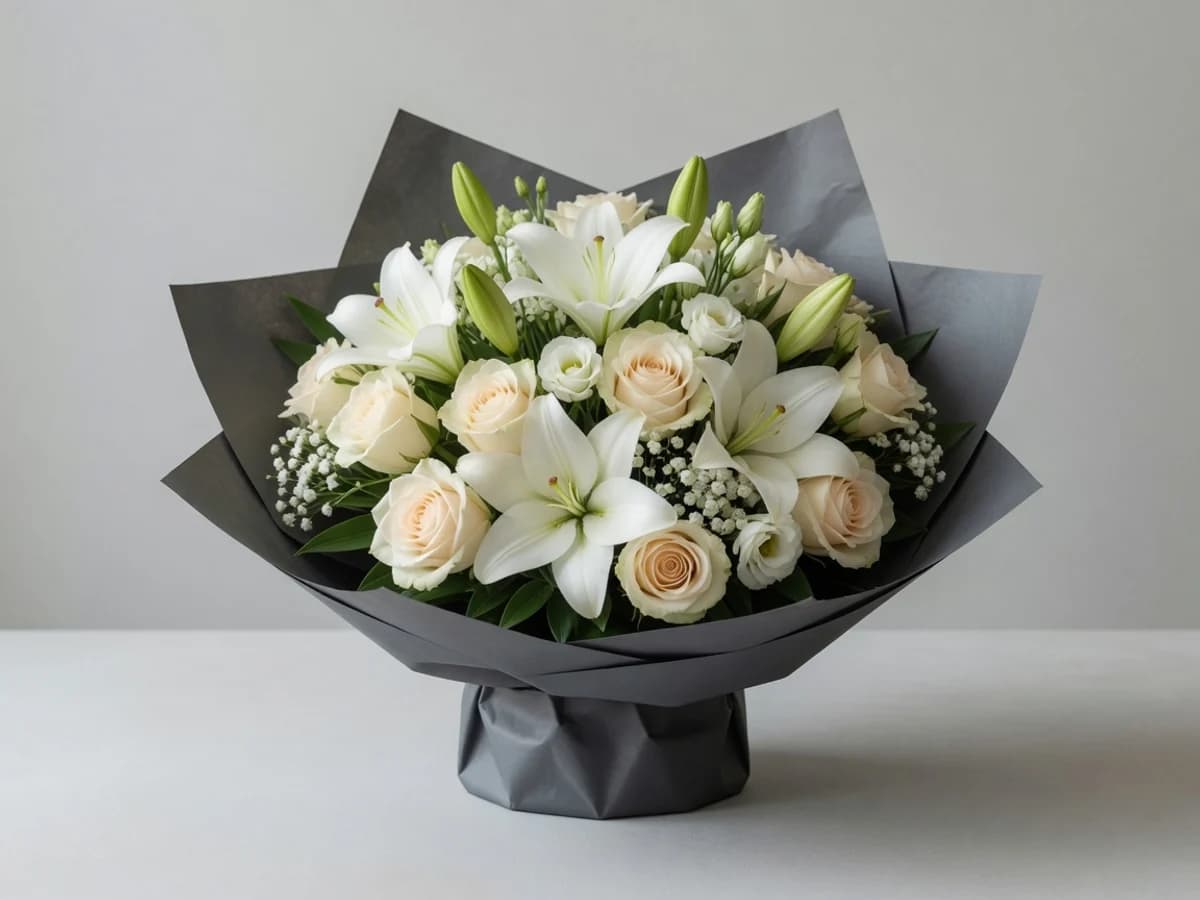
Condolences can be offered in several ways, depending on the situation:
- In person, at the wake or the funeral — a few words and a hand on the shoulder
- In writing — a card, a letter, or a message
- On the ribbon of a funeral wreath or spray
- By phone or text when you can't be present
| Situation | Fitting tone | Example from this guide |
|---|---|---|
| Short message, spoken or texted | Simple and sincere | With deepest sympathy. I'm thinking of you. |
| From an organisation or company | Sober and formal | Please accept our sincere condolences. |
| For a family of faith | With a religious note | May God grant him rest and peace, and bring you comfort. |
| On a wreath or spray ribbon | Very short, with the sender's name | In loving memory — the family |
| Loss of a parent | Warm and personal | He was a wonderful person. I'm thinking of you. |
| A sudden loss | Careful and gentle | I have no words. I'm with you. |
Short messages — for speaking or texting
For spoken condolences or a short text, simplicity works best:
- With deepest sympathy. I'm thinking of you.
- My heart goes out to you and your family.
- I'm so sorry for your loss. Words feel inadequate right now.
- He was a good person. You're in my thoughts.
- Sending you strength and love.
Formal messages
When writing on behalf of an organisation, a company, or a less close acquaintance, a sober tone is appropriate:
- Please accept our sincere condolences.
- With profound sadness, we share in your grief.
- Our team stands with the family in this loss.
- We extend our deepest sympathies at this difficult time.
Religious messages
For a family of faith, a message with a religious note brings comfort:
- May God grant him rest and peace, and bring you comfort.
- May he rest in eternal peace and light.
- May the Lord's peace be with you in this time of sorrow.
- We pray for his soul and for your strength.
Messages for a wreath ribbon
On the ribbon of a wreath or spray, the message is very short — a phrase and the name of the sender. See also the guide on funeral wreath ribbon messages.
- In loving memory — the family
- Forever in our thoughts — your colleagues
- Rest in peace — your friends
- With love and gratitude — [name]
What to avoid
A few things can cause unintended pain. It's worth avoiding them:
- Empty phrases said out of obligation, without sincerity
- Comparisons with other losses or with your own experience
- Unsolicited advice about how the family should feel or what they should do
- Questions about the cause of death or painful details
- Promises you can't keep
Condolences by message or online
When you can't be present, a written message, a phone call, or an online message is entirely appropriate. What matters is that it feels genuine — not a formula sent in haste.
For an online tribute or a memorial page, a short, warm message with a fond memory of the person is always welcome.
How to respond to condolences
The bereaved family is not expected to reply to every message. A simple thank-you, later on, is enough. There is no strict rule.
Many families choose to thank everyone publicly after the ceremony. A simple, genuine expression of gratitude is all that's needed.
Messages for the loss of a parent
For the loss of a mother or father, a warm and personal message is fitting:
- He was a wonderful person. I'm thinking of you.
- A devoted parent — you're in my heart.
- May the memories of her comfort you.
- Wishing you strength and peace in the days ahead.
Messages for a sudden loss
When death comes without warning, the shock is even greater. Choose your words with care and gentleness:
- I have no words. I'm with you.
- I'm so sorry. This is devastating news.
- I can only imagine how hard this is. With all my sympathy.
- I'm here for you, whatever you need.
Short messages for a card or online
For a card or an online message, short and sincere is always right:
- With deepest sympathy.
- Thinking of you.
- Sending love from far away.
- Rest in peace. You are in our hearts.
How we can help
We help with the wording for the ribbon on a wreath and with the death notice, if you need it. We coordinate the flowers and the ceremony so everything is ready on time.
We're available around the clock. For a conversation with no obligations, call us or see our floral arrangements.