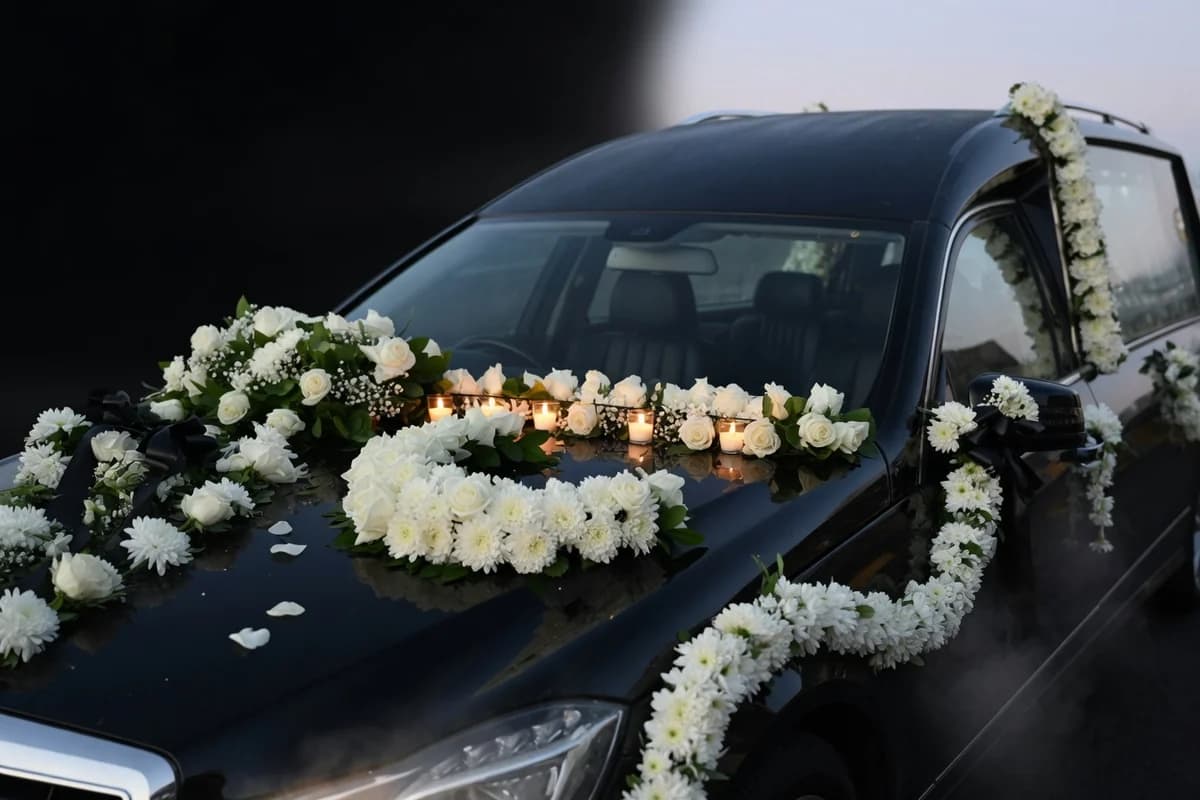
Burial (interment) is the placing of the deceased in the ground at a cemetery — the most common form of funeral in Romania. It requires a burial plot (loc de veci), a burial permit (adeverință de înhumare), the preparation of the grave, and a religious service. We take care of the documents, transport, casket, and coordination, so the family does not carry every burden alone.
Burial is the placing of the deceased in the ground at an authorised cemetery, in a concession plot. It is the traditional form of funeral in Romania, alongside the modern alternative of cremation services.
Burial takes place in a casket, after the deceased has been prepared and a religious service has been held. The plot remains with the family, through the concession, and can be tended and visited in the years to come.
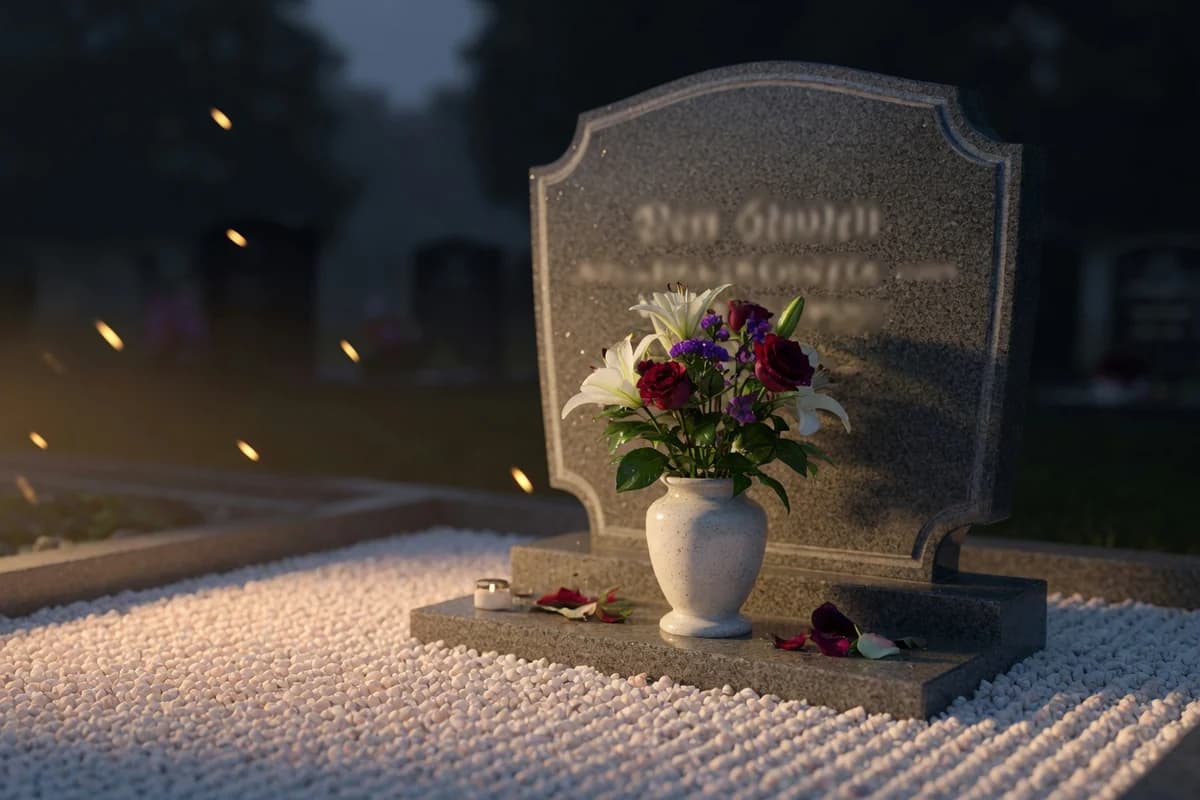
Illustrative image: a well-kept burial plot, prepared for interment.
Documents required for burial
A few documents are needed for burial. We obtain them on behalf of the family, on the basis of a simple letter of authority:
The certificatul de deces (death certificate) — issued by Starea Civilă (the civil registry office), on the basis of the certificatul constatator
The adeverință de înhumare (burial permit) — also issued by Starea Civilă, at the same time as the death certificate
The deed of concession for the burial plot — proof that the family holds the right to the plot
The cemetery administration's agreement — for the date and time of burial
Document
What it is for
Certificatul de deces (death certificate)
Issued by Starea Civilă, on the basis of the certificatul constatator
Adeverință de înhumare (burial permit)
Issued by Starea Civilă with the death certificate; permits the burial
Deed of concession
Proof that the family holds the right to the burial plot
Cemetery administration's agreement
Sets the date and time of the burial
Documents required for burial and the role of each We obtain them on behalf of the family, on the basis of a simple letter of authority.
The burial plot
Burial takes place in a concession plot. If the family already has a plot, burial is arranged there; if not, a new concession must be obtained from the cemetery administration.
The cost and availability of plots vary considerably from cemetery to cemetery. For details on obtaining, maintaining, and the types of plots available, see the page on burial plots.
Grave preparation and the ceremony
The grave is prepared by the cemetery's staff or by our team, before the cortège arrives. At the cemetery, the casket is lowered into the grave after the religious rite.
The priest conducts the funeral service, earth is scattered over the casket, and prayers are said. Details about lowering and handling the casket are on the dedicated page.
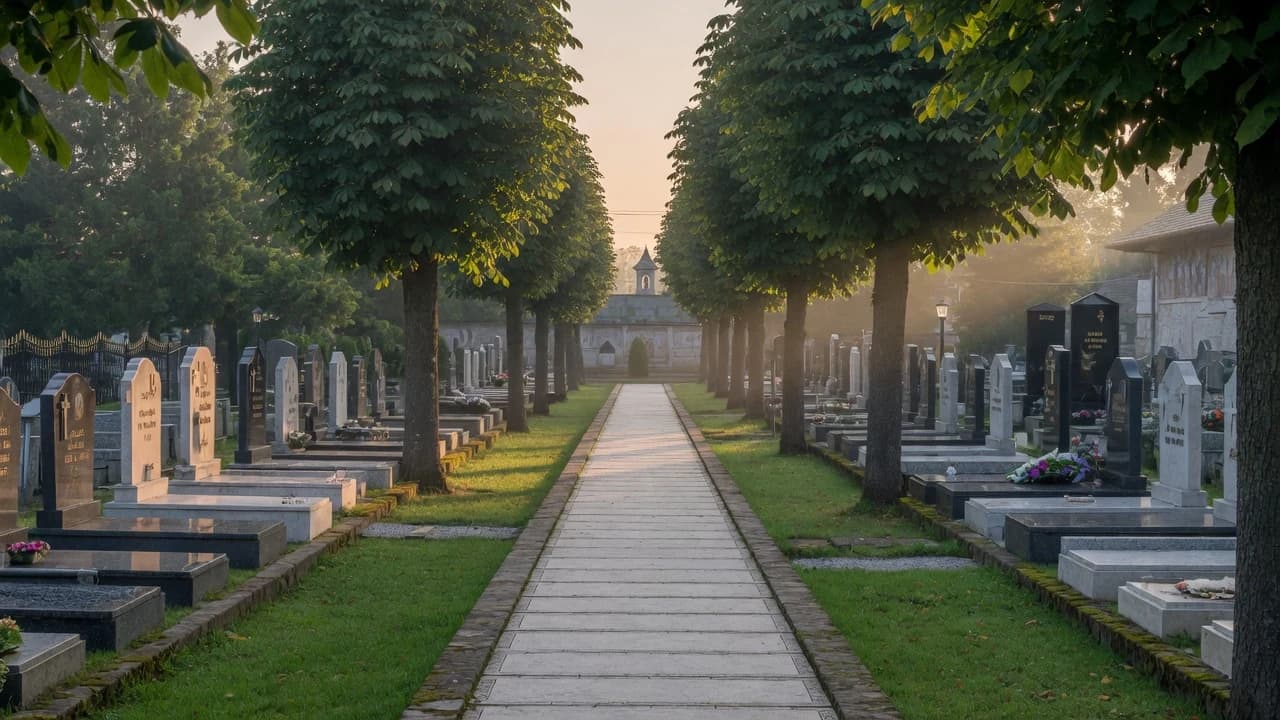
Illustrative image: a cemetery path, the setting for the burial ceremony.
What our burial service includes
We coordinate the entire burial so the family does not have to chase documents and formalities:
Obtaining the documents — certificatul de deces and adeverința de înhumare
The casket and preparation of the deceased
Transport to the church and to the cemetery
Coordination with the priest and the cemetery administration
Lowering and handling the casket
The wreath, candles, and accessories, on request
Burial or cremation
Burial preserves a physical plot that can be visited and tended. cremation services is generally more affordable, as it avoids the cost of a new burial plot and a monument.
The tradition of memorial gatherings (pomeni/parastase) is the same for both. For a full comparison of costs and customs, see the guide the comparison guide.
What burial costs
The cost of a burial brings together several elements: the casket, preparation, transport, the religious service, and the burial plot. The largest single cost is usually a new plot and the monument.
A casket starts from 800 lei, while a new burial plot can cost between 3,000 and 30,000 lei depending on the cemetery. For guidance, see our pricing page and the guide cost breakdown.
Who handles everything
The family calls us, signs a simple letter of authority, and we take care of the documents, casket, transport, and coordination. You do not travel to offices or negotiate with institutions.
We answer day and night. For a no-obligation conversation, call us or ask for a quote for funeral packages that include burial.
FREQUENT QUESTIONS
What families ask about burial: procedure, documents, and cost
What documents are needed for burial?
The certificatul de deces (death certificate) and the adeverință de înhumare (burial permit), both from Starea Civilă (the civil registry office), plus the deed of concession for the burial plot and the cemetery administration's agreement. We obtain them.
What is the adeverință de înhumare?
It is the document permitting burial, issued by Starea Civilă at the same time as the death certificate. Without it, the cemetery administration cannot approve the funeral.
Can I arrange a burial without a burial plot?
No. Burial requires a concession plot. If the family does not have one, a new concession must be obtained from the cemetery administration. We help with this step too.
What does a burial cost?
It depends on the casket, the services, and above all on the burial plot. A casket starts from 800 lei; a new plot can cost between 3,000 and 30,000 lei depending on the cemetery.
Who digs the grave?
The grave is prepared by the cemetery's staff or by our team, before the cortège arrives. We coordinate this step with the cemetery administration.
How long from death to burial?
Usually 2–3 days, during which the documents are obtained, the deceased is prepared, and the service and plot are arranged. A mortuary refrigerator allows a postponement if needed.
Can burial take place at any cemetery?
Only at authorised cemeteries and only with a concession plot. Each cemetery has its own rules on plot dimensions, the monument, and scheduling.
What is the difference between burial and cremation?
Burial places the deceased in the ground in a burial plot. Cremation reduces the body to ash, kept in an urn. The tradition of memorial gatherings remains the same for both.
Can more than one person be buried in the same plot?
Yes, over time, according to the cemetery's rules. A family plot can receive more than one person, through stacking or by placing the remains in an ossuary after 7 years.
Is a monument needed immediately after burial?
No. The monument is usually erected some months later, after the ground has settled. Until then, a temporary wooden cross is used.
Who coordinates the service at the burial?
We coordinate the date, time, and location with the parish priest. The priest's fee is paid directly to the church, according to the parish's custom.
Does burial require a special casket?
No. Any standard wooden casket is suitable for burial. The wood is chosen according to budget and tradition — from affordable pine to premium oak.
Can I attend the lowering of the casket?
Yes. Lowering the casket into the grave is part of the ceremony, attended by the family and those close to the deceased, together with the priest, with prayers and the scattering of earth.
How do you help the family at the burial?
We obtain the documents, prepare the casket and the deceased, provide transport, and coordinate with the priest and the cemetery. The family does not travel to offices.
Is burial included in funeral packages?
Yes. Our packages cover the burial services — casket, transport, preparation, formalities. A new burial plot is added separately, if the family does not already have one.
Can burial be postponed?
Yes, with a mortuary refrigerator, when the family needs more time — for relatives abroad or for scheduling. The body is kept in appropriate sanitary conditions.
How deep is the grave?
Generally around two metres, in accordance with sanitary regulations and the cemetery's rules. For stacked plots, the depth is adjusted accordingly.
Can burial take place on private land, outside a cemetery?
No. Burial takes place only at authorised cemeteries, under the law. Burial on private land is not permitted, for sanitary and legal reasons.
What is the difference between a simple grave and a crypt?
A simple grave is dug directly in the ground. A crypt is a concrete underground structure, which can hold several stacked plots and makes it easier to gather remains.
RELATED SERVICES
Related services we provide
Burial plots
Obtaining, maintaining, and the types of burial plots.