
What is the Hague Apostille?
An apostille is an official stamp that verifies the authenticity of a document so it can be used in another country. It is placed on documents issued in a state that has signed the Hague Convention of 1961, making them automatically recognized in every other signatory state.
When a death has international dimensions — a repatriation, an inheritance in another country — Romanian documents need an apostille before foreign authorities will accept them.

Which Romanian authority issues the apostille?
In Romania, the apostille is issued by different institutions depending on the type of document:
| Document type | Issuing authority |
|---|---|
| Civil-status records, criminal records, educational diplomas | Instituția Prefectului (Prefect's Office) |
| Court judgments, bailiff documents, Trade Register records | Tribunalul (County Court) |
| Notarial deeds, certified translations, notarized copies | Camera Notarilor Publici (Chamber of Public Notaries) |
Does the death certificate need an apostille?
The death certificate is a civil-status record, so the apostille is placed on it by the Instituția Prefectului (Prefect's Office) of the county where it was issued.
For a repatriation or an international transfer of remains, the destination country's authorities usually require an apostilled death certificate before they will accept the body.
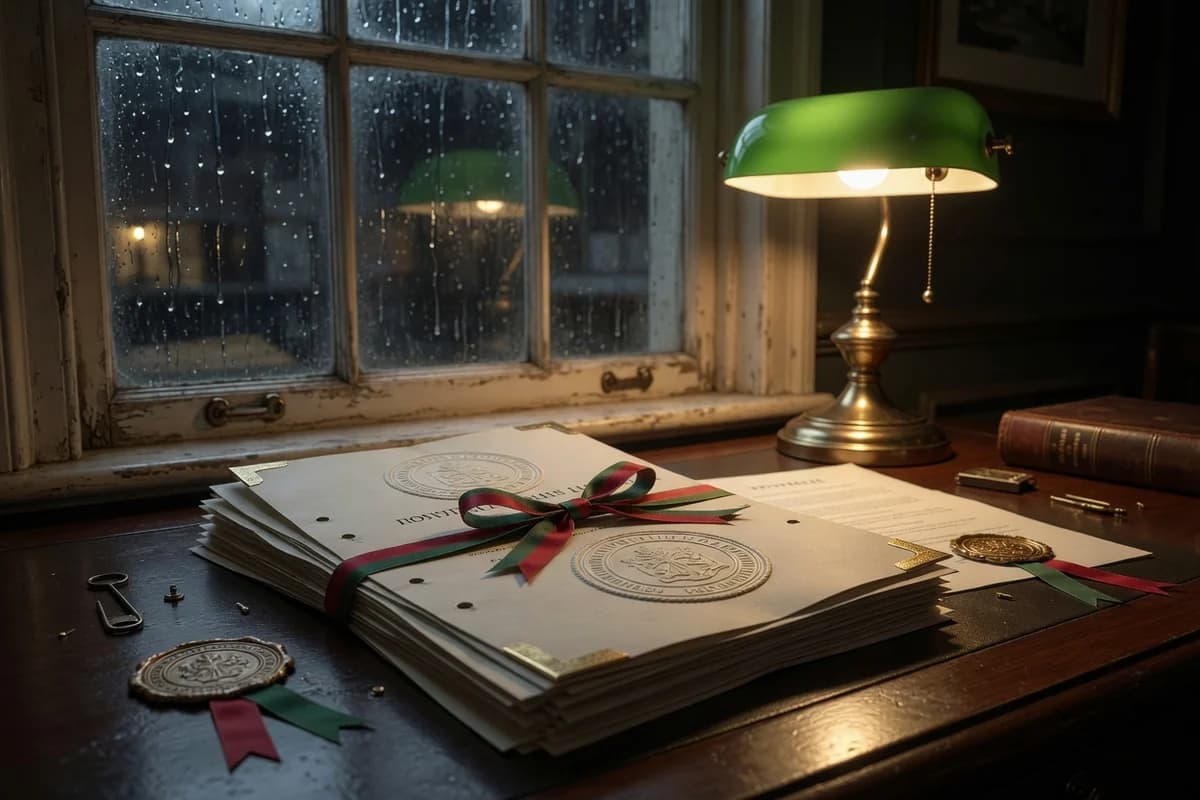
Apostille vs. full legalisation (supralegalizare)
The apostille applies to countries that have signed the Hague Convention. For countries that have not joined the Convention, a longer procedure called supralegalizare (full legalisation) is required instead.
We check for every case whether the destination country accepts an apostille or requires full legalisation, so you are not sent to the wrong office.
Does the document also need a certified translation?
Often, yes. The document usually also needs a certified translation into the language of the destination country. The order matters: in some cases the document is apostilled first and then translated; in others, the translation itself must also be apostilled.
We coordinate the translations in the correct sequence for each country.
How long does an apostille take?
At the Instituția Prefectului (Prefect's Office), an apostille typically takes one to two working days — sometimes it is issued on the spot, depending on workload.
For notarial documents processed through the Camera Notarilor Publici (Chamber of Public Notaries), the turnaround may be slightly longer. We give you a realistic timeline before you commit to anything.
What we handle and how we help
We prepare your documents, identify the correct authority for each one, and — with a power of attorney — submit and collect them on your behalf. The family does not need to visit any government office.
We coordinate the apostille together with the rest of the repatriation formalities or the probate process, so everything is ready on time.
We take care of everything
Tell us which country needs the documents and we handle the apostille, translations, and submission. We verify the exact requirements of the foreign authority.
We are available day and night. For a no-obligation conversation, call us or see our full administrative and medical services.