
When is the three-month parastas held?
The date is counted from the day of death: at the completion of exactly three calendar months. If that date falls on a weekday (Monday through Friday), the parastas is moved to the nearest Saturday — Saturday is the day appointed by the Church for commemorating the departed.
If the date falls during a special liturgical period (Great Lent, or Bright Week immediately after Pascha), the parish priest sets a suitable Saturday from those nearby. Consult the priest well in advance to avoid scheduling conflicts.
The three-month parastas is part of the series of commemorations in the first year: 40 days, 3 months (and sometimes 6 and 9 months, depending on regional tradition), 1 year — and then annual commemorations. The complete calendar of 2026 dates is in the commemorations guide.
What to prepare
The three-month parastas is one of the monthly commemorations — generally smaller in scale than the 40-day service. Preparations are similar, but proportionally reduced.
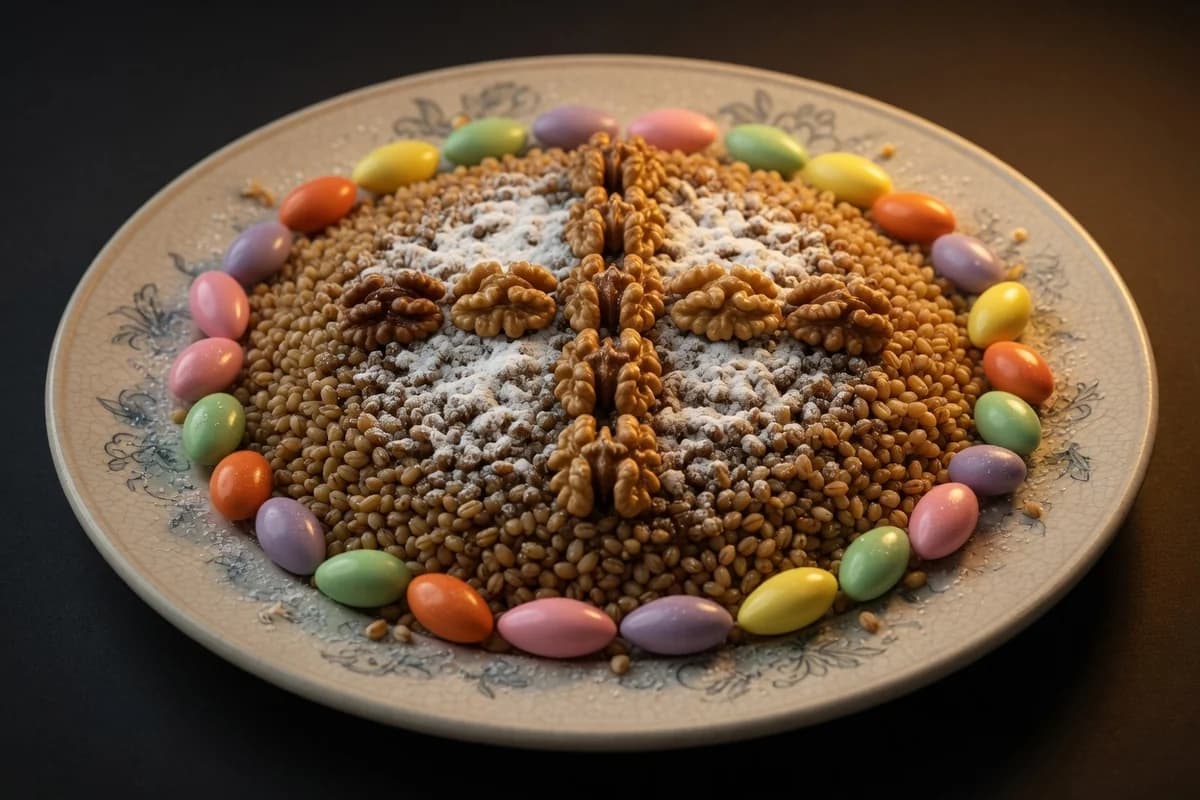
- Koliva — boiled wheat with walnuts and powdered sugar, decorated with a cross; a lit candle placed in the centre during the service
- Wine — for the memorial toast after the service
- Candles — one for each person present at church
- The pomelnic (memorial name list) — handed to the priest before the service
- Hand towels or food parcels — according to local custom and the number of guests
- Prior arrangement with the priest — book the memorial service in advance
The memorial service and meal
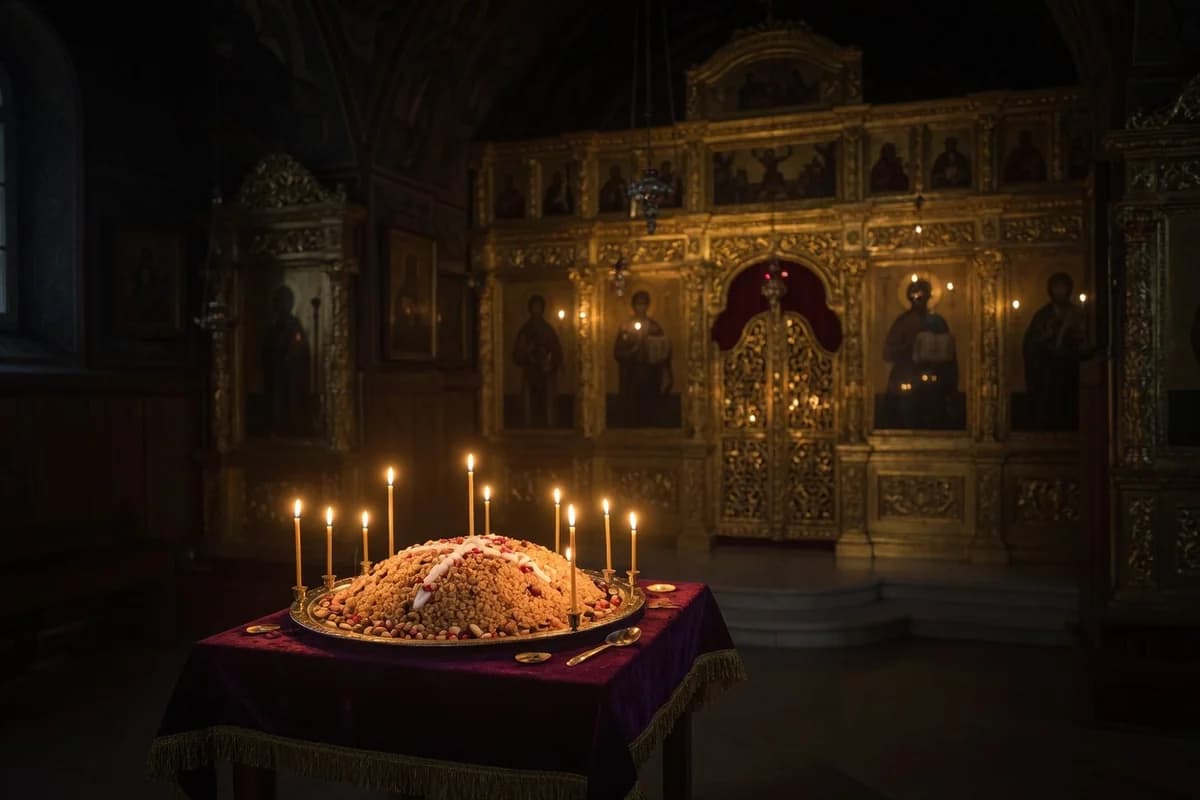
The service takes place at church, usually after the morning Liturgy. The family brings the koliva and ritual breads (colaci), hands the pomelnic to the priest, and lights the candles. The priest conducts the parastas — a short or full memorial service, depending on parish custom.
The memorial meal follows the service: at the family home, at a restaurant, at the parish hall, or in the form of food parcels distributed to guests and those present at church. At organising memorials we organise the koliva, colaci, delivery to the chosen location, and church coordination.
How it differs from the 40-day parastas
The 40-day parastas is the most important commemoration of the first year. The three-month parastas is one of the monthly commemorations — smaller in the number of guests and in the preparations involved.
Where the 40-day service typically includes extended family and close friends, the three-month gathering is more intimate — immediate family and a few friends. The koliva and the service remain the same; the meal or parcels are scaled to the number of people present.
| Aspect | At 40 days | At 3 months |
|---|---|---|
| Place in the first year | The most important commemoration | One of the monthly commemorations |
| Who attends | Extended family and close friends | Immediate family and a few friends |
| Koliva and the service | The same | The same |
| Meal or food parcels | For a wider circle of guests | Scaled to the number present |
| Preparations | More extensive | Similar, proportionally reduced |