Types of wreaths and sprays
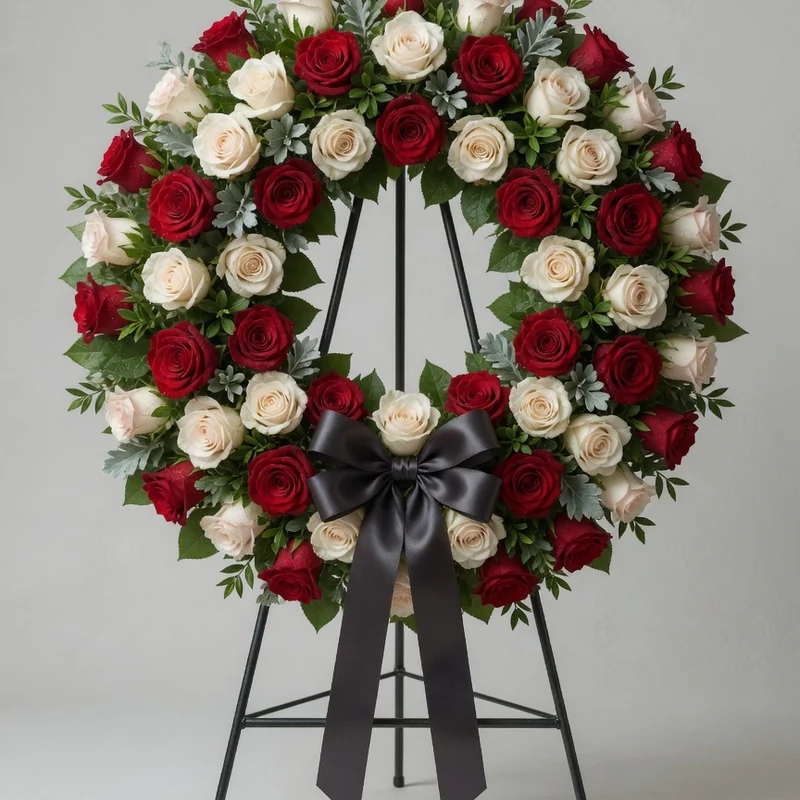
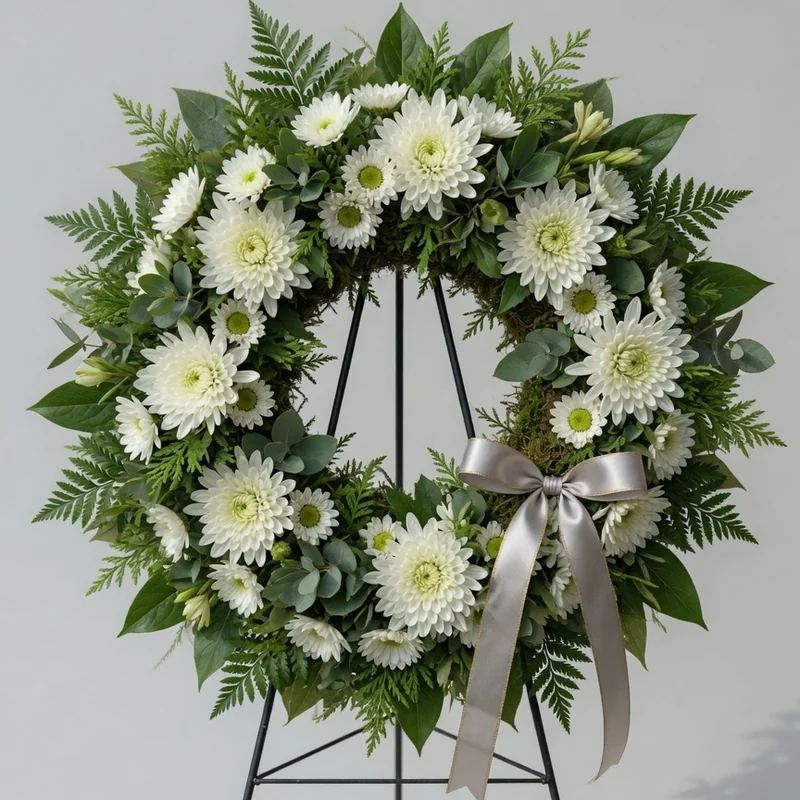
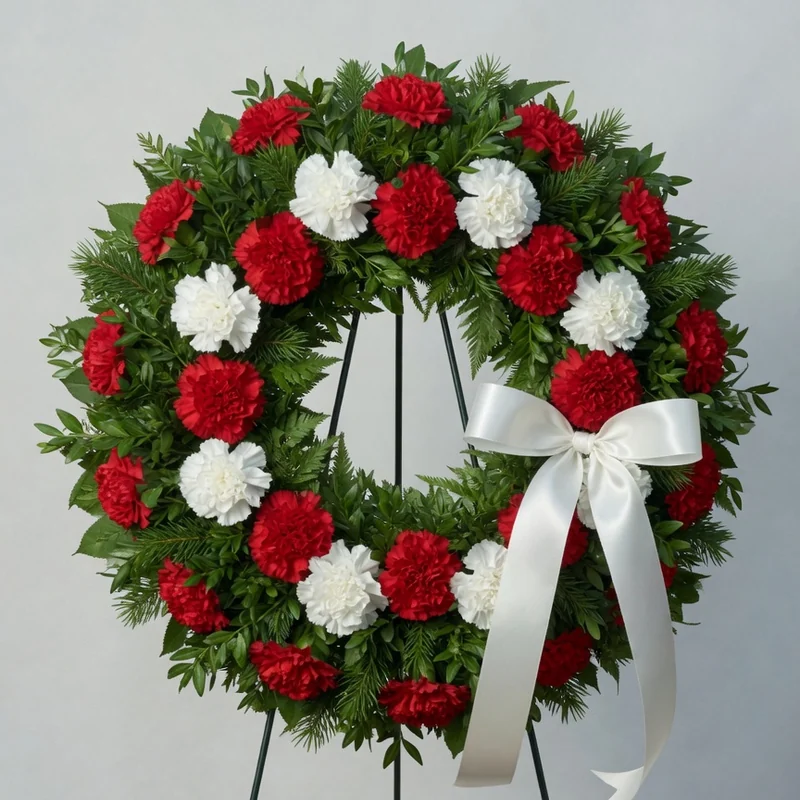
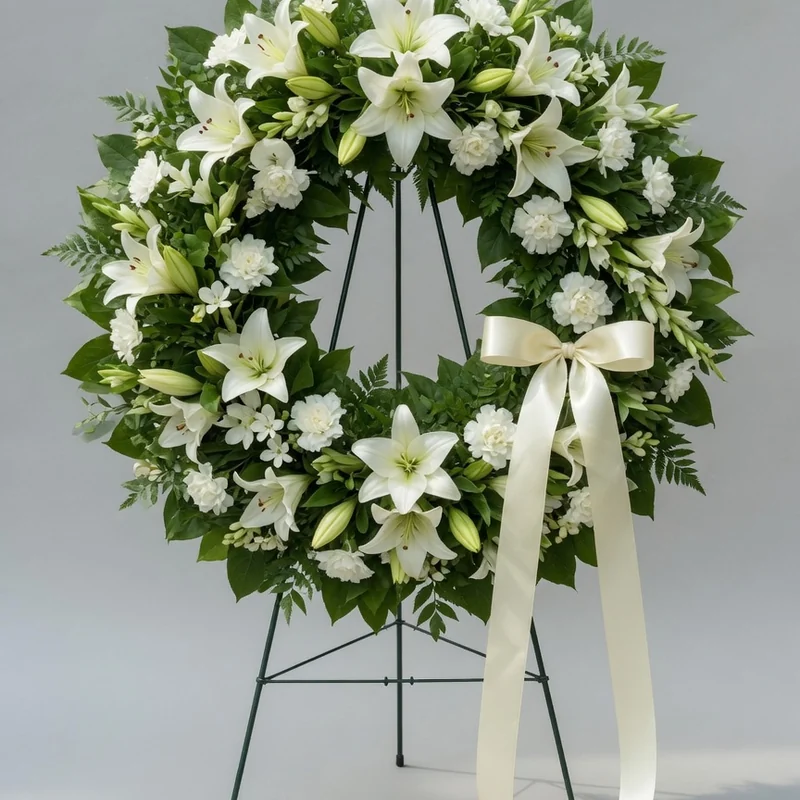
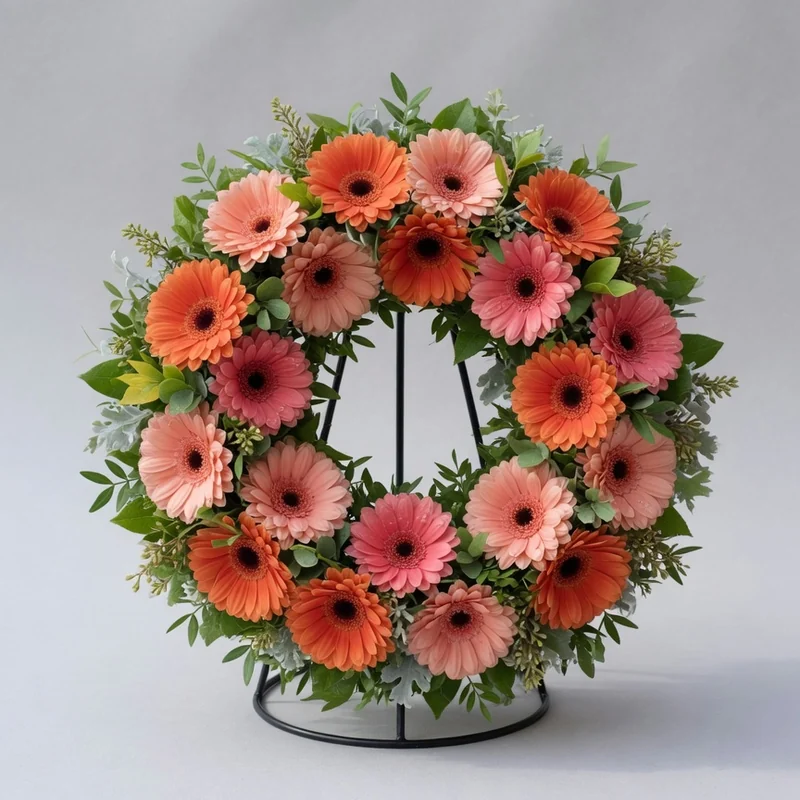
- Round wreath — the classic form, on a stand, available in several sizes (number of tiers of flowers)
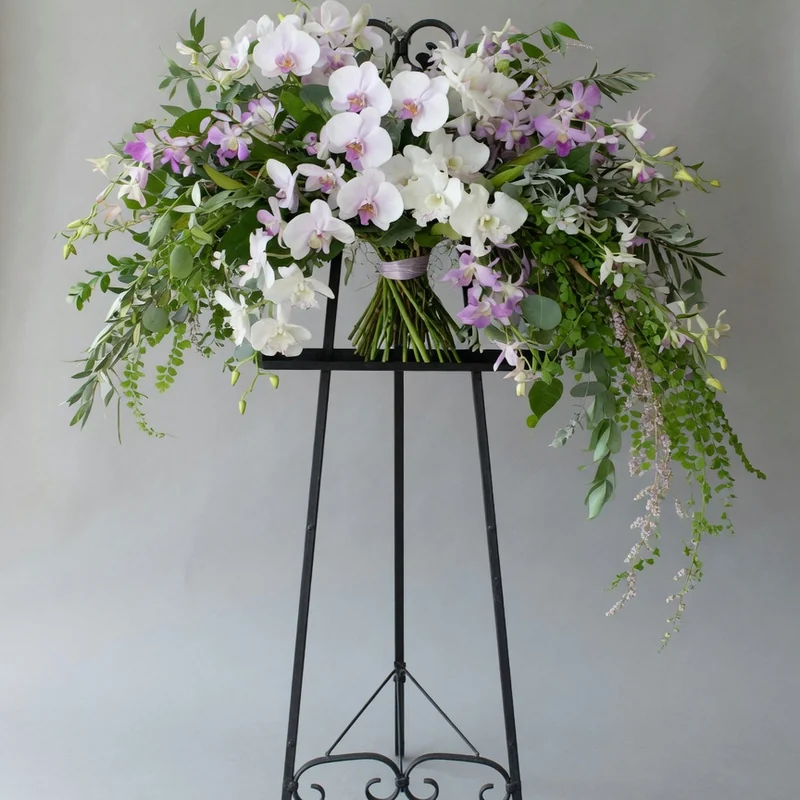
- Spray (jerbă) — an elongated arrangement, more modern, placed on or beside the casket
- Heart- or cross-shaped wreath — for a more personal message
- Small bouquet or arrangement — for those who prefer a discreet presence
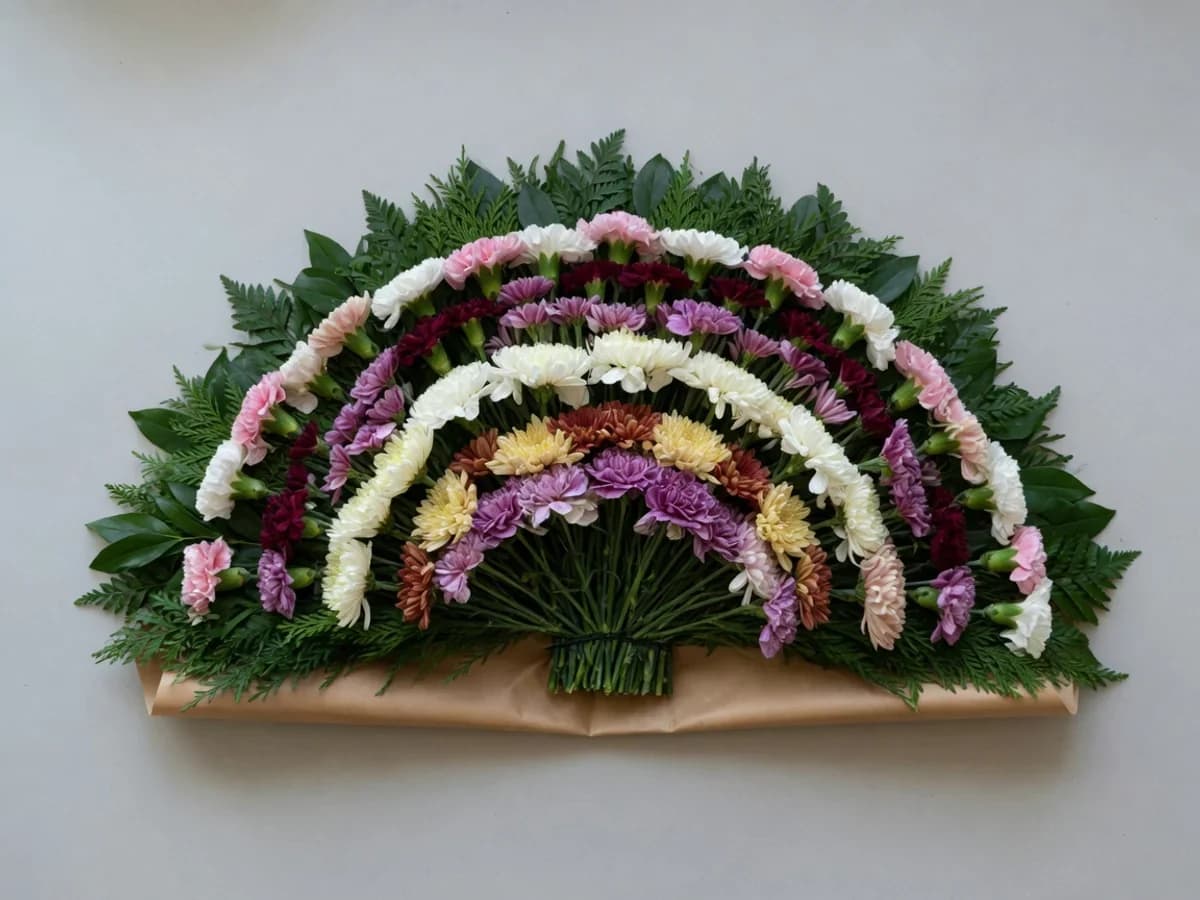
| Type | From whom | Occasion |
|---|---|---|
| Classic round wreath | Family, close relatives | Main arrangement of the ceremony |
| Funeral spray | Colleagues, friends | Discreet presence, less space required |
| Cross-of-flowers wreath | Family or religious associations | Emphasised Christian message |
| Casket-lid arrangement | Immediate family only | Placed directly on the casket lid |
| Condolence bouquet | Friends, acquaintances | Visits at the wake or to the family home |
Suitable flowers and the season
The traditional flowers for wreaths are chrysanthemums and carnations — hardy, dignified, and available all year. Roses and lilies are used for more elegant arrangements but are more sensitive to heat.
Seasonal availability can shift the florist's recommendation: in summer, carnations and gerberas hold up better than lilies or orchids. In winter, chrysanthemums and tulips are more readily available. If you have a specific preference, mention it early.
Colour plays a role: white suggests purity and calm, and is the most widely used; pastel tones suit younger people; red expresses a deep bond. Avoid very bright, vivid colours, which are out of keeping with the tone of a funeral ceremony. See also the range of floral arrangements if you want something more personalised.
The ribbon message
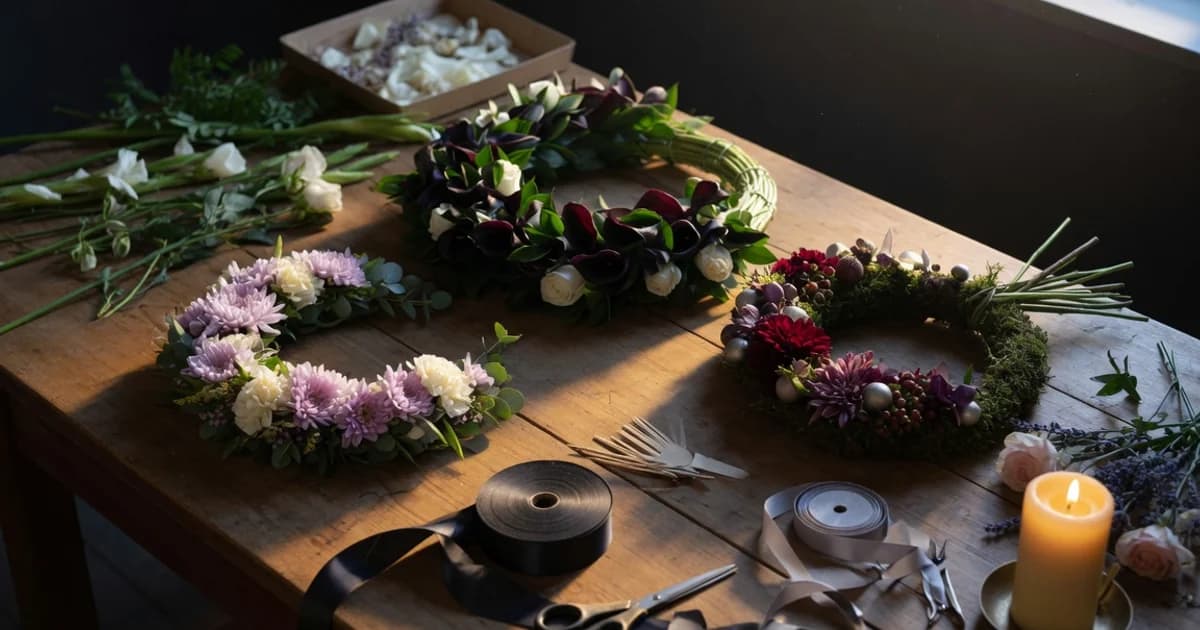
The wreath ribbon usually carries a short condolence phrase and says who it is from. The message should be easy to read, sober, and not too long. The family notes the ribbons on all received wreaths — a clear message helps, especially when there are many.
How to sign: the family writes their full name or 'The [Name] family'; colleagues write 'From [firm/institution] colleagues'; a close friend can use a first name. An institution signs formally with its full name. If you're sending on behalf of a group, list all members only if there are few — otherwise use a general phrase.
The ideal length is 3–10 words. Beyond 15 words, the message becomes hard to read on the narrow ribbon. If you want to say something more personal, a second ribbon or a separate card can be added — available on request.
- "A final tribute" — a neutral phrase, suitable in any situation
- "Rest in peace" — a classic phrase, universally accepted
- "In lasting memory" — for a close bond
- "From the [Name] family" or "From colleagues" — to make clearly who it is from
- "Eternal regrets" — a sober phrase, suited to friends or colleagues
- "Safe journey" — a familiar, more direct phrase
When and where to send the wreath
The wreath is sent to the place of the wake (chapel, church, or the family home), before the funeral ceremony begins. If you don't know the location, the funeral home can deliver it directly to the ceremony.
Timing matters as much as the address. Delivering too early means the flowers stand unattended; delivering after the ceremony starts means the wreath doesn't arrive in time. The practical rule: delivery 30–60 minutes before the announced time of the wake or the service.
If you can't attend the ceremony and want to send a wreath, tell the funeral home: the exact address of the chapel or church, the time of the ceremony, and a phone number where you can be reached if there are last-minute changes.
Some families are now using the note 'flowers welcome but donations preferred' — in that case, respect the family's wish and make a donation in memory of the deceased instead of sending a wreath.
Common mistakes when choosing a wreath
- An even number of flowers is the rule for funerals (odd numbers are for the living — birthdays, births); for a funeral wreath the arrangement is always even or has no strict numerical relevance, but never a bouquet of 1, 3, or 5 stems brought as you would for a birthday.
- A wreath too large for the chapel — in a small chapel, a 90 cm-diameter wreath can block circulation; ask the funeral home about the space dimensions.
- A late order that doesn't arrive by the ceremony — order at least 12 hours in advance; for personalised wreaths or rare flowers, allow 24–48 hours.
- A ribbon with no text, or a generic text when the relationship called for something personal — a simple note like 'With love, [first name]' makes a difference over a completely impersonal ribbon.
Fresh flowers vs artificial — which for which situation
Fresh flowers are the standard choice for the funeral ceremony. They are fresh, subtly fragrant, and convey respect through their authenticity. They last 5–7 days with basic care — enough for the wake days and the ceremony.
Artificial flowers have one major advantage: durability. They are used when the arrangement remains at the graveside after the ceremony, exposed to the weather with no regular care. They are a practical choice for families who live far away or cannot visit the grave regularly.
There is no rule against artificial flowers at the ceremony, but Romanian funeral tradition prefers fresh ones. If the family wants a lasting arrangement for the grave, the standard approach is: fresh wreath for the ceremony, followed by an artificial arrangement placed at the grave afterwards. See also the range of floral arrangements for available options.
A note on etiquette: if you're sending a wreath and cannot attend the ceremony, fresh flowers are the right choice — they show the arrangement was made for that day, not for duration.
Indicative price ranges
Price depends on size and the flowers chosen. As a guide: small wreaths from around 150–300 RON, medium wreaths 300–600 RON, and large wreaths with multiple tiers and noble flowers from 600 RON upwards, reaching over 1,200 RON.
We can prepare and deliver the wreath along with the rest of the services, with the ribbon inscribed to your requirements.
Consumer rights — ANPC