What actually matters when choosing a casket
Four things make a real difference: the wood (from pine to oak), the interior lining (fabric and pillow), the size, and the finish (handles, nameplate, varnish). Everything else is a matter of preference and budget.
A practical tip: choose based on the type of ceremony and the family's means, not under pressure. A well-made, dignified casket does not have to be expensive.
Types of wood and the differences
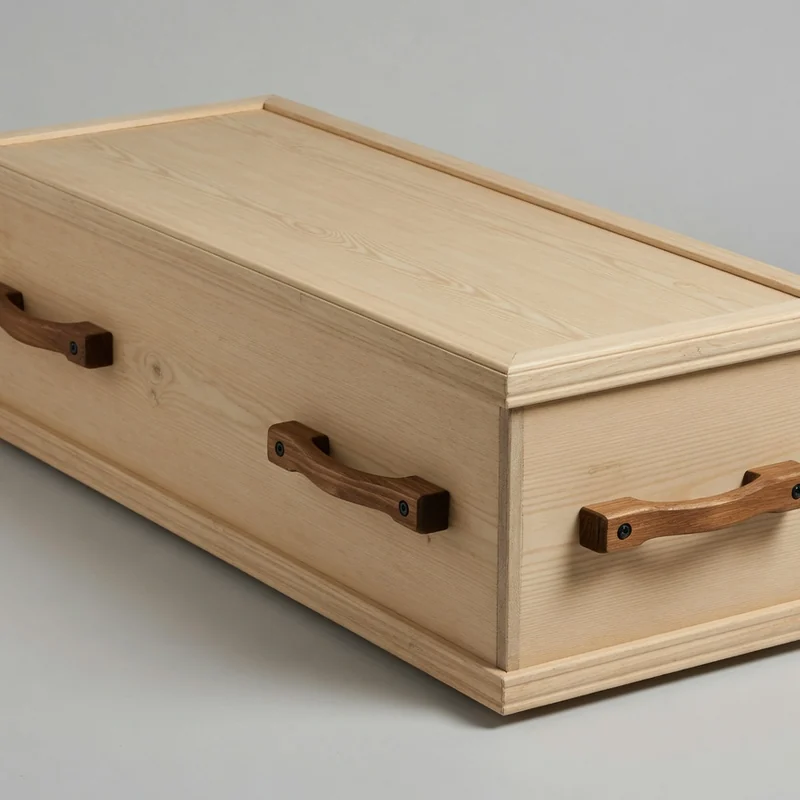
- Pine — the most affordable, light-coloured wood, suitable for sober ceremonies
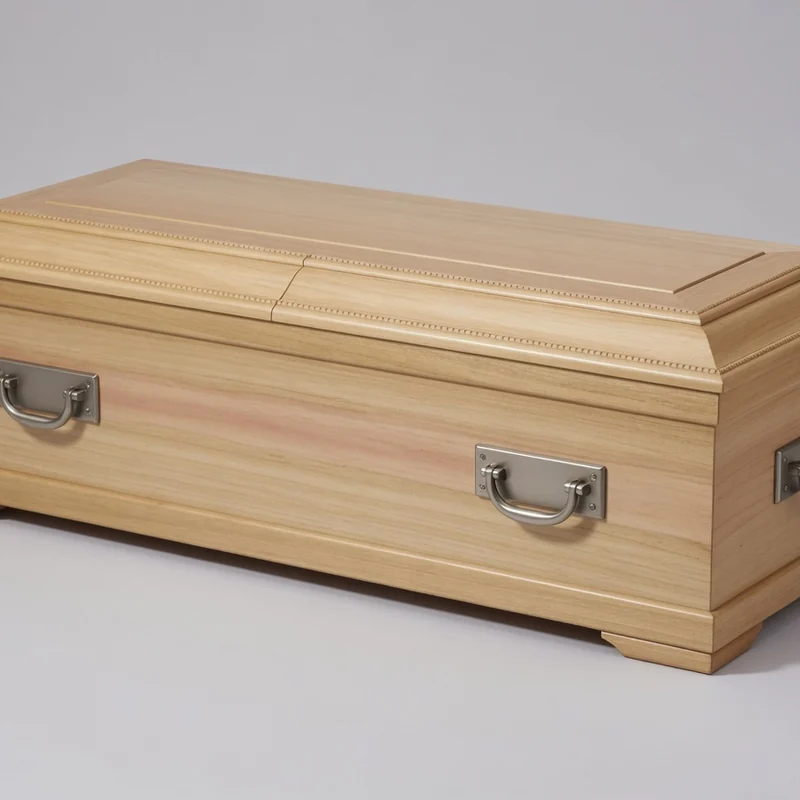
- Poplar — light, clean finish, a step up from pine in appearance
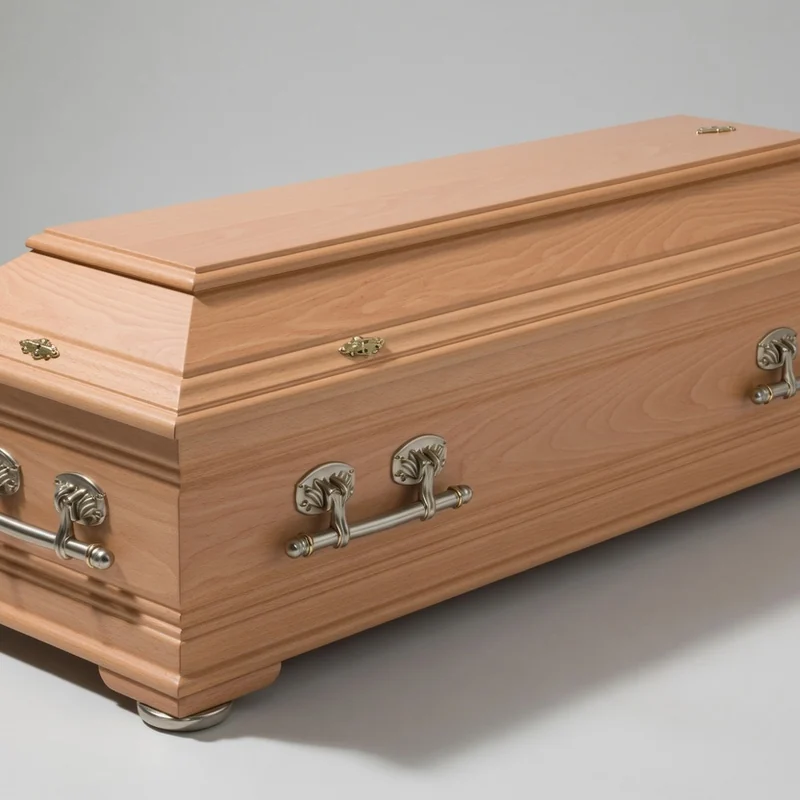
- Beech — denser and more durable, beautiful finishes, mid-range
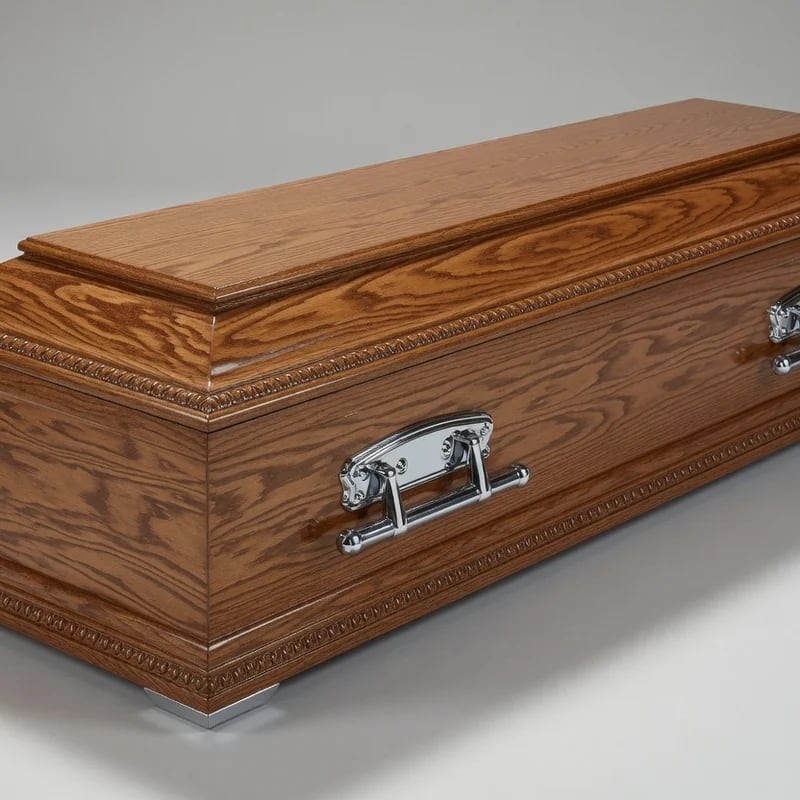
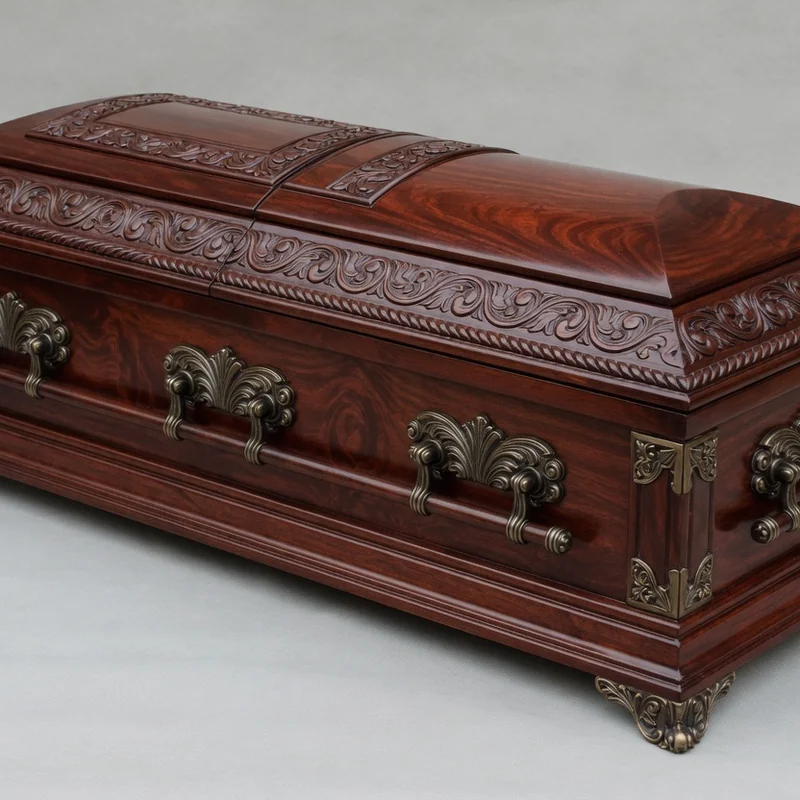
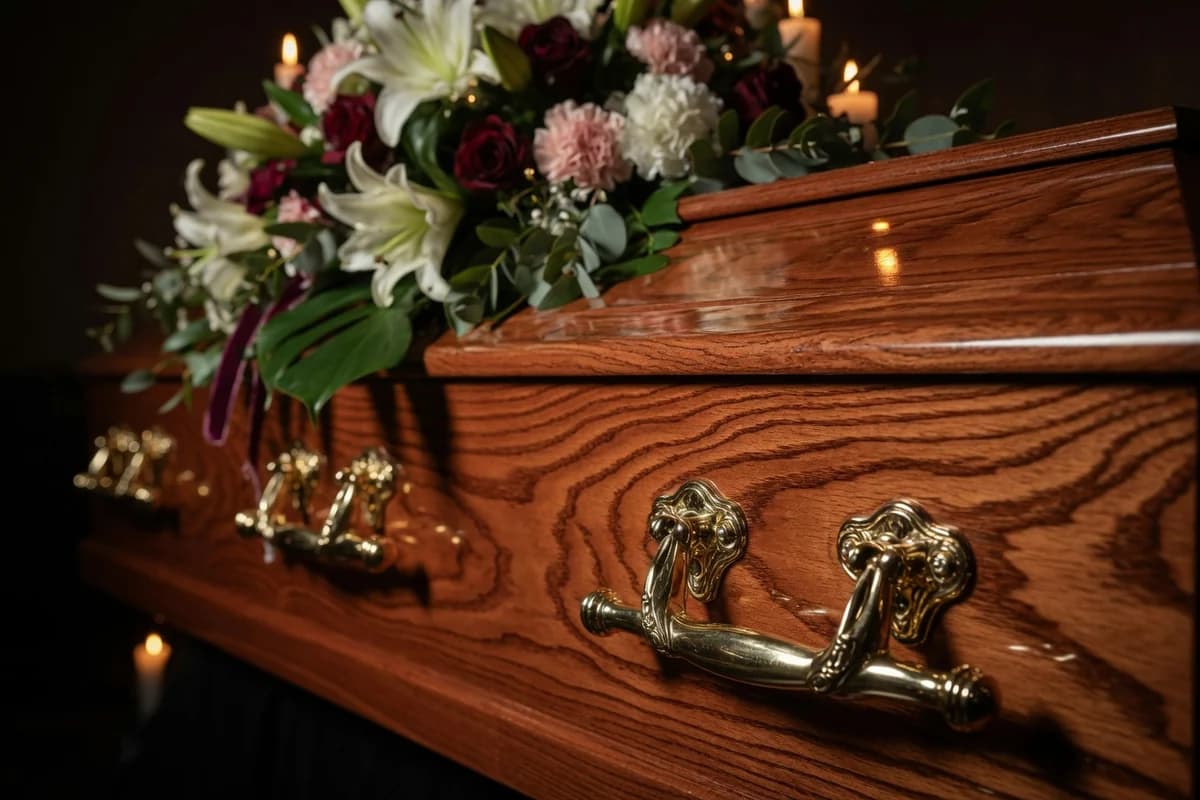
- Oak — a noble species, solid and heavy, premium appearance, the most expensive
- Veneer vs solid — many caskets have a basic wood structure with a noble veneer; solid throughout costs significantly more
| Wood | Character | Who it suits |
|---|---|---|
| Pine | Light wood, pale colour, natural finish | Tight budget or cremation — simple and dignified |
| Poplar | Slightly denser, more elegant finish | Mid budget, accessible alternative to pine |
| Beech | Fine texture, light reddish colour, durable | Mid range — durable, classic look |
| Oak | Visible grain, solid, long-lasting | Traditional ceremonies, families who want a noble appearance |
| Mahogany | Reddish-brown tones, exotic, durable | Premium — ceremonies with an extended open casket |
| Walnut | Dark brown colours, distinctive look | Premium, for elaborate finishes and engravings |
Lining and finish — what they are and why they matter
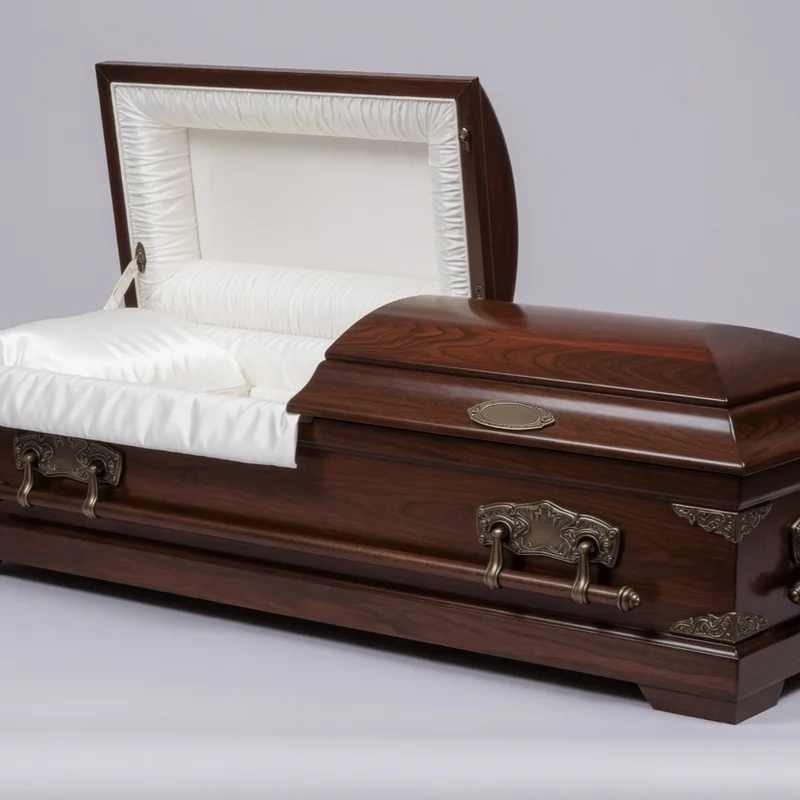
The lining is the interior upholstery: the pillow, the sheet, and the fabric on the interior walls. The standard material is white, cream, or beige satin or velvet. On premium caskets, the lining may be natural silk or a custom colour. Quality lining affects how the casket looks at the wake — especially when the casket is open for an extended period.
External finishes include the varnish applied to the wood (matt, satin, or gloss), the handles, and the ornaments. Plastic silver-effect handles are standard on affordable caskets; zinc-plated or bronze handles appear on mid-range and premium models. A traditional Orthodox cross or other religious symbol is usually placed on the lid — available on request.
A practical tip: if the casket will be on show at the wake, invest in better lining and varnish — the difference is visible. If the casket won't be on show, or it's for cremation, basic lining is fine.
Dimensions and fit
Standard adult caskets cover the vast majority of cases. For tall or larger-build individuals, oversized models are available and need to be ordered in advance. Child-size caskets also exist and are made with discretion.
The right size matters in practice: a casket that is too narrow or too short creates difficulties when placing and transporting the deceased. It also matters for the burial plot or vault, if applicable.
Don't guess the size — the funeral home measures and recommends the right model. It is a routine step, handled with discretion and professionalism.
Cremation caskets — what is different
For cremation services you need a simple, fully combustible wood casket — no heavy metal elements (iron handles or ornaments), no zinc inserts, and no special varnishes that would affect the cremation process. Crematoria require this type for technical and environmental reasons.
Recommended species for cremation are pine, poplar, or plain MDF — affordable and fully combustible. There is no point in an expensive oak casket for cremation; the money saved can go towards the ceremony or other arrangements.
We can advise you on exactly which model is accepted at the chosen crematorium.
Zinc casket for repatriation
International transport of a deceased person requires a casket with a sealed zinc insert — an airtight metal lining fixed inside the wooden casket. This is not an aesthetic choice; it is a requirement of international transport regulations (the 1937 Berlin Agreement and EU road and air transport rules).
The zinc insert is not visible from outside — the appearance and finish of the wood remain the family's choice. If the repatriation is by air, there are additional requirements (weight, certified sealing) that we manage in coordination with the transport company. See the repatriation guide for the full procedure.
Common mistakes when choosing a casket
- Choosing on price alone without checking that the dimensions match the person — a few centimetres' difference matters in practice.
- Ordering a casket before knowing whether the ceremony will be burial or cremation — the two types differ technically and are not interchangeable.
- Assuming an expensive casket means more respect for the deceased — the dignity of a ceremony is not measured by the price of the casket.
- Leaving it to the last day — for premium models (mahogany, walnut, custom work) preparation time is needed; don't leave it until the last moment.
What to check when choosing at the funeral home
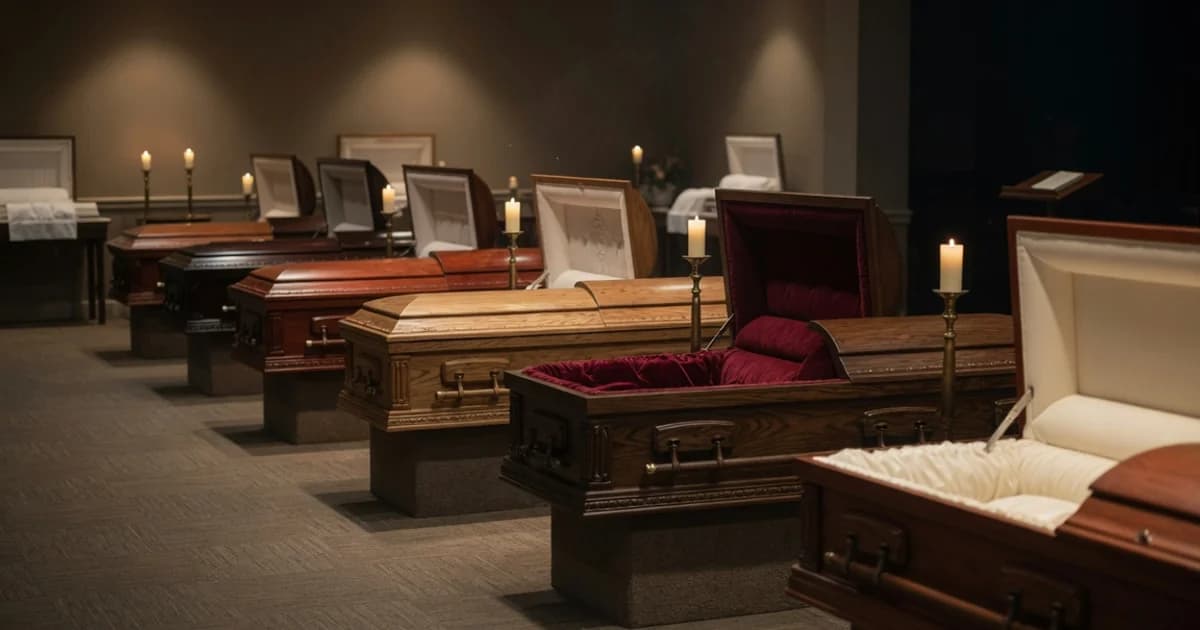
- Ask to see the casket physically or a lining sample — don't choose based on a catalogue photo alone.
- Check whether the price includes the lining, handles, and nameplate, or whether these are extra costs.
- Ask explicitly whether the casket you've chosen is suitable for the type of ceremony: burial, cremation, or repatriation.
- Request a written quote with the model, wood species, dimensions, and final price — the right to a written quote is guaranteed under ANPC rules.
- If you have any doubt about the size, ask for it to be confirmed before the order is placed.
- Don't let yourself be rushed — a serious funeral home gives you time to choose, without pressure.
Indicative price ranges
Prices vary depending on wood species, finish, and lining. As a guide: pine caskets from around 600–1,200 RON, poplar and beech around 1,200–2,500 RON, oak and premium models from 2,500 RON upwards, reaching over 6,000 RON for solid wood with exceptional finishes.
The casket is usually included in the our package offers; always ask for a written quote showing the exact model and price, as required by ANPC rules.
Consumer rights — ANPC