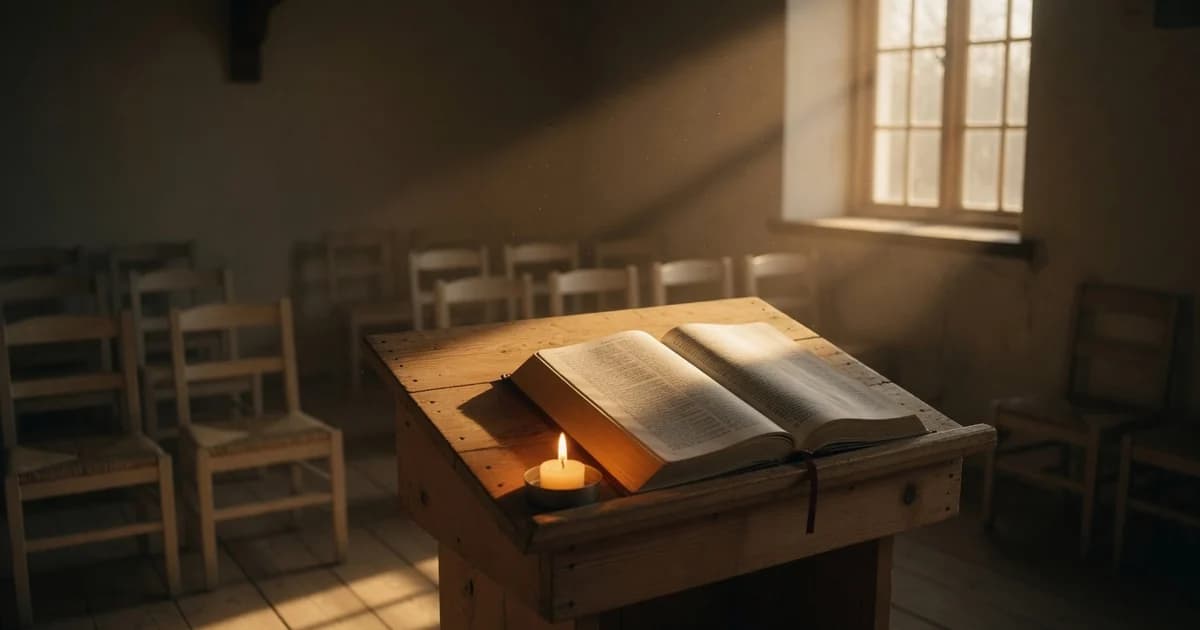
How the Baptist service works
The Baptist funeral service is centred on Scripture. The pastor preaches a sermon, the congregation prays together and sings hymns. Family members or members of the congregation may also speak a few words in memory of the deceased.
There may be a simple evening vigil with hymns and Bible readings, held at the family home or at the church. The vigil is not compulsory — the family decides whether to hold it, together with the pastor.
The coffin may be open or closed, according to the family's wishes. There is no strict rule requiring either.
The service is led by the community's pastor or by an elder, and is usually shorter than an Orthodox service — typically between half an hour and an hour. The exact length — the number of hymns, the length of the sermon, any family tributes — is agreed by the pastor and the family before the ceremony. The venue may be the community's prayer house, a funeral chapel or the graveside, depending on the family's preference and practical circumstances.
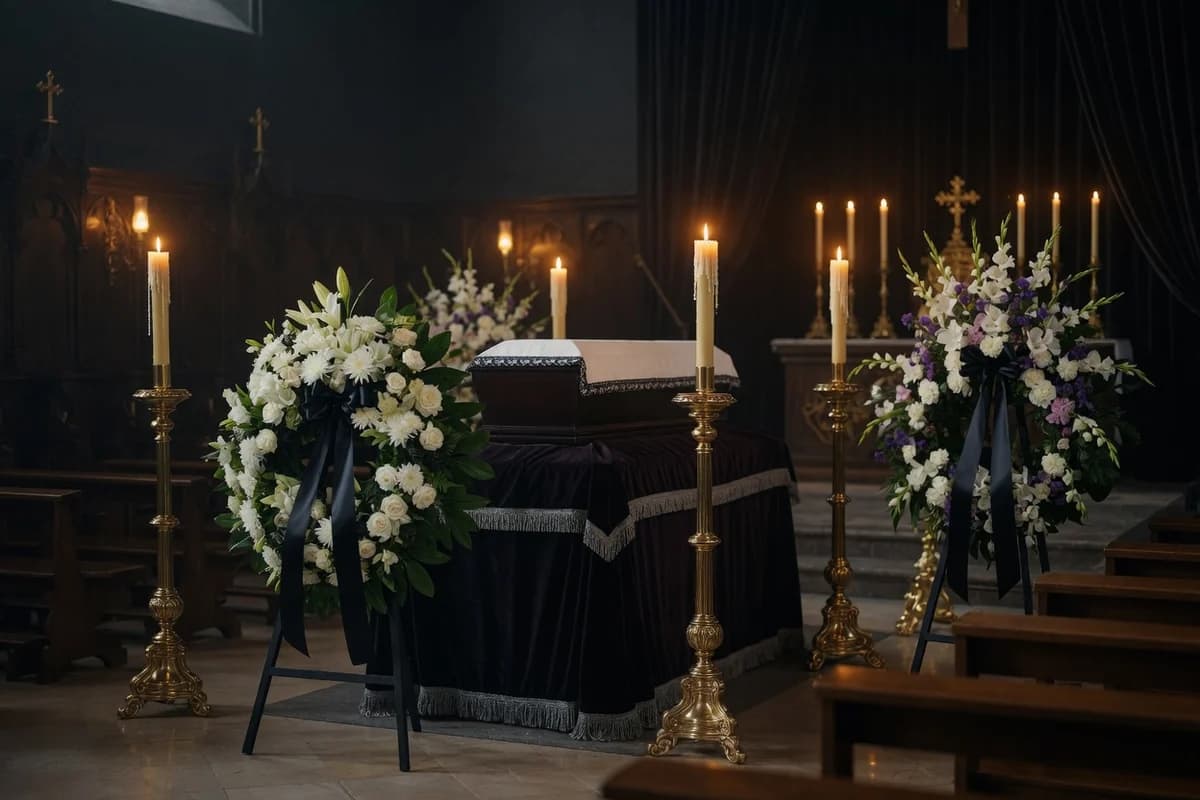
Differences from an Orthodox funeral
The table below sets out the main differences, without hierarchy — both traditions have their own order.
Mixed families — where some members are Orthodox and others Baptist — sometimes face questions about which rite to follow. The simplest rule: follow the tradition to which the deceased belonged and held to in life. The pastor and the priest can each be consulted separately to clarify the expectations of their respective communities.
| Aspect | Baptist | Orthodox |
|---|---|---|
| Officiant | Pastor | Priest |
| Coliva and incense | Not used | Part of the liturgical rite |
| Memorial services | No fixed dates; simple commemorations may be held | At 3, 9, 40 days and other established dates |
| Mourning | No strict rules | Established mourning traditions |
| Service | Sermon and hymns, tone of comfort | Funeral service with Prohodul |
Cremation among Baptists
There is no unified prohibition on cremation in Baptist communities in Romania. Practice differs from one congregation to another, and the decision belongs to the family, discussed with the pastor.
If the family is considering cremation, it is helpful to speak with the pastor before deciding, to understand the position of the local congregation. The guide on the comparison guide sets out the full comparison — costs, timescale, procedure and religious considerations. The Reformed community holds a similar position — see the guide on the Reformed funeral.
What to expect at the service
The service is open to anyone who wishes to be with the family, regardless of denomination. You are not required to take part in any ritual — silent, respectful presence is enough. Sober clothing in dark colours is appropriate, as at any funeral.
Communal singing is central. The congregation sings hymns together, sometimes unaccompanied, sometimes with instruments, according to the congregation's custom. The pastor's sermon is addressed to those present, with an emphasis on the hope of resurrection and comfort for the family.
Coliva, incense and colaci are not used, as they are in the Orthodox tradition. Flowers and wreaths are welcome; some families suggest a donation to the church or a cause close to the heart of the deceased in their place. You can discuss funeral wreaths with the funeral home.
Paperwork and practical arrangements
Administrative formalities are identical at any death, regardless of denomination: the medical death certificate from the doctor, registration of the death with the Civil Registry within 3 calendar days of death, the official death certificate, and the health clearance certificate for funeral transport.
The funeral home can handle all these formalities on the basis of a simple power of attorney signed by the family at first contact. The family gathers the deceased's documents — identity card, pension slip if the person was retired — and decides the details of the ceremony.
Full details on documents in the guide on death certificate procedure and on the sequence of steps in arranging the funeral step by step. Our team respects the denomination's customs and coordinates with the pastor for the service.