Mortuary refrigeration: when it is needed and how it works
Mortuary refrigeration keeps the deceased at a controlled low temperature when the funeral cannot take place immediately. It is used when relatives are travelling from abroad, during repatriation preparations, or when the burial date must be arranged around other commitments. We provide cold storage and coordinate everything else — collection, preparation, and onward transport.
A mortuary refrigerator is a unit that holds the body at 2–4 °C, slowing the natural processes after death. This allows the funeral to be delayed by several days while maintaining the required sanitary standards.
It is used when an immediate funeral is not possible — for relatives travelling in, for repatriation preparation, or for scheduling reasons. For short delays, cold storage is the standard alternative to embalming.
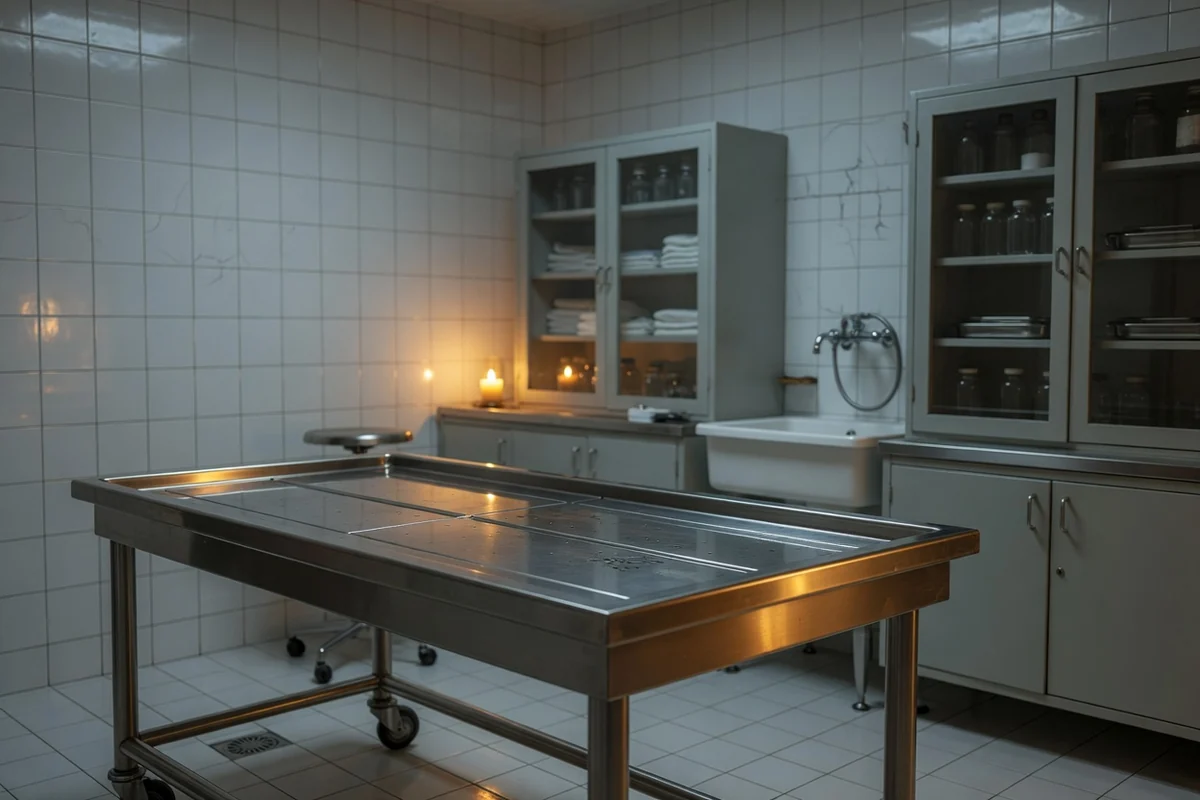
Illustrative image: a refrigerated mortuary unit used for cold storage of the deceased.
When mortuary refrigeration is needed
Cold storage becomes necessary whenever more than a day or two pass between death and the funeral:
Relatives are travelling from abroad or another city
Preparing an international repatriation
Scheduling delays at the cemetery or church
Waiting for a post-mortem examination (autopsy)
The family wants a longer wake period
How it works
The body is placed in a temperature-controlled refrigerated unit, kept at a constant 2–4 °C. The cold slows decomposition and maintains the sanitary conditions required by Romanian law.
For short delays, cold storage alone is sufficient. For transport lasting more than a week, or for international repatriation, embalming is also recommended — it preserves the body for a longer period.
How long can the body remain in cold storage
The appropriate duration depends on the situation. The table below gives practical guidance:
Situation
Indicative duration
Recommendation
Short delay (relatives, scheduling)
1–3 days
Cold storage
Domestic or international repatriation
3–7 days
Cold storage + embalming
Extended delay (over one week)
7+ days
Embalming
Indicative cold storage duration. For international transport, a zinc-sealed casket and embalming are mandatory.
Where mortuary refrigeration facilities are located
Mortuary refrigerators are available at hospital morgues, funeral homes, and dedicated holding facilities. When a death occurs in hospital, the body may be kept at the hospital morgue until collection.
We handle cold storage in proper conditions and coordinate the collection, preparation, and transport — wherever the death occurred.
Illustrative image: a mortuary holding facility, maintained to the required sanitary standards.
Cold storage or embalming — which to choose
Cold storage is the right choice for short delays of a few days. It does not alter the body in any way — it simply slows natural processes through temperature.
Embalming preserves the body for longer and is mandatory for international transport. For a repatriation, both are usually used together. See the page on preparing the deceased.
What is included and what it costs
Cold storage is usually charged per day. Any preparation or transport required is priced alongside it.
We coordinate cold storage, preparation, and transport in one place, with a clear quote upfront. For an overview of costs, see our funeral service prices.
Who handles everything
Call us and we take care of cold storage, paperwork, and coordination — whether the death occurred at home, in hospital, or abroad.
We answer day and night. For a no-obligation conversation, call us or see our licensed hearse service.
FREQUENT QUESTIONS
What families ask about mortuary refrigeration: when it is needed and how it works
What is a mortuary refrigerator?
A unit that keeps the deceased at 2–4 °C, slowing the natural processes after death. It allows the funeral to be delayed by several days in correct sanitary conditions.
When is mortuary refrigeration needed?
When more than a day or two pass between death and the funeral — for relatives travelling in, for a repatriation, a post-mortem examination, or a longer wake.
How long can the body stay in cold storage?
For short delays, 1–3 days in cold storage is usually sufficient. For repatriations or delays over a week, embalming is added alongside cold storage.
Where are mortuary refrigerators located?
At hospital morgues, funeral homes, and specialist holding facilities. When death occurs in hospital, the body is kept at the hospital morgue until collection.
At what temperature is the body kept?
Normally at 2–4 °C, constant and controlled. The cold slows decomposition and maintains the sanitary conditions required by law.
Cold storage or embalming — which should I choose?
Cold storage for delays of a few days. Embalming for longer periods or international transport, where it is mandatory.
What does mortuary refrigeration cost?
It is usually charged per day of storage. Preparation and transport are quoted alongside it. We give a clear figure before we start.
Does cold storage change the body?
No. Cold storage only slows the natural processes through temperature, without altering the body. Longer-term preservation requires embalming.
Can the family view the deceased while in cold storage?
Viewing normally takes place after preparation, not during cold storage. We coordinate the right moment for a final farewell.
Is cold storage needed for a repatriation?
Yes, as a rule. During repatriation the body is kept in cold storage until the paperwork and transport are ready, alongside embalming and a zinc-sealed casket.
Who arranges cold storage if the death happened at home?
We do. We collect the deceased from home and arrange cold storage in proper sanitary conditions until the funeral or repatriation.
Is cold storage mandatory?
Not if the funeral takes place within 1–2 days. It becomes necessary or advisable when the date is delayed and the body must be kept in good condition.
How quickly should the body be placed in cold storage?
As soon as possible after death, if the funeral is to be delayed. The sooner storage begins, the better the conditions are maintained.
Can a wake still be held if the deceased is in cold storage?
Yes. The body is removed from cold storage, prepared, and laid out for the wake. If needed, it is returned to cold storage afterwards until the funeral.
Does cold storage affect the appearance of the deceased?
Not if storage is done correctly and for a short period. Preparation and restorative cosmetics restore a natural appearance for the wake and ceremony.
Who coordinates cold storage and transport?
We do. We handle cold storage, preparation, paperwork, and transport — wherever the death occurred. The family does not need to manage the logistics.
What happens after cold storage?
The deceased is prepared — washing, embalming if needed, cosmetics, and dressing — then placed in the casket, ready for the wake, ceremony, and funeral.
Is mortuary refrigeration available around the clock?
Yes. We provide cold storage day and night, including weekends and public holidays. Call us at any hour for collection and storage.
Is cold storage used for hospital deaths too?
Yes. When death occurs in hospital, the body is held at the hospital morgue until collection. We coordinate the collection and any subsequent storage.
What does one day in cold storage cost?
The daily rate depends on the facility and the services included. It is stated clearly in our quote, alongside preparation and transport, with no surprises.
Is the deceased treated with dignity in cold storage?
Yes. Storage is carried out in the required sanitary conditions and with respect, in dedicated facilities. The dignity of the deceased is maintained throughout.
Is cold storage needed in winter too?
Yes, regardless of season. Ambient cold is not sufficiently low or controlled for correct preservation; a mortuary refrigerator maintains the precise conditions required.