Exhumation (deshumare in Romanian, also called exhumare) means removing remains from a grave, for reburial in another plot, transfer to another locality, or placing in an ossuary. The procedure requires authorisation and follows strict legal deadlines. We handle the paperwork, the physical work, and the transport.
Exhumation is the removal of remains from a grave. It is usually carried out to rebury them in another plot, to transfer them to another locality, or to place them in a family vault.
The work requires authorisation and must comply with strict sanitary regulations. The family does not go through this process alone — we handle the paperwork, the physical work, and the transport.
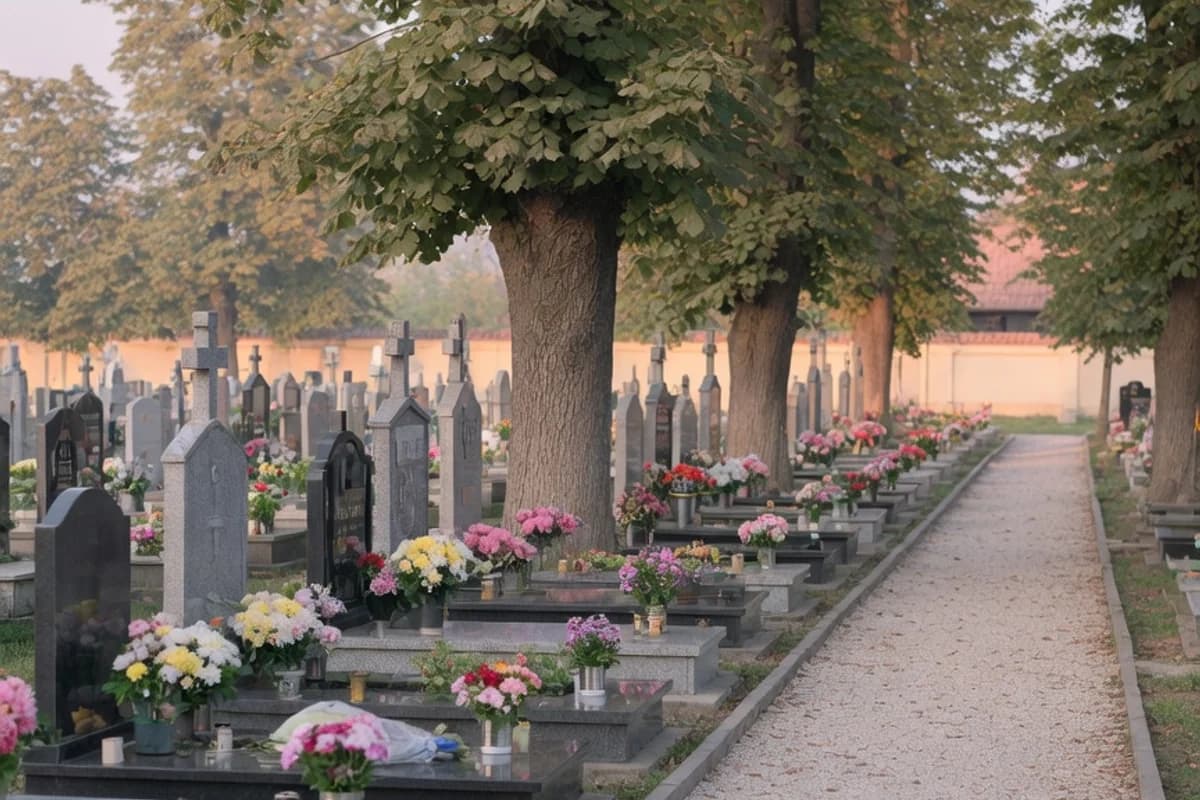
Illustrative image: a cemetery path, where the exhumation takes place.
When exhumation is permitted
The general rule is that exhumation may take place after 7 years from the date of burial. After this period, the remains may be exhumed at any time of year, without an authorisation from the Direcția de Sănătate Publică (DSP — the county public health authority).
Before 7 years, exhumation is permitted only in two situations: after at least one year, in the period 1 November – 31 March, with a DSP sanitary authorisation, for reburial in another plot; or at any time, on the basis of an order from the public prosecutor or a court.
Situation
When it may take place
Authorisation required
More than 7 years after burial
At any time of year
No DSP authorisation; only the cemetery administration's agreement
Between 1 and 7 years after burial
Only in the period 1 November – 31 March, for reburial in another plot
The DSP sanitary authorisation
By order of the public prosecutor or a court
At any time
The prosecutor's or court's order
Transfer to another cemetery
Under the rules above
Additionally, the receiving cemetery's agreement
When exhumation is permitted and what authorisation it requires Under the technical and sanitary regulations approved by Government Decision 741/2016 (HG 741/2016).
The documents required depend on how much time has passed since burial:
Under 7 years — the sanitary authorisation from the Direcția de Sănătate Publică (DSP)
After 7 years — no DSP authorisation is needed; only the cemetery administration's agreement
In all cases — the cemetery administration's agreement for the date of the work
When transferring to another cemetery — the receiving cemetery's agreement
How the exhumation proceeds
The work is carried out by authorised personnel, in compliance with the sanitary regulations. We first verify the time elapsed and obtain the necessary authorisations, then schedule the work with the cemetery administration.
The exhumation itself involves opening the grave and carefully gathering the remains. These are placed in an ossuary box or, for transfer, in a sealed zinc coffin.
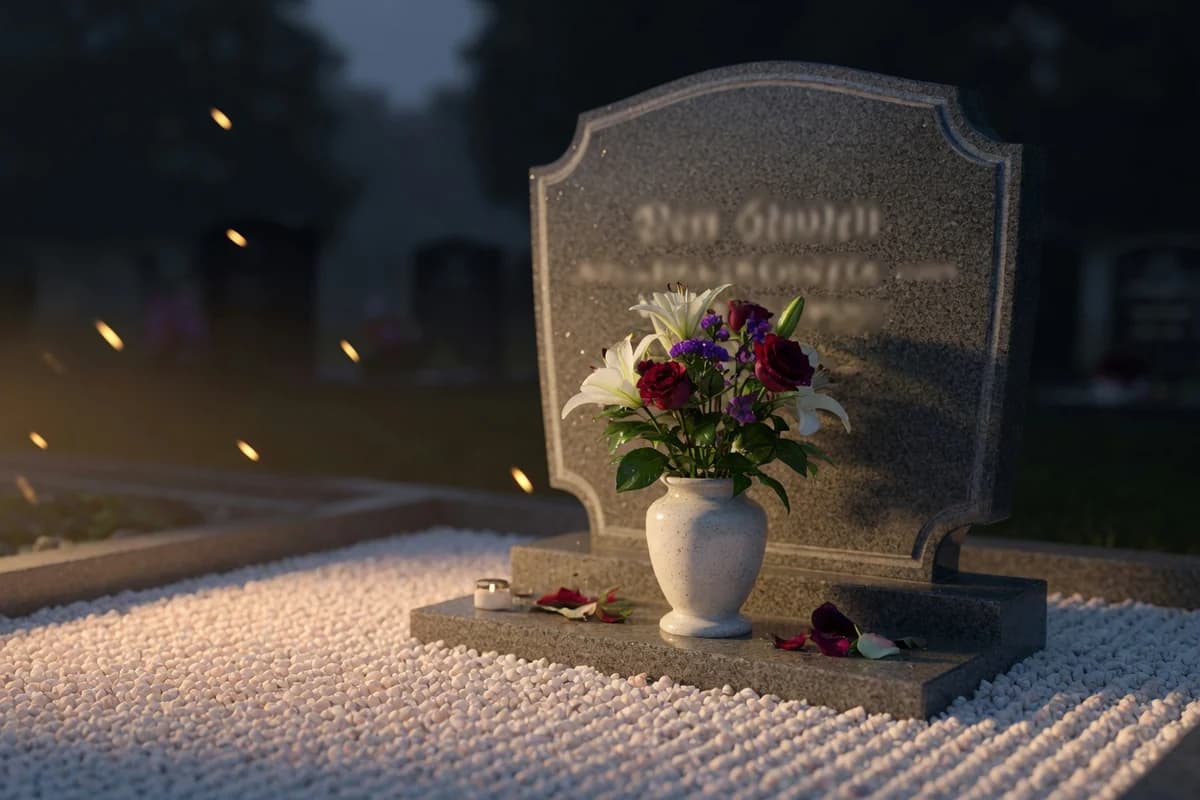
Illustrative image: a burial plot, prepared for the work.
Reburial, transfer, or ossuary
After exhumation, the remains may follow several paths, according to the family's wishes:
Reburial in the same plot, after work on the grave
Transfer to another cemetery or locality, in a zinc coffin
Placing in an ossuary, to free the plot
Placing in a family vault
Transfer to another locality
Moving remains to another town or cemetery is the most common reason for exhumation. The remains are transported in a sealed zinc coffin, and a reburial takes place at the destination.
We coordinate the entire process, including collection and transport and the receiving cemetery's agreement. If a new burial plot is needed, the cost is added separately.
What is included and what it costs
We include obtaining the authorisations, the work of opening and closing the grave, the ossuary box, and coordination. Transport and a new burial plot are added where applicable.
The total cost of an exhumation with reburial is generally between 1,500 and 4,000 lei. For details, see our exhumation pricing page.
Who handles everything
The family tells us what they need, and we take care of the authorisations, the request to the cemetery, the physical work, and the transport. You do not travel to offices.
We answer day and night. For a no-obligation conversation, call us or see our complete funeral services.
LOCAL COVERAGE
Where do we provide exhumation in Bucharest and Ilfov?
We cover all six sectors of Bucharest and the towns of Ilfov county. Pick your area for local details: cemeteries, churches and the neighbourhoods we cover.
Select Bucharest or Ilfov for local exhumation pages.
FREQUENT QUESTIONS
What families ask about exhumation: procedure, conditions, and documents
What is exhumation?
It is the removal of remains from a grave, for reburial in another plot, transfer to another locality, or placing in an ossuary. It requires authorisation and must comply with sanitary regulations.
After how many years can exhumation take place?
The general rule is after 7 years from the date of burial. After this period, the remains may be exhumed at any time of year, without an authorisation from the Direcția de Sănătate Publică (DSP).
Can exhumation take place before 7 years?
Yes, in two situations: after at least one year, in the period 1 November – 31 March, with a DSP sanitary authorisation, for reburial in another plot; or at any time, on the basis of an order from the public prosecutor or a court.
What authorisation is needed for exhumation?
Under 7 years, the sanitary authorisation from the Direcția de Sănătate Publică (DSP). After 7 years, this authorisation is no longer required. In all cases, the cemetery administration's agreement is needed.
What is the legal basis for exhumation?
The technical and sanitary regulations approved by Government Decision 741/2016 (HG 741/2016) govern exhumation and reburial. They set the 7-year period and the authorisation conditions.
Why is an exhumation carried out?
Most often for reburial in another plot, transfer to another locality, or placing the remains in an ossuary or family vault.
Who carries out the physical exhumation work?
Authorised personnel, in compliance with the sanitary regulations. The family does not participate in the physical work; we coordinate the entire process.
How are remains transferred to another town?
The remains are placed in a sealed zinc coffin and transported to the new cemetery, with the receiving administration's agreement. We coordinate the paperwork, transport, and reburial.
What does an exhumation cost?
The total cost of an exhumation with reburial is generally between 1,500 and 4,000 lei. For a breakdown by component, see the exhumation pricing page.
How long does an exhumation take?
The physical work itself generally takes one day. Including the obtaining of authorisations and scheduling, the entire process can take from several days to several weeks.
What happens to the monument at exhumation?
A monument or surround is dismantled before the work and put back after, if the grave remains in the same place. At transfer, a new monument is erected.
Can I exhume to make room for a new burial?
Yes — after 7 years, the remains can be placed in an ossuary to free the plot. This is common practice at family burial plots.
What is an ossuary?
An ossuary is a container — a box or a niche — in which remains are placed after exhumation. It allows the remains to be kept while freeing the plot for a new burial.
Can exhumation take place in winter?
Under 7 years, exhumation for transfer is carried out precisely in the cold period, 1 November – 31 March, with a DSP authorisation. After 7 years, it can take place at any time of year.
Is the agreement of all relatives required?
Generally, exhumation is requested by the holder of the concession or a close relative. The cemetery administration may require the family's agreement, according to its own regulations.
Is a religious service held at an exhumation?
Usually yes. The priest says a short service at the raising of the remains and at the reburial. Tradition calls for prayer and a blessing.
Can I attend the exhumation?
The physical work is carried out by authorised personnel, without the family present. You may attend the religious service and the reburial, as you wish.
How do I contact you for an exhumation?
Call us and tell us the situation — the cemetery, how long ago the burial was, and the purpose. We verify the time elapsed, obtain the authorisations, and schedule the work.
What happens to the old coffin at exhumation?
The remains of the old coffin are replaced. The remains are placed in an ossuary box or, for transfer, in a new zinc coffin.
Can I move a grave to be next to another family member?
Yes. Transferring remains to a family plot, beside other loved ones, is a common reason for exhumation. We coordinate the paperwork and the move.
How deep is the excavation at exhumation?
Digging proceeds to the level of the coffin, then the remains are carefully gathered. The work is carried out by authorised personnel, in compliance with the sanitary regulations.
RELATED SERVICES
Related services we provide
Exhumation in Bucharest
Local page by district: neighbourhoods, cemeteries, collection times. 24/7 funeral home.