
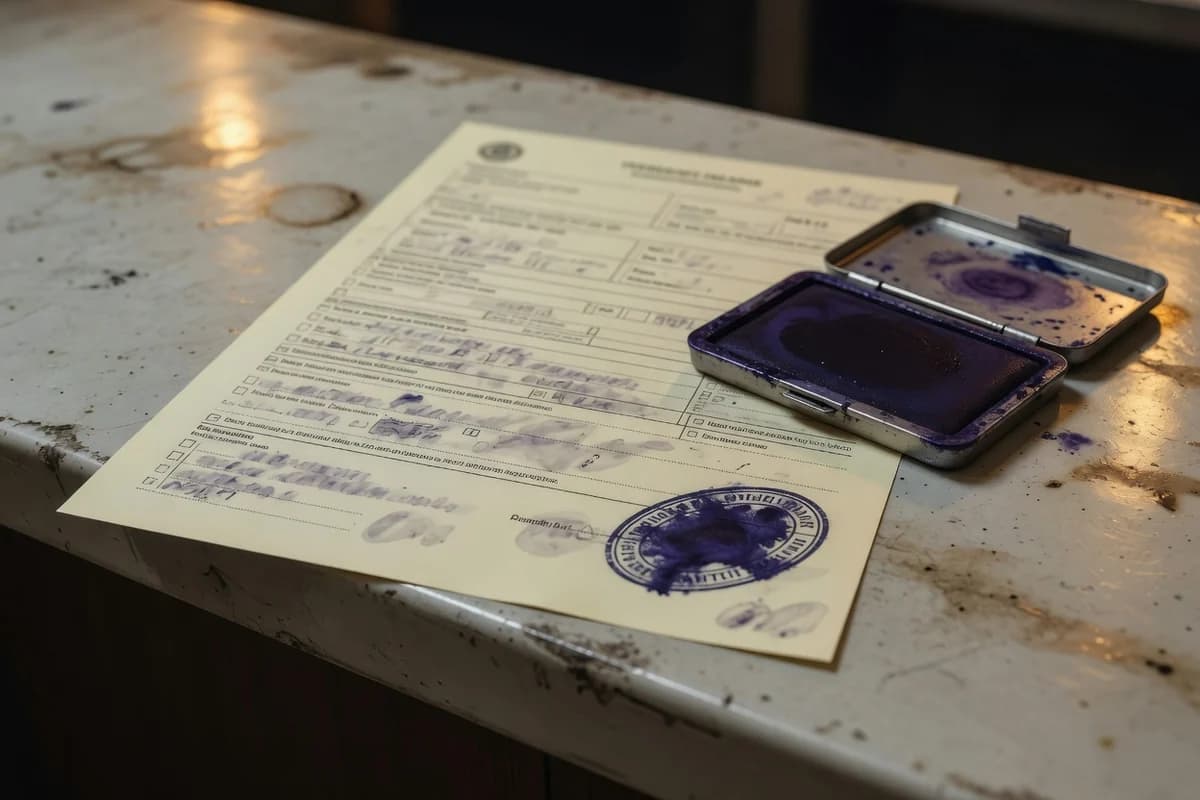
What the certificate of heirship is
The certificat de moștenitor is the document issued by a notary public at the end of the Romanian probate process (dezbaterea succesiunii). It confirms who the heirs are and what share of the estate belongs to each.
Without this certificate, heirs cannot transfer property, access bank accounts, or deal with other assets of the deceased. It is the key document of the entire inheritance.

What the certificate contains
The certificate sets out the essential facts of the estate:
- Name of the deceased and date of death
- Names of the heirs and their relationship to the deceased
- The share (cotă) allocated to each heir
- The masa succesorală (estate) — the assets that form the subject of the inheritance
What it is used for
The certificate of heirship is required for almost every post-probate formality:
- Transferring real property (houses, land) into the heirs' names
- Accessing the deceased's bank accounts
- Transferring a vehicle or other registered assets
- Collecting the deceased's uncollected pension from the pension house

How to obtain it
The certificate is issued at the end of the Romanian probate process at a notary. The notary reviews the documents, hears the witnesses, and establishes the heirs and their shares.
With a complete file, the certificate can be issued within a few days — usually after two appointments. We help you prepare the file.
Documents and witnesses
To issue the certificate, the notary requires the same documents as for the probate hearing:
- Death certificate of the deceased
- Identity documents of the heirs
- Birth and marriage certificates of the heirs
- Title deeds for assets in the estate
- Two witnesses from outside the family
Certificate of heirship versus certificate of heir status
When there are assets to be divided, the notary issues the certificat de moștenitor (certificate of heirship), which records the estate and each heir's share. When there are no assets to divide but heir status must simply be proved, the notary issues a certificat de calitate de moștenitor (certificate of heir status).
The latter confirms who the heirs are without allocating shares over specific assets. We advise which type is right for your situation.
| Document | When it is issued | What it certifies |
|---|---|---|
| Certificate of heirship (certificat de moștenitor) | There are assets to be divided | The heirs, their shares, and the estate (masa succesorală) |
| Certificate of heir status (certificat de calitate de moștenitor) | No assets to divide; only heir status must be proved | Who the heirs are, without shares over specific assets |
| Supplementary certificate of heirship | Assets unknown at probate come to light after the certificate is issued | The new assets, added to the estate, with the existing shares kept |
| Duplicate or certified copy | An heir requests another copy | Same content; issued by the notary who issued the original, based on the archived file |
Cost and timeline
The cost depends on the estate's value and the notary's fee. Probate within the two-year window attracts lower fees; after two years from death, a 1% state levy is added on real property.
With a complete file and no disputes between heirs, the certificate is issued within a few days. Delays arise when documents are missing or heirs disagree.
Challenging the certificate
An heir who considers themselves wronged may challenge the certificate of heirship in court. This is why a correct and complete notary file matters.
Until a court ruling sets the certificate aside, it remains in full legal effect. A lawyer can advise you if this situation arises.
What to do once you have the certificate
With the certificate of heirship in hand, the heirs can complete the remaining steps:
- Register real property in the heirs' names (intabulare)
- Access the deceased's bank accounts
- Transfer the vehicle at the vehicle registry
- Collect uncollected pension from the pension house
- Pay any taxes and levies on the inherited assets
Assets discovered after the certificate is issued
If assets unknown at the time of probate come to light after the certificate has been issued, a supplementary certificate of heirship can be drawn up for those assets.
The notary adds the new assets to the estate, keeping the shares already established between the heirs. We can guide you through this as well.
How we help
We help you prepare the notary file — documents and witnesses — and refer you to the right notary, so the certificate is issued as smoothly as possible.
We are available day and night. Call us or see our notary and probate service for a no-obligation conversation.